


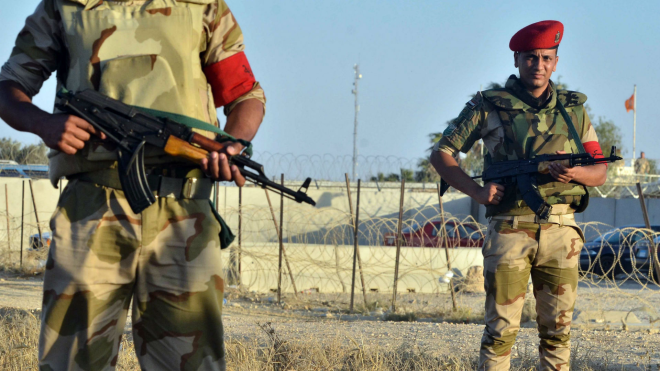


Somalia: The Egyptian government is reportedly preparing military forces to deploy to Somalia, a move tied to bolstering defense cooperation between the two nations as the Horn of Africa region faces escalating political tensions, security challenges, and growing strategic competition.
The newspaper *The New Arab* reported that Egyptian officers, trainers, and military advisors are engaged in preparing the planned mission to deploy troops to Somalia.
This report emerges at a time when relations between Cairo and Mogadishu have reached a high peak, following the bilateral defense cooperation agreement signed in 2024 and the decision to elevate their relationship to a strategic partnership in 2025.
Although the total headcount of the planned force, their arrival timeline, and their specific mandating duties have not yet been officially announced, emerging reports indicate that both governments seek to further strengthen cooperation in defense and security.
El-Adde Reportedly Designated for Egyptian Forces: Reports regarding this plan suggest that the area of El-Adde, located on the northern outskirts of Mogadishu, could be among the locations designated for the Egyptian troops.
El-Adde is cited as a location formerly used as a military airfield, enhancing its potential utility if repurposed as a support facility or military base.
If the reported plan is confirmed, an Egyptian troop presence at this site could form part of efforts to advance military cooperation, train Somali armed forces, and coordinate security operations.
However, no official statement has yet confirmed that El-Adde has been definitively selected as a base for Egyptian forces or that Egyptian troops have already arrived there.
Likewise, the number of troops to be stationed, the duration of their deployment, and the nature of the equipment or military support they will bring remain undisclosed.
The 2024 Somalia-Egypt Defense Agreement: Military cooperation between Somalia and Egypt entered a new phase when the two governments signed a defense cooperation agreement in 2024.
That agreement laid the groundwork for strengthening security ties, troop training, and building Somalia’s defense capacity.
The Somali government has long been engaged in rebuilding the Somali National Army (SNA) and enhancing the capacity of security institutions while seeking support from friendly partner nations.
Egypt, for its part, expressed its readiness to support efforts to enhance Somalia’s security and safeguard the nation’s sovereignty.
The defense agreement is therefore significant for both sides, as it creates a framework to expand cooperation in training, exchange military expertise, and support security institutions.
If the plan to deploy Egyptian troops to Somalia materializes, it could represent another concrete step toward implementing that cooperation.
Somalia and Egypt Elevate Relations to Strategic Level: In 2025, Somalia and Egypt elevated their relationship to a strategic partnership, reflecting both governments’ intent to broaden political, economic, and security cooperation.
Both parties have repeatedly emphasized the critical importance of preserving Somalia’s sovereignty and territorial integrity.
This issue holds particular significance for Mogadishu, which seeks to reinforce alliances with nations supporting Somali unity and national institution-building.
Egypt views Somalia as a key regional partner in the Horn of Africa, particularly given the country’s strategic geographic location along the Red Sea and Gulf of Aden maritime corridors.
The bilateral relationship is anchored in shared security and diplomatic interests extending beyond military collaboration alone.
Egyptian Military Delegation Visits Mogadishu: According to reports, an Egyptian military delegation visited Mogadishu on September 20, where they met with Somali Defense Minister Ahmed Moallim Fiqi.
Discussions centered on defense cooperation, troop training, and enhancing the operational capabilities of the Somali National Army.
The visit underscores the priority both governments place on military ties, particularly as Somalia advances efforts to build defense capacity and combat Al-Shabaab.
However, comprehensive details regarding the meetings, specific pacts reached, and their direct link to the troop deployment plan still await official confirmation.
A central question surrounding this deployment plan is whether Egyptian forces will operate under the African Union Support and Stabilization Mission in Somalia (AUSSOM) or deploy under a bilateral defense agreement.
AUSSOM is an African Union-led mission supporting the Somali government in counter-insurgency operations, stabilizing recovered territory, and building institutional security capacity.
Egypt previously expressed interest in supporting Somali security and potentially contributing to the African Union mission.
If Egyptian forces are integrated into AUSSOM, defining force strength, deployment sectors, and operational mandates will be critical.
If they deploy under a bilateral agreement, a clear framework will be required to define their relationship with the Somali government, the national armed forces, and the African Union mission.
These two arrangements differ in their administrative mechanisms, operational coordination, and troop mandates.
To date, no official statement has definitively clarified the exact framework under which Egyptian forces will contribute to Somalia’s security.
If this plan is confirmed, it could have multifaceted implications for Somalia, particularly regarding defense capacity-building and international cooperation.
First, Egyptian forces could assist in training and developing the skills of Somali troops, provided the agreements reached explicitly define that role.
Second, defense cooperation could create opportunities to strengthen technical expertise, military planning, and security institution interoperability.
Third, bilateral relations could provide Somalia with additional diplomatic support, particularly regarding the protection of national sovereignty and territorial integrity.
However, the tangible outcome will depend on the nature of the support provided, the duration of the Egyptian military presence, and how well it aligns with Somalia’s national security needs.
The presence of foreign forces alone does not guarantee security progress; it is vital that cooperation has clear objectives, accountability, and close coordination with Somali institutions.
The reported plan to deploy Egyptian troops to Somalia comes at a time when the Red Sea and the Horn of Africa have become convergence points for the security, economic, and strategic interests of many nations.
The Bab al-Mandab Strait connects the Red Sea to the Gulf of Aden and is vital for international commercial shipping.
Somalia occupies a strategic location near critical regional and global trade routes, increasing the importance of maritime security and national stability.
Egypt, for its part, relies heavily on the Suez Canal, one of the most vital waterways linking trade between Europe, Asia, and other global regions.
Consequently, security in the Red Sea and the Bab al-Mandab Strait is vital to the strategic interests of both nations, even as each maintains its own specific priorities.
The strengthening of defense cooperation between Cairo and Mogadishu can be understood as part of efforts to advance regional security ties.
Nonetheless, there is no official confirmation indicating that the plan to deploy Egyptian troops to Somalia directly targets any specific country or forms part of a plan for military confrontation.
The longstanding dispute between Egypt and Ethiopia regarding the Grand Ethiopian Renaissance Dam (GERD) remains among the key issues impacting political dynamics in the region.
Egypt views the dam as a direct water security concern, given the Nile’s critical role in the daily lives of its citizens and its national economy.
Ethiopia, for its part, considers the project vital for power generation and domestic economic development.
The two nations have long diverged on matters concerning the filling of the reservoir, water management protocols, and the guarantees downstream basin states require from Ethiopia.
While this friction forms part of the regional diplomatic landscape, it is insufficient on its own to determine the exact underlying motives of Egypt’s planned military deployment to Somalia.
It is essential to distinguish between verified facts and analytical commentary regarding the strategic interests of regional powers.
Pending an official statement outlining the specific objectives of the mission, it is premature to assume Egyptian forces are deploying to Somalia purely as part of the broader Cairo-Addis Ababa dispute.
Should the reported plan proceed, it could expand Egypt’s footprint in Horn of Africa security cooperation.
This development could also draw the attention of other regional actors, particularly those with strategic interests in the Red Sea, the Gulf of Aden, and Somali security.
However, the real strategic impact of this plan cannot be fully evaluated until details emerge regarding troop strength, mission types, and duration of stay.
Furthermore, it is important to recognize that any Egyptian military presence takes place under agreements authorized by Somalia, upholding national sovereignty and the Somali government’s authority over national security decisions.
Effective military cooperation can help strengthen security institutions, but it requires solid coordination and clearly defined mandates for all participating parties.
Although reports indicate military preparations are underway, several critical questions still await official clarification.