

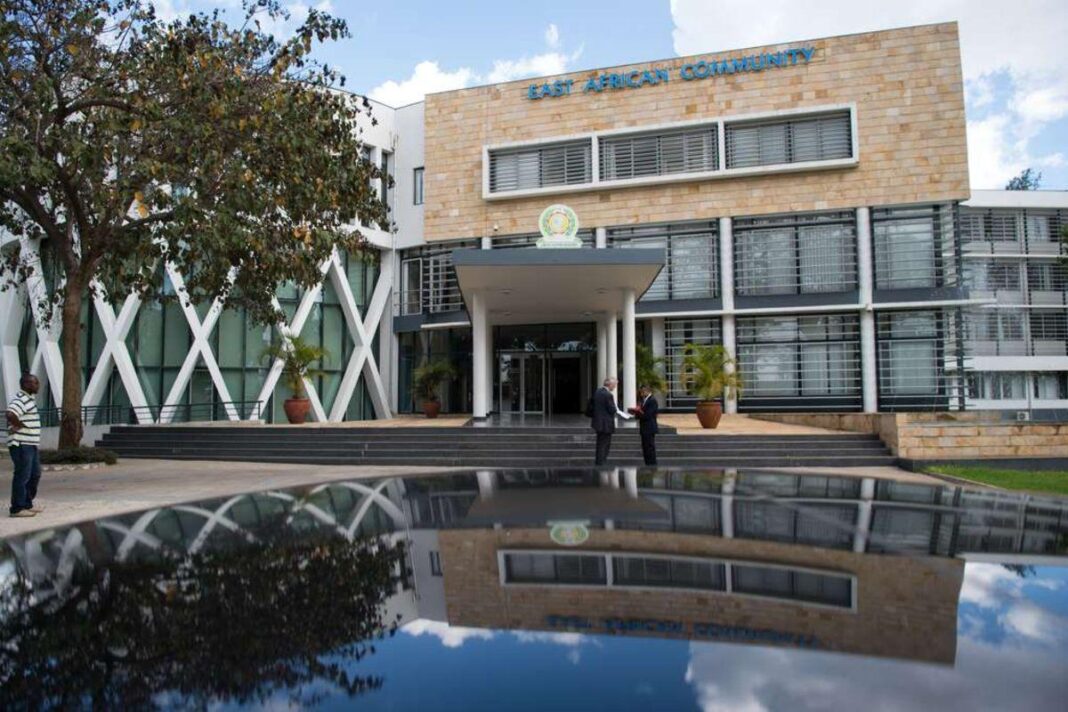

The East African Court of Justice (EACJ) has given the Federal Government of Somalia 45 days to respond to a legal case brought by six Supreme Court judges challenging government actions they say have undermined the independence of the judiciary.
The case brings Somalia’s escalating constitutional dispute before a regional court, adding an international legal dimension to a confrontation that has so far centred on the presidency, the Supreme Court and the country’s constitutional order.
The court’s First Instance Division issued a notification on November 18, 2026, requiring the Somali government to submit its response in accordance with the EACJ’s procedural rules.
The applicants are challenging the removal of former Supreme Court Chief Justice Dr. Baashe Yusuf Ahmed and what they describe as interference in the work and independence of the country’s highest judicial institution.
The respondents named in the case are the Federal Republic of Somalia and the Attorney General.
The six judges are Dr. Baashe Yusuf Ahmed, Salah Sheikh Ibrahim Diblaw, Abdikadir Idiris Essa, Dr. Abubakar Ahmed Ali, Dr. Abdikafar Hussein Isak and Abdiaziz Mohamed Yusuf.
Their case follows a series of disputed decisions in Mogadishu that have deepened disagreements over the constitutional amendments, the tenure of federal institutions and the authority to appoint or remove senior judicial officials.
The dispute escalated on November 4, when President Hassan Sheikh Mohamud announced the removal of Baashe Yusuf Ahmed as Chief Justice and appointed Ibrahim Iidle Suleymaan to replace him.
The presidency said the decision followed complaints concerning the administration of justice and the need for reforms within the judiciary.
The move came as the Supreme Court was considering a constitutional petition filed by former President Sheikh Sharif Sheikh Ahmed. The case challenged changes to the Constitution and the extension of the mandates of federal institutions.
On November 5, the Supreme Court rejected the president’s decision to remove Baashe, declaring the dismissal invalid and arguing that the president had not followed the required constitutional procedures.
The court also ruled that the terms of the federal institutions had expired and called on political leaders to reach an agreement on an electoral framework. It urged the country to proceed with elections within the period set out in its decision.
The Federal Government has disputed the legitimacy of that ruling. In a statement issued on November 14, the Ministry of Justice and Constitutional Affairs defended Baashe’s removal, arguing that it had been carried out under the transitional arrangements associated with the new constitutional order.
The government also questioned the Supreme Court proceedings, including the court’s jurisdiction, the standing of the petitioner and the composition of the bench. It said it did not recognise the pronouncements issued on November 5 as a valid court ruling.
The disagreement has attracted international attention. On November 12, United Nations human rights experts criticised the dismissal of Baashe and raised concerns about judicial independence and the treatment of Supreme Court judges.
They argued that the removal had not followed the required constitutional procedures and called for the reinstatement of the former Chief Justice and protection for members of the judiciary.
The Somali government rejected aspects of the UN experts’ assessment, saying they had not sought clarification from the authorities before publishing their statement.
Mogadishu maintained that the country was moving from the previous constitutional framework to the system established under the 2026 Constitution, and that the dispute should be understood within that institutional transition.
The competing positions illustrate how deeply divided the parties remain over the legality of the changes to the judiciary and the constitutional order.
The EACJ proceedings now provide another legal forum in which aspects of the dispute may be examined. Based in Arusha, Tanzania, the East African Court of Justice is the judicial organ of the East African Community.
Under Article 23 of the EAC Treaty, its role is to ensure adherence to the law in the interpretation, application and compliance with the Treaty.
Article 27 gives it jurisdiction over the interpretation and application of the Treaty, while Article 30 allows eligible individuals to refer certain acts or decisions by a Partner State or Community institution to the Court on grounds that they violate the Treaty.
This means the case is not simply an appeal against a Somali Supreme Court decision. The applicants will need to establish how the actions they challenge relate to the obligations and principles contained in the East African Community Treaty.
The Court’s role is not to act as a general appeals court for every dispute arising under Somalia’s domestic Constitution. Its consideration will depend on the legal grounds presented by the six judges and whether those grounds fall within its jurisdiction.
There is also an important procedural distinction concerning the 45-day deadline. Under the EACJ Rules of Procedure adopted in 2019, Rule 32 requires a respondent to file and serve a response within 45 days after being served with the notification of a reference.
The response must outline the respondent’s position on the facts and law, provide supporting evidence where appropriate and state the relief being sought. The applicant may then file a reply within a further 45 days after receiving the government’s response.
The 2019 rules identify this provision as Rule 32, rather than Rule 30. Rule 30 deals with the validity period of a notification. The 45-day period also runs from the date the government is served with the notification, not necessarily from the date the court issued it.
Therefore, although the notification was reportedly issued on November 18, the precise deadline depends on when service was completed.
The government’s response will be an important part of the written proceedings. It could contest the applicants’ interpretation of the events, challenge the admissibility of the reference or raise preliminary objections concerning the Court’s jurisdiction.
The 2019 rules allow a respondent to raise preliminary objections, which must be set out with their grounds and communicated to the Court and the other parties in accordance with the prescribed procedure.
The applicants would then have an opportunity to respond to the government’s arguments.
If Somalia submits its response, the six judges will have 45 days to file a reply.
The exchange of written submissions is intended to clarify the legal and factual issues that remain contested before the proceedings move towards the next stages, including a scheduling conference and, where directed by the Court, oral hearings.
The filing of a response does not itself amount to a final hearing or a judgment on the merits.
Failure to respond within the prescribed period would not automatically mean that the six judges have won their case. However, the Court’s rules provide for proceedings to continue in certain circumstances even when a respondent does not participate.
The government could also seek an extension of time, as the Court has power to extend deadlines where sufficient reason is established.
The eventual outcome will depend on the evidence, legal arguments and the Court’s assessment of its jurisdiction and the merits of the reference.
The case is significant because a dispute that began within Somalia’s own constitutional institutions has now reached a regional judicial body.
It places questions about the removal of the Chief Justice, the authority of the presidency and the independence of the judiciary within a wider debate about the rule of law and the obligations of East African Community member states.
For the Federal Government, the immediate task is to prepare its legal position and explain why it considers the challenged actions lawful.
For the six judges, the proceedings offer an opportunity to present their allegations of interference with judicial independence before a regional court. Neither side has yet secured a final legal determination in this case.
The next major development will be the government’s response and any preliminary objections it may raise. The proceedings could take considerable time, and the 45-day notification should not be confused with a deadline for the Court to deliver its final judgment.
The case therefore adds another dimension to Somalia’s ongoing political and constitutional crisis.
While negotiations between political actors remain important to resolving disagreements over the country’s institutions and electoral arrangements, the proceedings in Arusha will test the legal arguments advanced by the six judges and the Federal Government under the framework of the East African Community Treaty.