


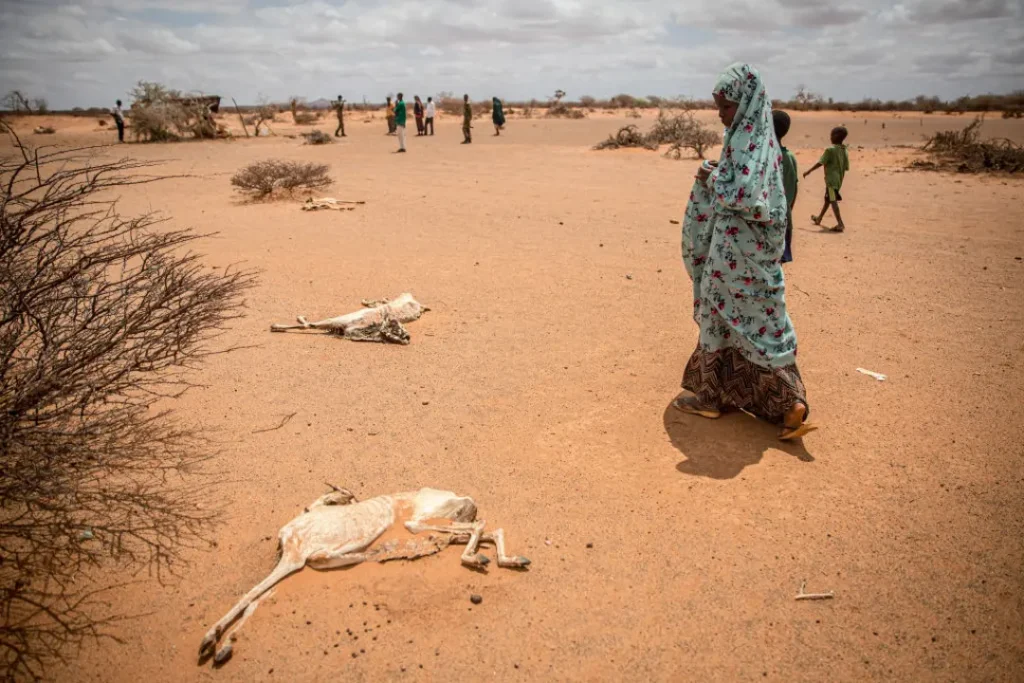


Mogadishu (Kaab TV) – According to recent reports from humanitarian agencies and food security monitors, more than 6 million Somalis are experiencing acute food insecurity, while nearly 2 million children under the age of five are suffering from acute malnutrition.
The crisis has been fueled by consecutive failed rainy seasons that have devastated crops, dried up water sources, and killed livestock across large parts of the country.
Southern and central Somalia have been particularly hard hit, with experts warning that some districts may soon reach famine conditions if rains fail again and humanitarian assistance does not increase.
In Burhakaba District in Somalia’s Bay Region, hunger levels have skyrocketed. Food security analysts say more than 37 percent of children there are acutely malnourished—one of the clearest warning signs of a looming famine.
Aid organizations say the situation is being worsened by major cuts in global humanitarian funding. Somalia received billions of dollars in aid during previous drought emergencies, but current funding levels are far lower despite growing needs. The United Nations says its humanitarian response plan remains critically underfunded
The World Food Programme has warned that lifesaving food assistance programs may be suspended in some areas if urgent financial support is not secured.
Humanitarian workers report that clinics are already struggling to treat severely malnourished children because supplies of therapeutic food are running low.
The drought has also triggered widespread displacement. Hundreds of thousands of families have left their homes in search of water, food, and medical care. Many are now living in overcrowded camps with limited sanitation and healthcare services.
Rising food and fuel prices have made basic necessities unaffordable for many households, especially in urban areas thus adding to the crisis.
In Mogadishu, the collapse in confidence in the Somali shilling has further increased hardship for poor families who depend on cash-based trade.
Somalia has faced repeated climate shocks over the past decade, including one of the worst droughts in its history between 2021 and 2023. Humanitarian agencies warn that climate change is making droughts more frequent and severe across the Horn of Africa.
Aid groups and international organizations are calling for urgent action to prevent a repeat of the devastating 2011 famine, which killed an estimated 250,000 people in Somalia.
Humanitarian groups urge immediate humanitarian assistance, improved access to water, and long-term investment in climate resilience will be essential to preventing further loss of life.