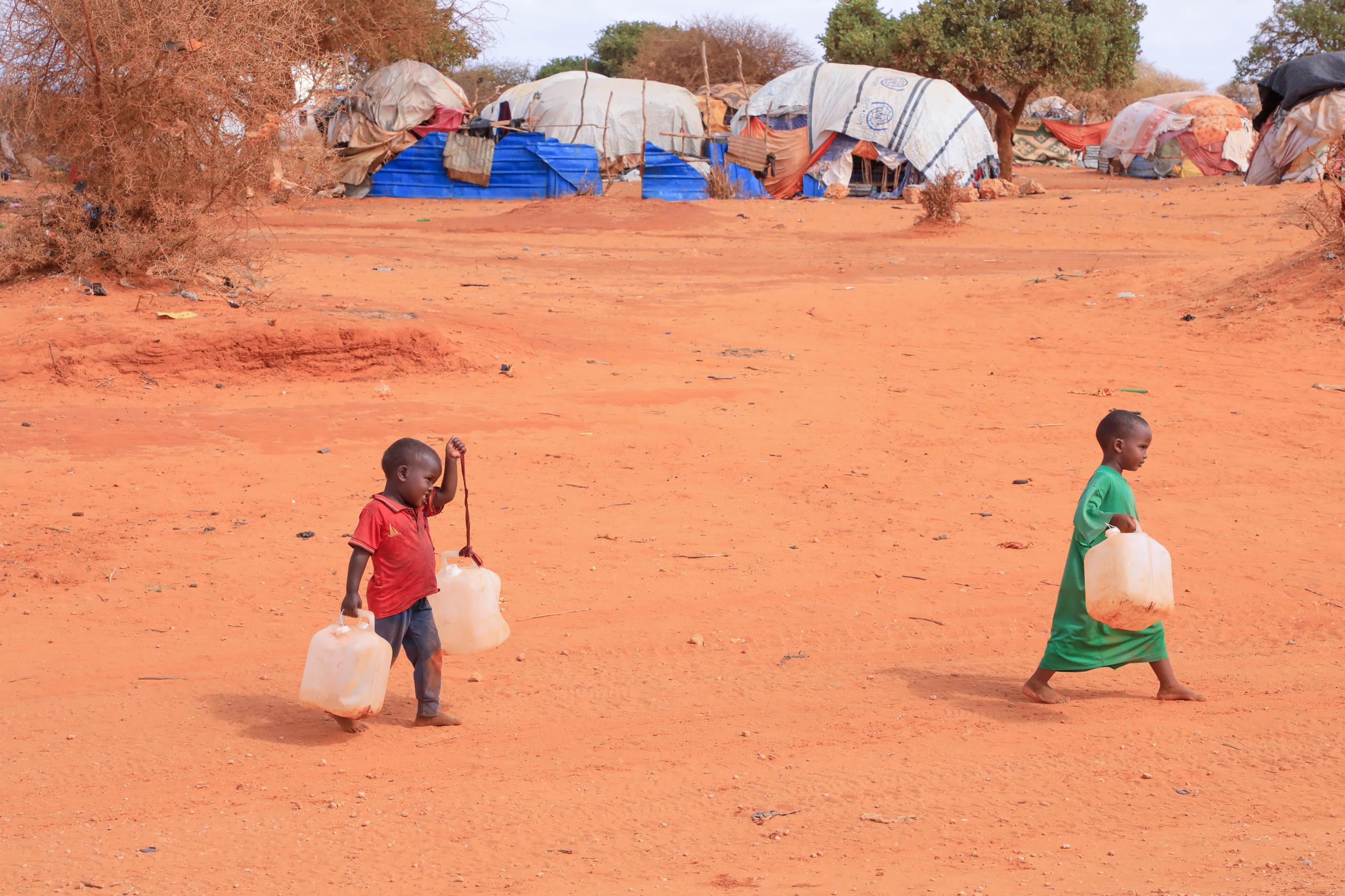
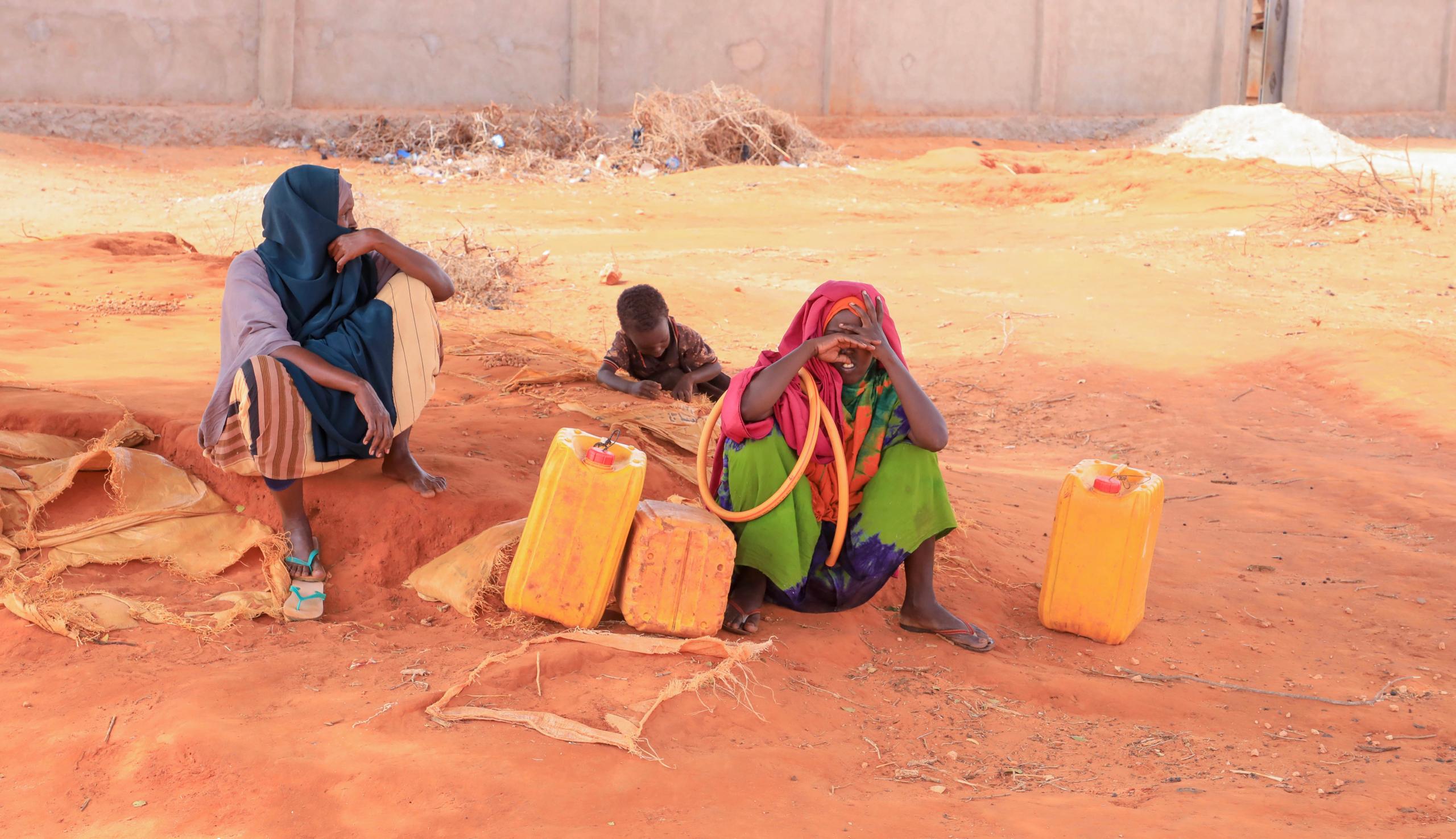
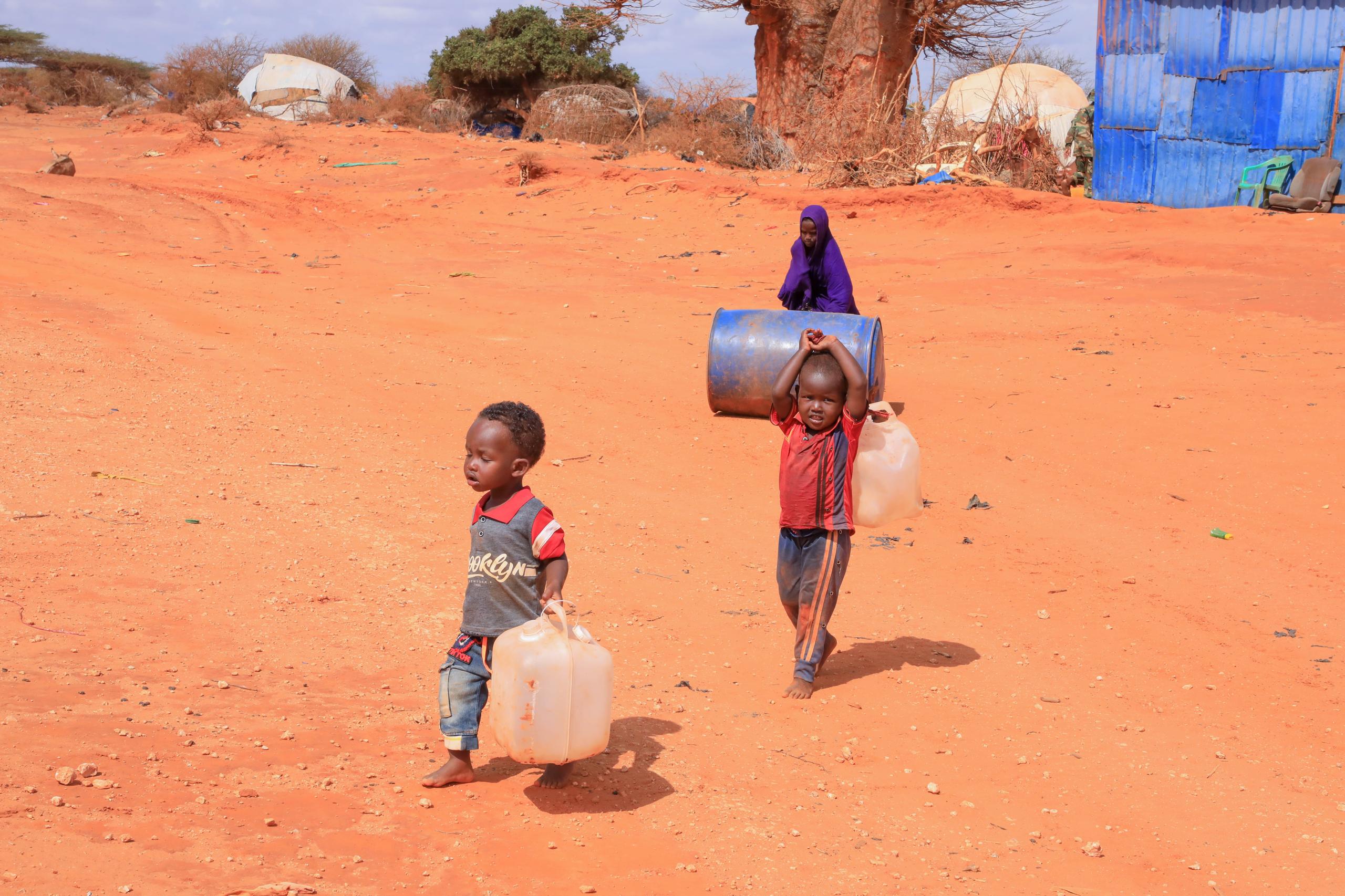
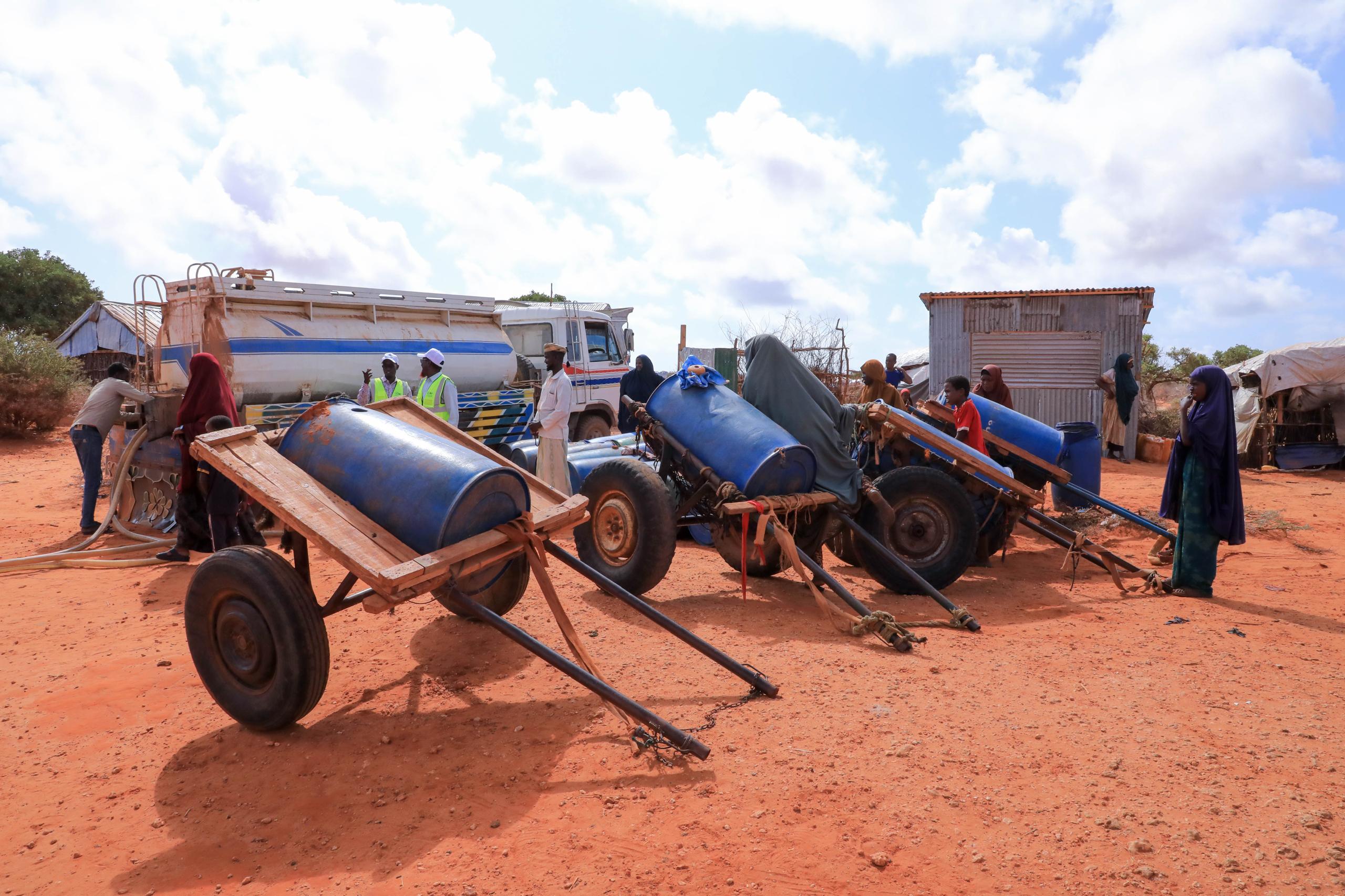
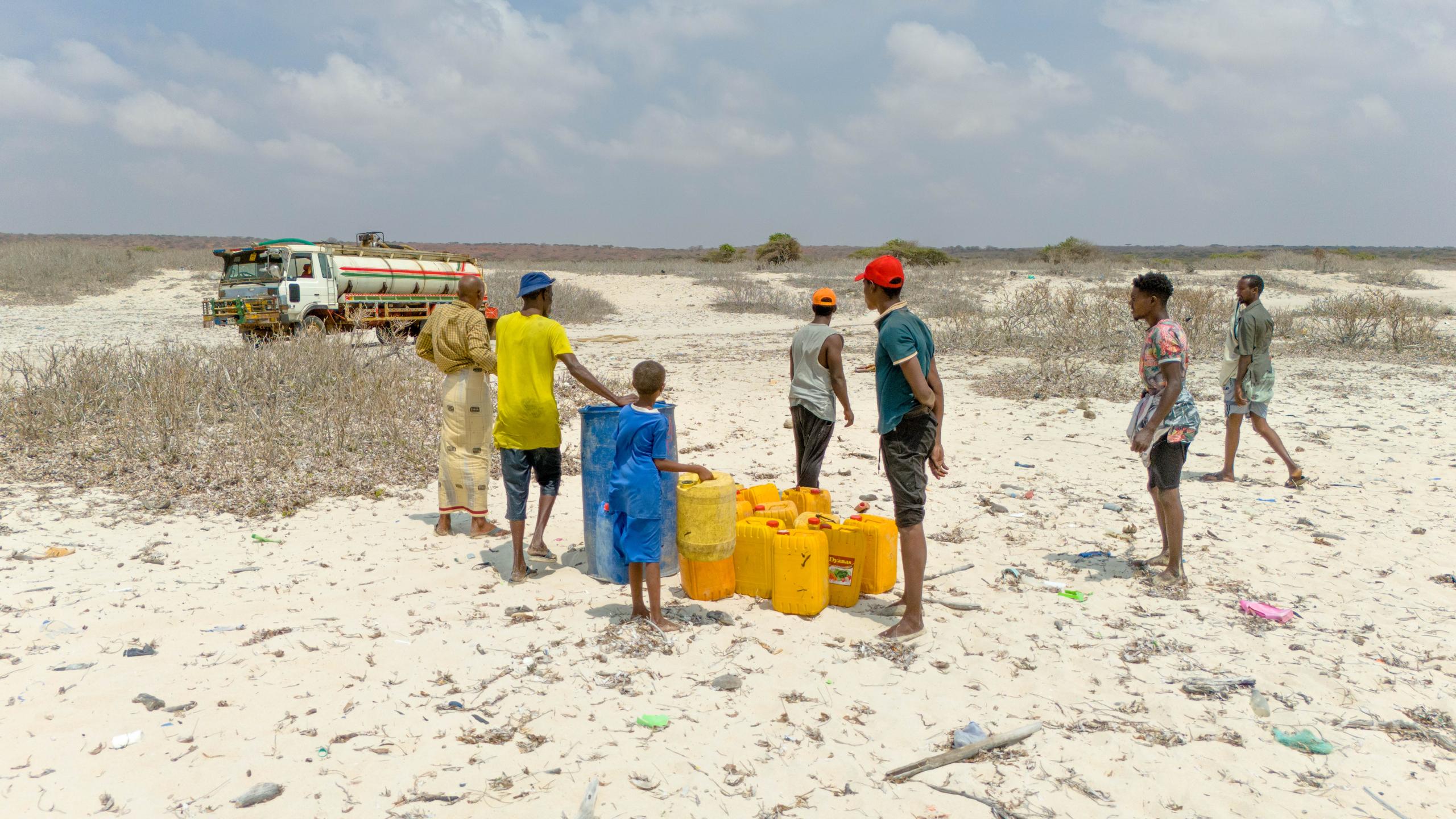
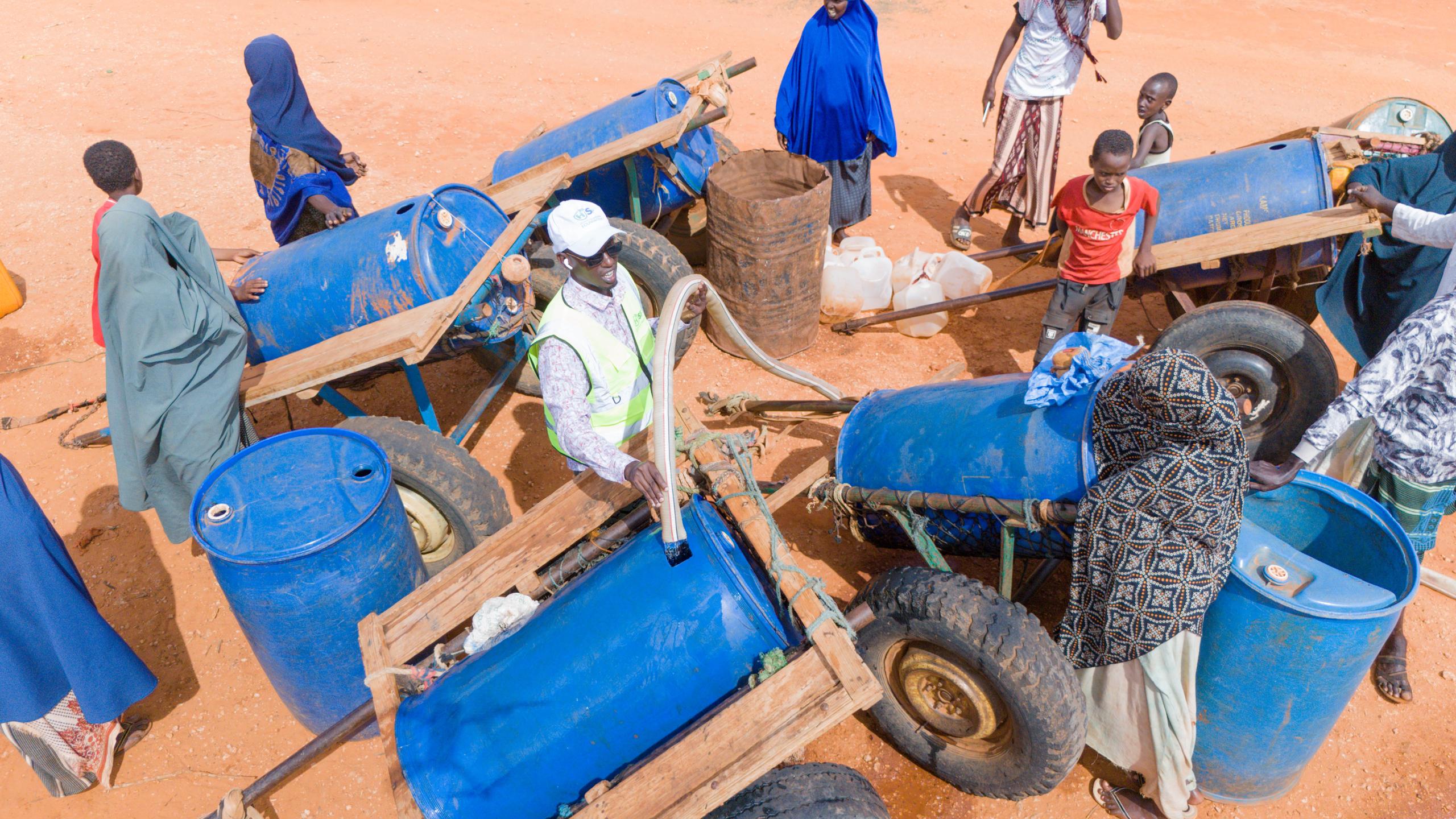
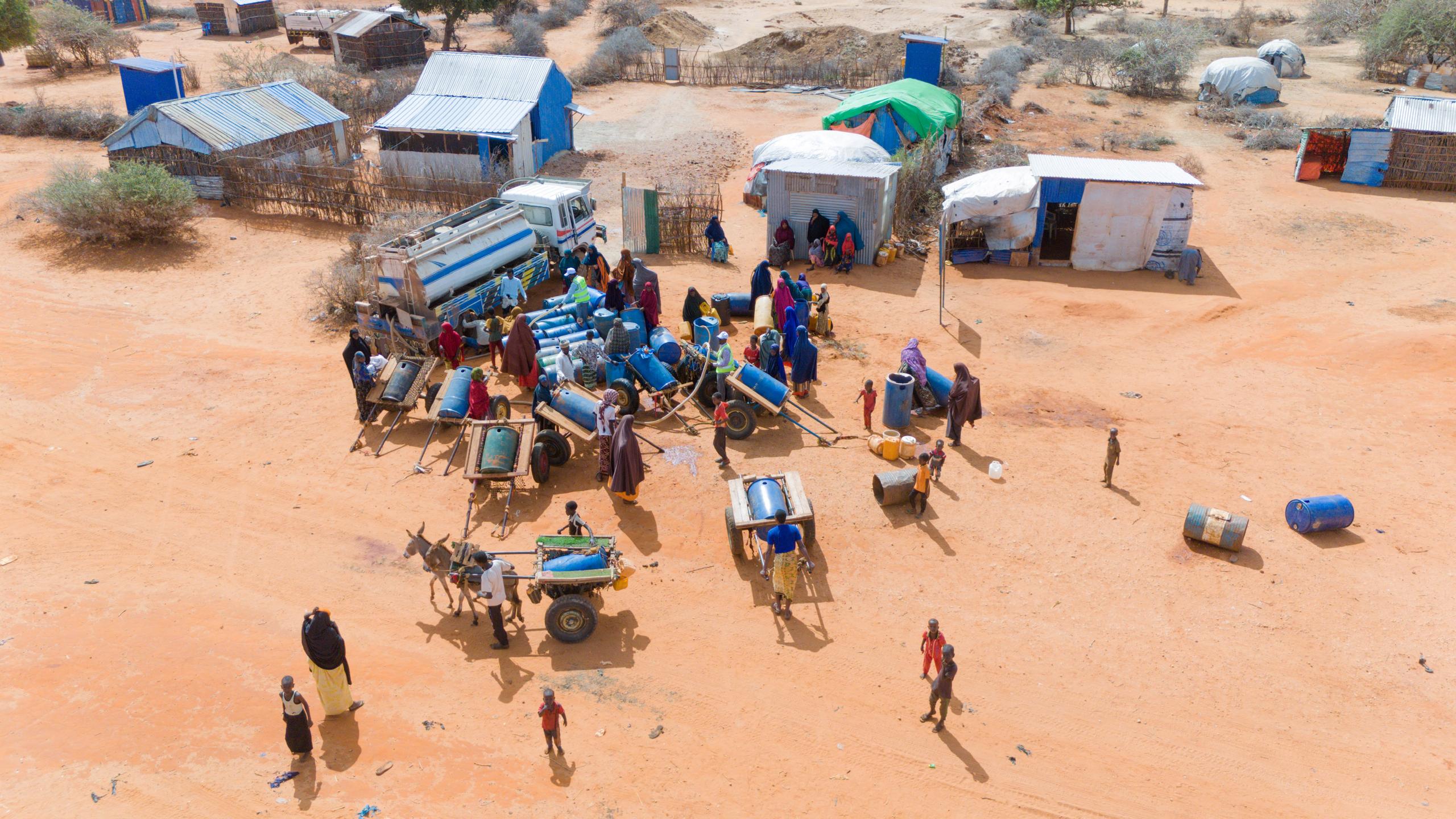
Children carry jerrycans in Barkadda Shariifadda village, about 13 km west of Kismayo, Jubaland, while waiting for a water trucking vehicle brought by an NGO from Kismayo. This is the only water the community can access to survive. PHOTO/ABDULLAAHI HUSSEIN KILAS/ KAAB TV.
KISMAYO, Somalia (Kaab TV) – Climate change is forcing local communities in the Lower Juba region of Jubaland State, Somalia, to rely on water trucking, sometimes going days without water.
Local authorities reported in January this year that 1.5 million people in Jubaland are affected by the climate crisis, worsened by the ongoing drought and failed rainy seasons. Nationwide, about 6.5 million Somalis face high levels of hunger, and more than 1.8 million children suffer from acute malnutrition, according to a new report by the Somali government and UN agencies.
While many community members have been displaced toward Kenyan-Somali border towns such as Dhobley and Liboye, some families have remained, hoping for change.
However, aid has not arrived, and only water trucking provided by NGOs and local businesspeople in Kismayo has kept them alive since December of last year.
6.5 million Somalis face high levels of hunger, and more than 1.8 million children suffer from acute malnutrition – a new report by the Somali government and UN agencies.
We are publishing a series of photos taken from villages west of Kismayo and from Kooyama Island in the Lower Juba region.
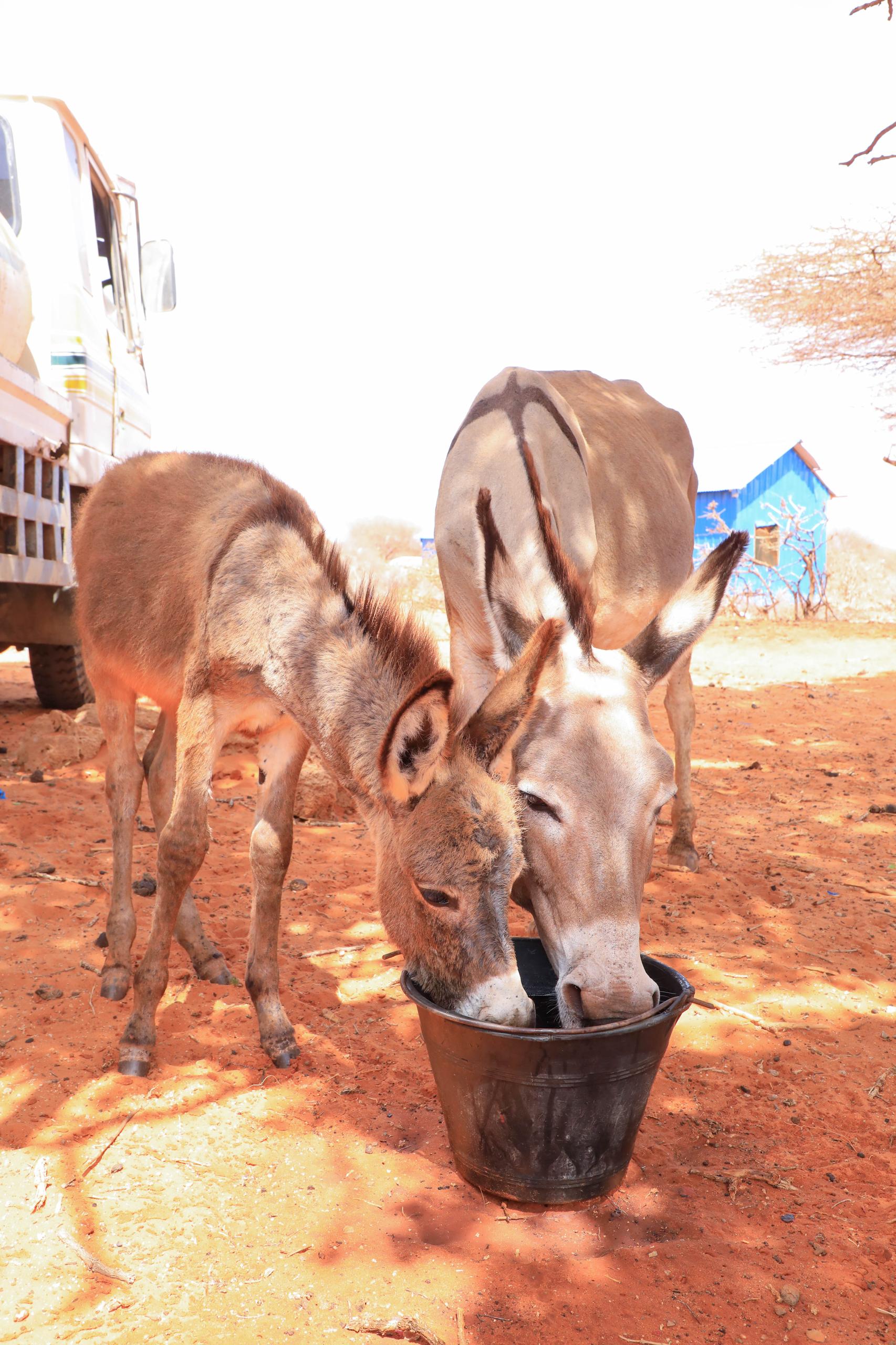
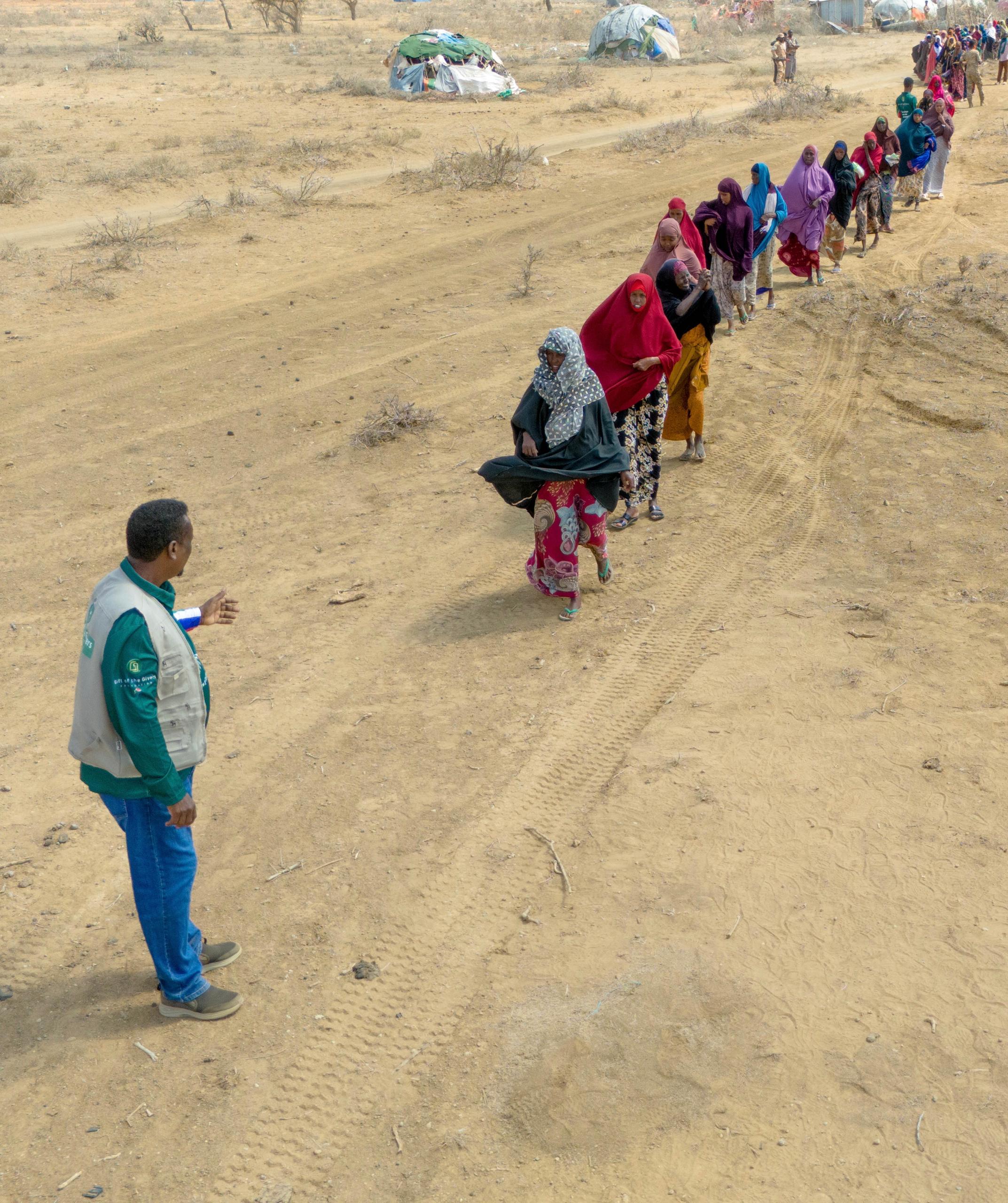
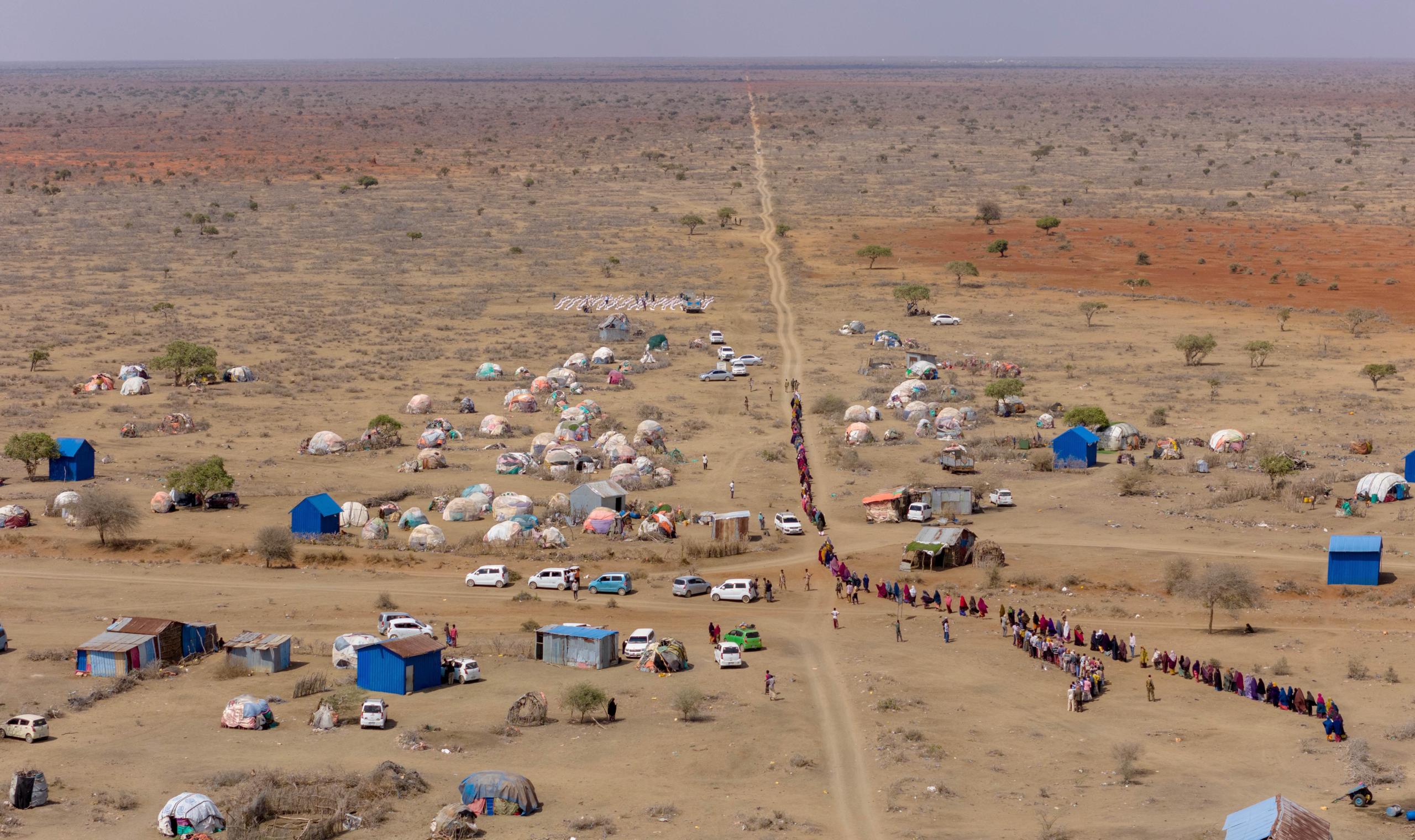
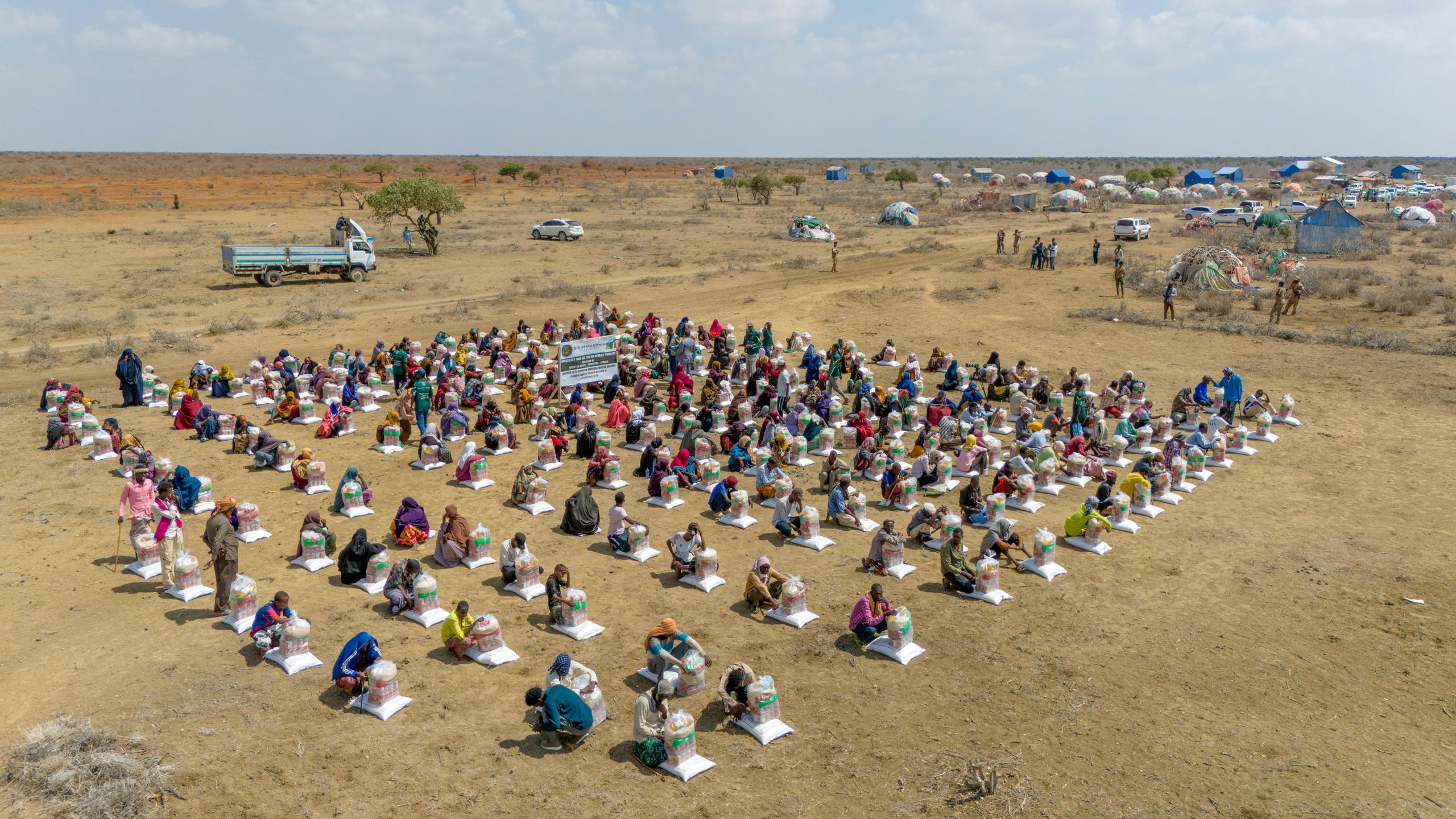
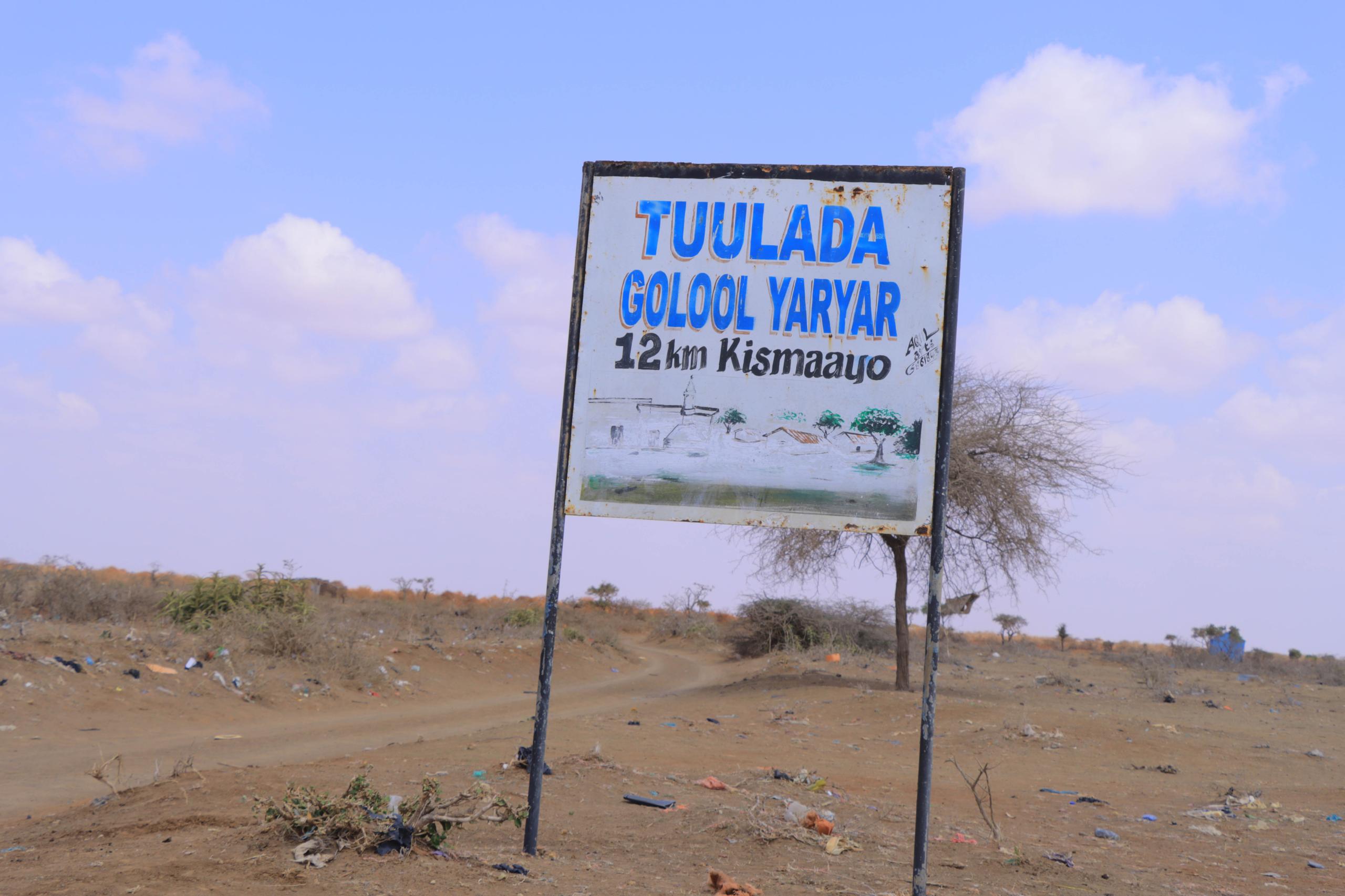
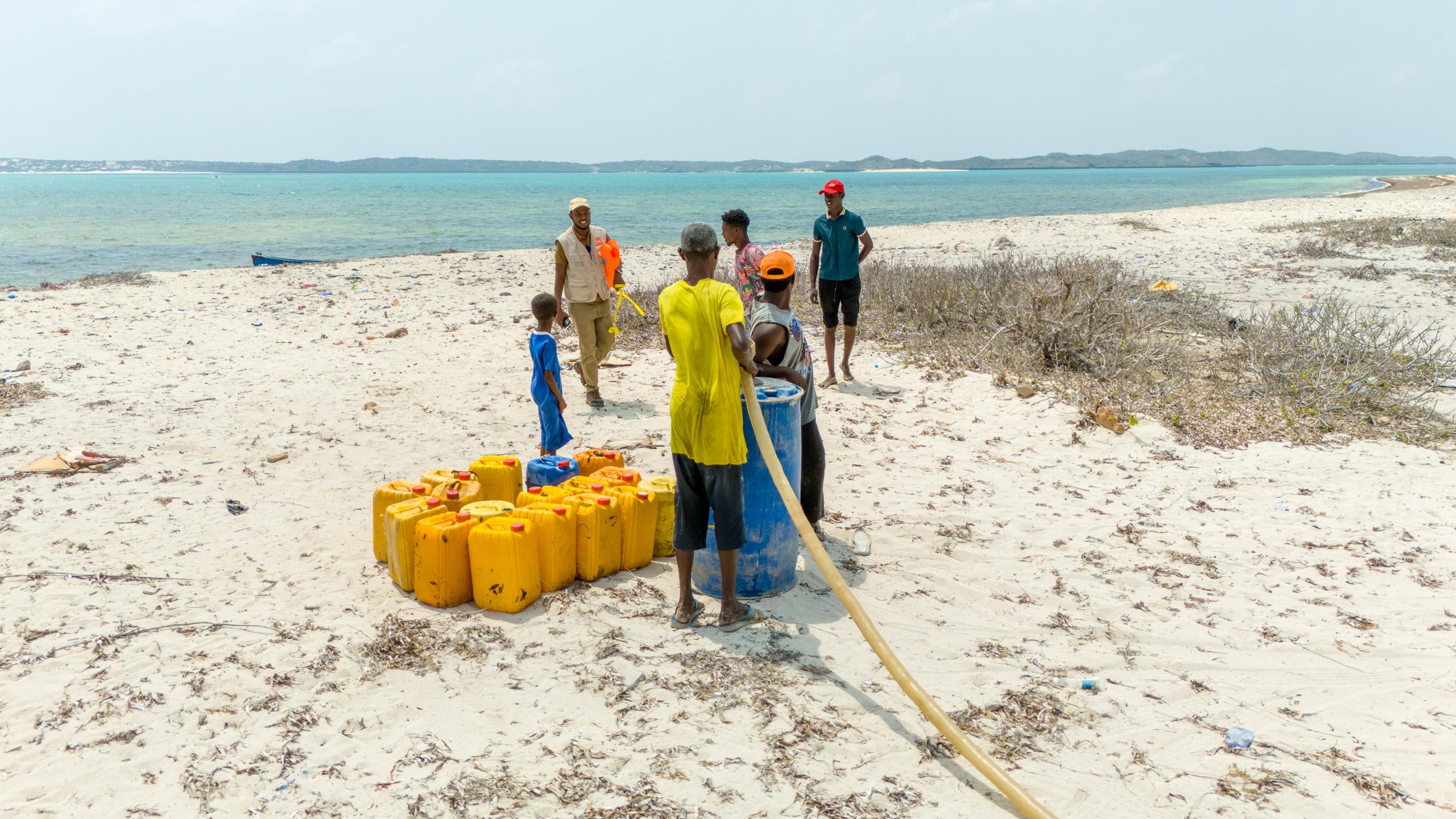
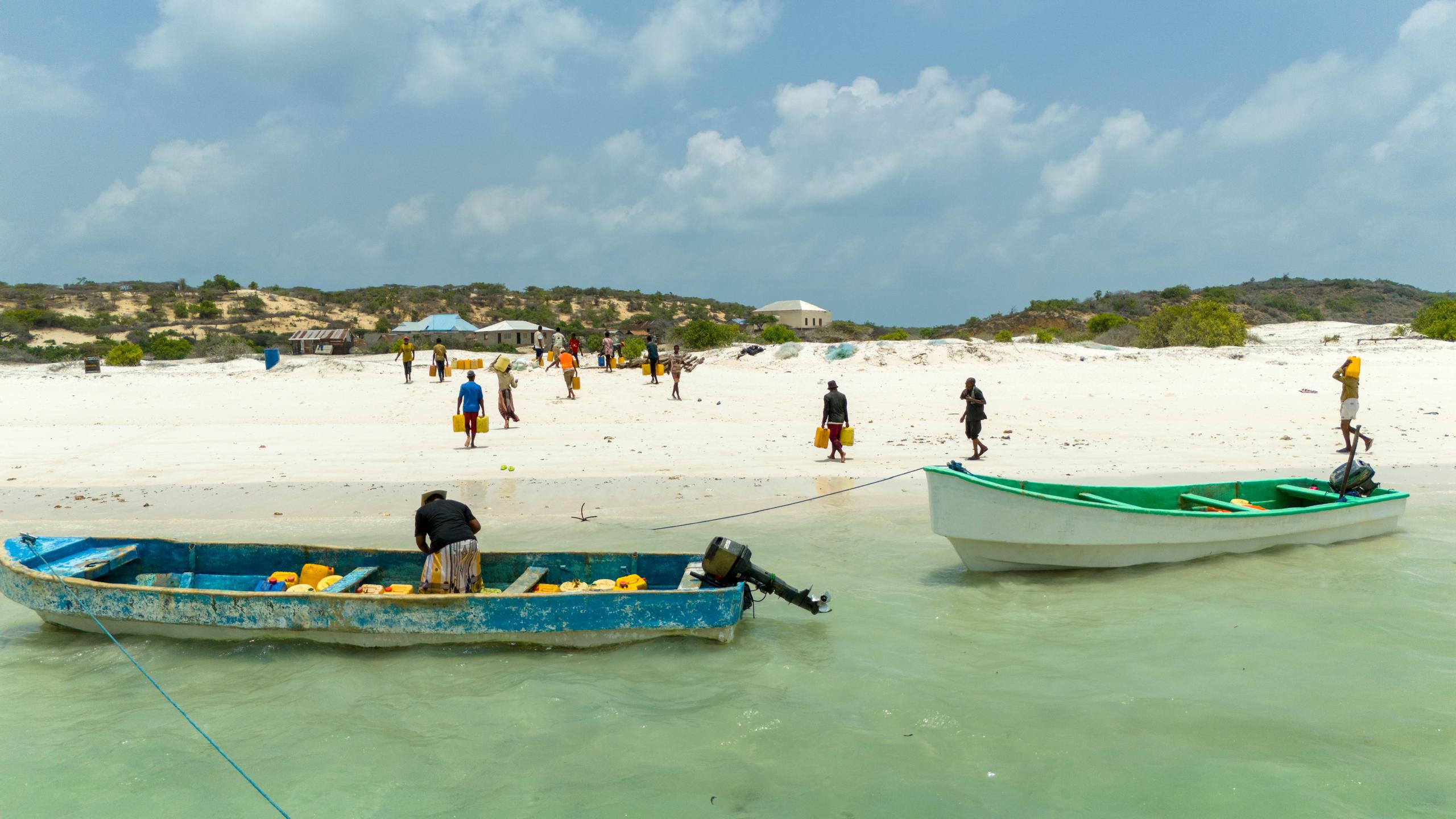
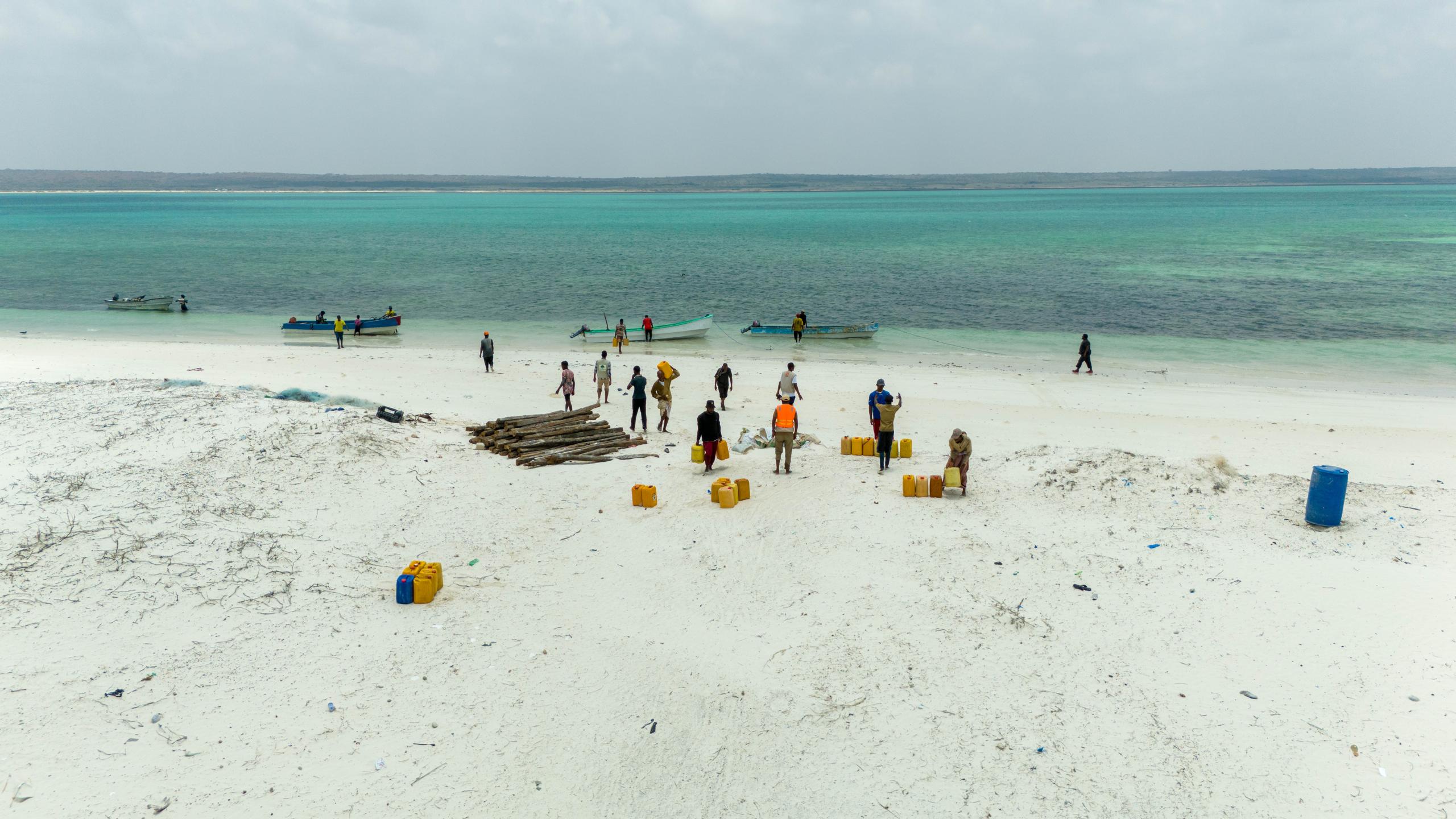
Here in Barkadda Shariifadda village, about 13 km west of Kismayo, Jubaland, on 16 March 2026, women wait for the arrival of a water trucking vehicle brought by an NGO from Kismayo. This is the only water the community can access to survive. | PHOTO/ABDULLAAHI HUSSEIN KILAS/ KAAB TV.Children carry jerrycans in Barkadda Shariifadda village, about 13 km west of Kismayo, Jubaland, while waiting for a water trucking vehicle brought by an NGO from Kismayo on 16 March 2026. This is the only water the community can access to survive. PHOTO/ABDULLAAHI HUSSEIN KILAS/ KAAB TV.Here in Barkadda Shariifadda village, about 13 km west of Kismayo, Jubaland, women wait for the arrival of a water trucking vehicle brought by an NGO from Kismayo on 16 March 2026. This is the only water the community can access to survive. | PHOTO/ABDULLAAHI HUSSEIN KILAS/ KAAB TV.Donkeys drink water in Ali Gaduudow village, west of Kismayo, after an NGO provided water trucking in mid-March. PHOTO/ABDULLAAHI HUSSEIN KILAS/ KAAB TV.In Galool Yar village, west of Kismayo, women queue to receive food donations brought by aid NGOs, as climate shocks and drought have left rural communities without food. Many have been forced to abandon their farms and livestock. PHOTO/ABDULLAAHI HUSSEIN KILAS/ KAAB TV.In Galool Yar village, west of Kismayo, women queue to receive food donations brought by aid NGOs, as climate shocks and drought have left rural communities without food. Many have been forced to abandon their farms and livestock. PHOTO/ABDULLAAHI HUSSEIN KILAS/ KAAB TV.In Galool Yar village, west of Kismayo, women receive food donations brought by aid NGOs, as climate shocks and drought have left rural communities without food. Many have been forced to abandon their farms and livestock. PHOTO/ABDULLAAHI HUSSEIN KILAS/ KAAB TV.This photo taken mid March shows a board sign marks the village of Galool Yar, about 12 km west of Kismayo. Most of the local community has been displaced as drought has left the area without water and wells dry. PHOTO/ABDULLAAHI HUSSEIN KILAS/ KAAB TV.Here in Kooyaama, a small fishing island community in the Indian Ocean, locals survive on water delivered by NGOs. These photos were taken in mid-March 2026. PHOTO/ABDULLAAHI HUSSEIN KILAS/ KAAB TV.Here in Kooyaama, a small fishing island community in the Indian Ocean, locals survive on water delivered by NGOs. These photos were taken in mid-March 2026. PHOTO/ABDULLAAHI HUSSEIN KILAS/ KAAB TV.
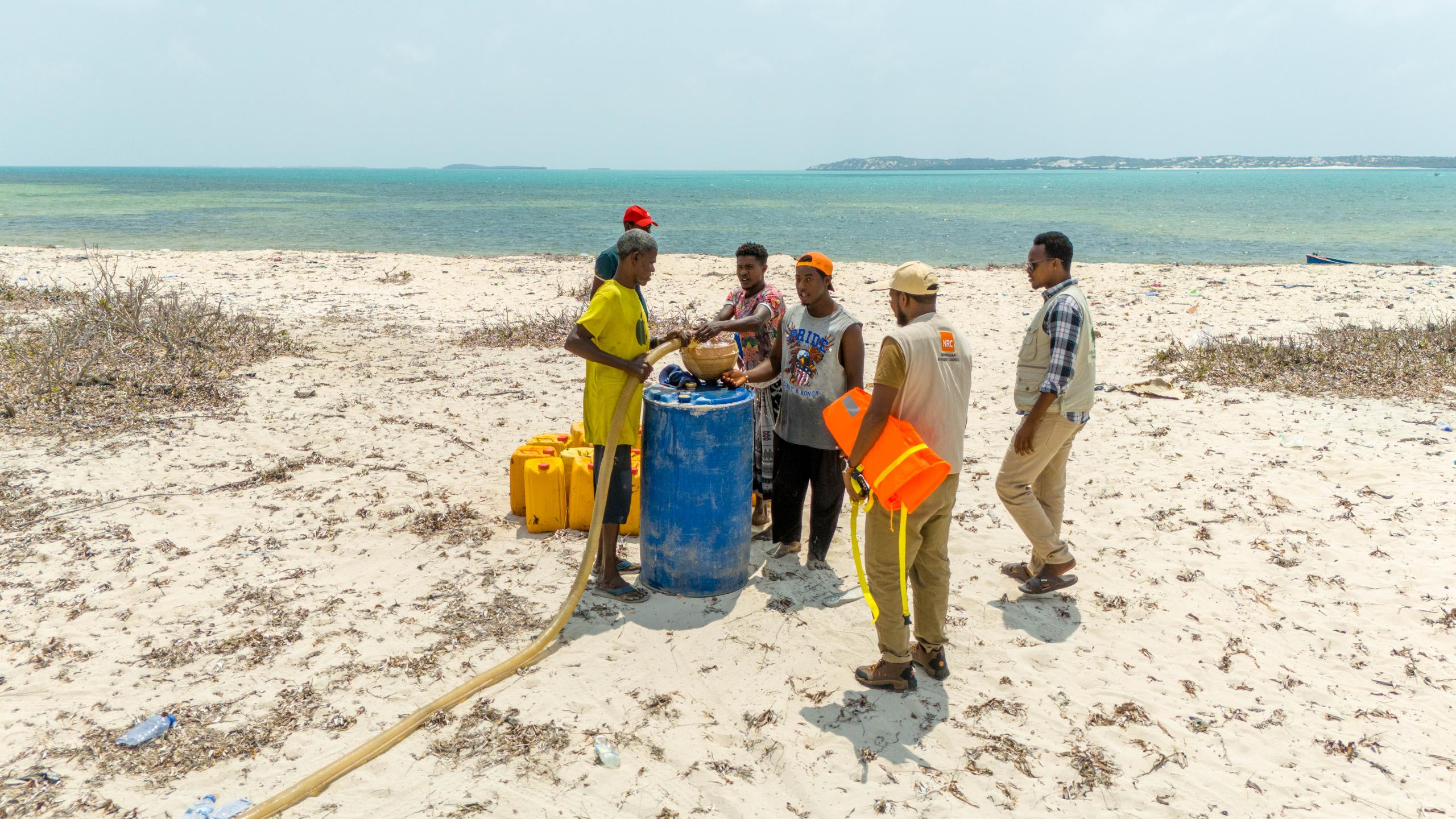
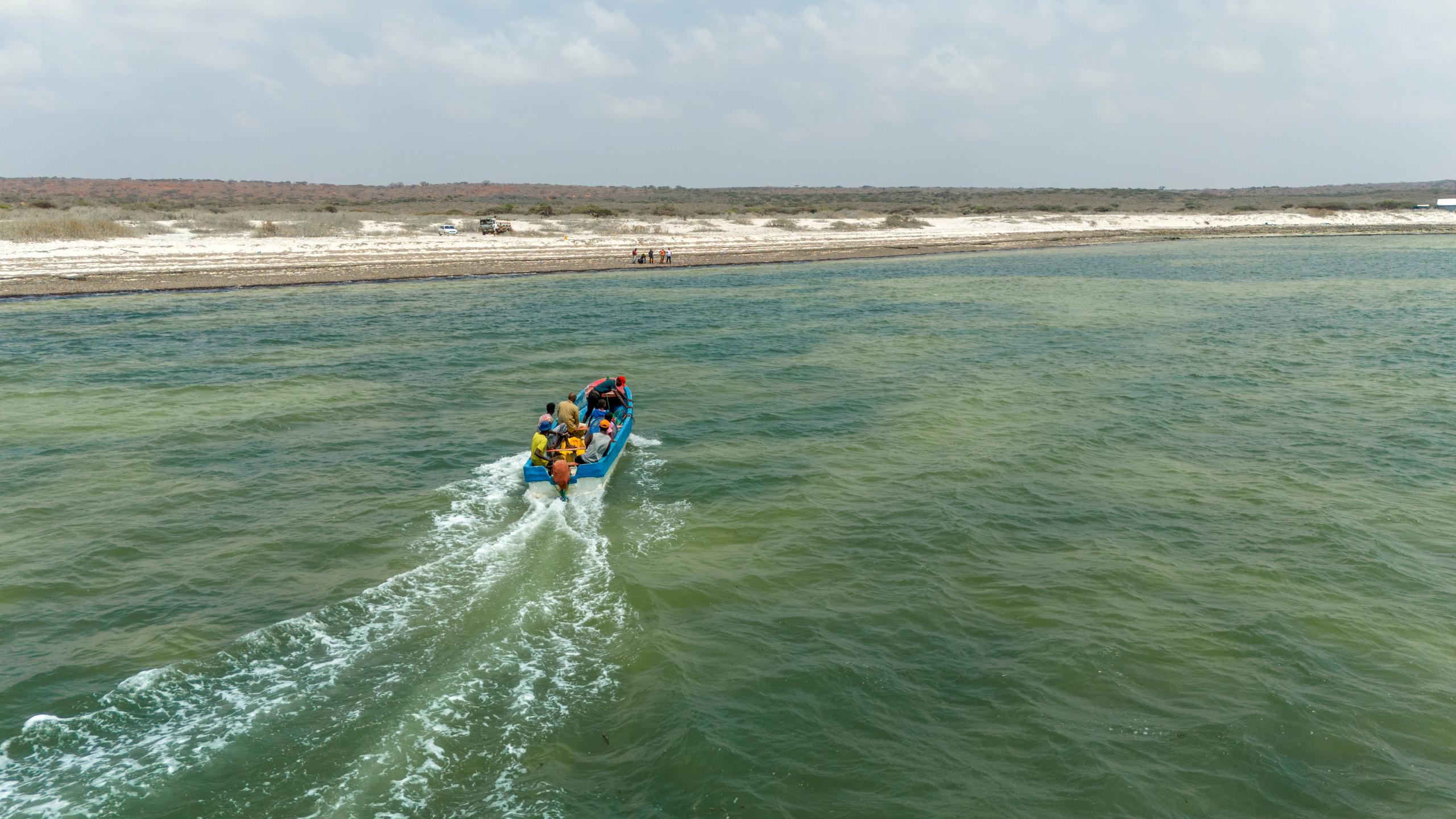
Here in Kooyaama, a small fishing island community in the Indian Ocean, locals survive on water delivered by NGOs. These photos were taken in mid-March 2026. PHOTO/ABDULLAAHI HUSSEIN KILAS/ KAAB TV.Here in Kooyaama, a small fishing island community in the Indian Ocean, locals survive on water delivered by NGOs. These photos were taken in mid-March 2026. PHOTO/ABDULLAAHI HUSSEIN KILAS/ KAAB TV.
Here in Kooyaama, a small fishing island community in the Indian Ocean, locals survive on water delivered by NGOs. These photos were taken in mid-March 2026. PHOTO/ABDULLAAHI HUSSEIN KILAS/ KAAB TV.Here in Kooyaama, a small fishing island community in the Indian Ocean, locals survive on water delivered by NGOs. These photos were taken in mid-March 2026. PHOTO/ABDULLAAHI HUSSEIN KILAS/ KAAB TV.
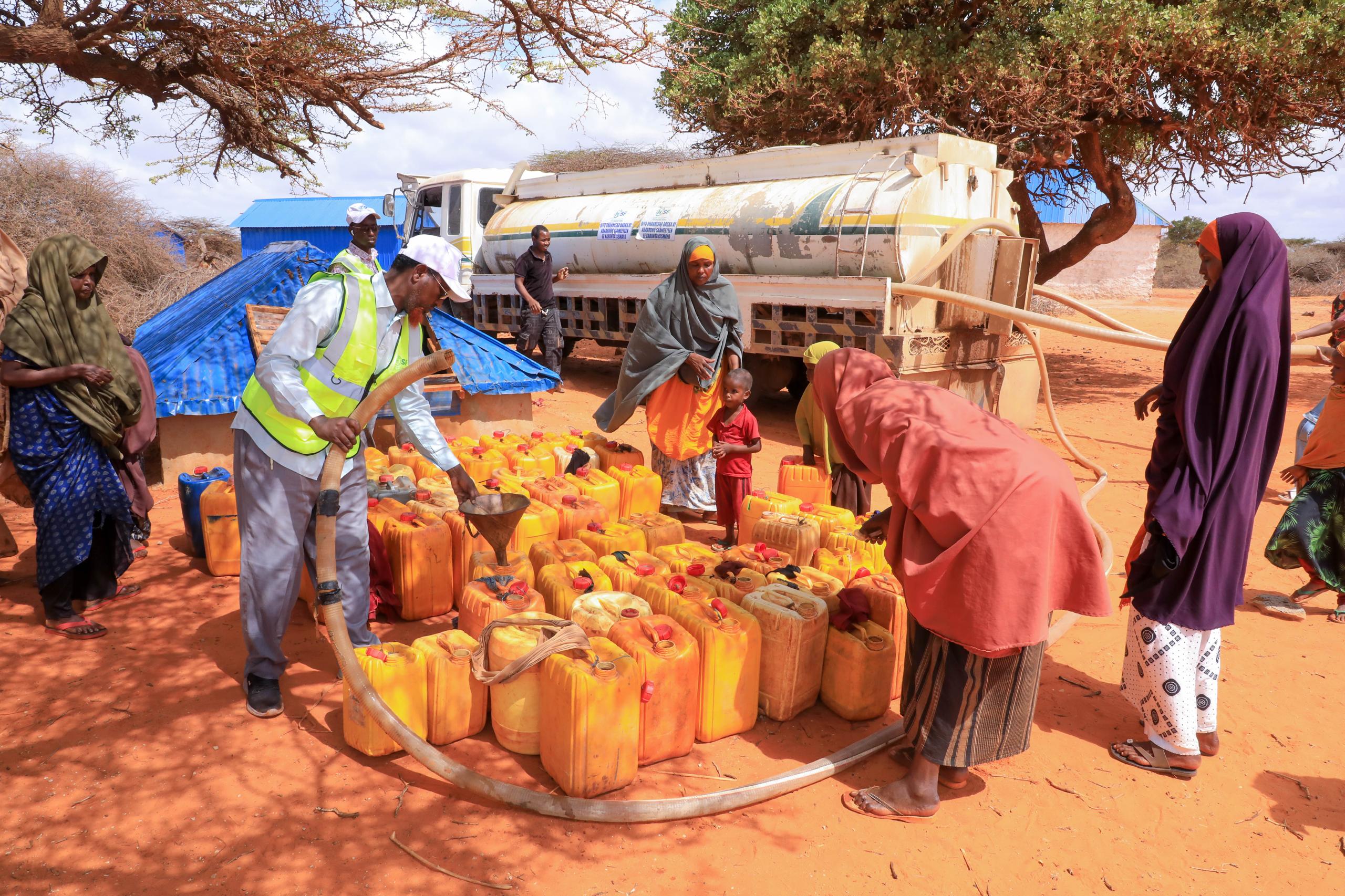
Women receive water delivered to their village in Ali Gaduudow, west of Kismayo, on 16 March 2026. PHOTO/ABDULLAAHI HUSSEIN KILAS/ KAAB TV.Here in Barkadda Shariifadda village, about 13 km west of Kismayo, Jubaland, people receive water brought by an NGO from Kismayo on 16 March 2026. This is the only water the community can access to survive. | PHOTO/ABDULLAAHI HUSSEIN KILAS/ KAAB TV.Here in Barkadda Shariifadda village, about 13 km west of Kismayo, Jubaland, people receive water brought by an NGO from Kismayo on 16 March 2026. This is the only water the community can access to survive. | PHOTO/ABDULLAAHI HUSSEIN KILAS/ KAAB TV.