

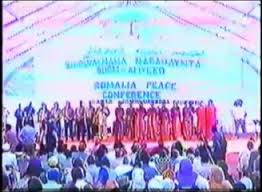

Djibouti (KAAB TV) – The town of Arta, Djibouti, is today hosting a one-day commemoration marking 25 years since the landmark 2000 Arta Peace Conference—the pivotal gathering that restored Somalia’s central government after nearly a decade of civil war and state collapse.
The ceremony is being opened by Djibouti’s President Ismaïl Omar Guelleh, who also hosted the original peace talks.
Somali President Hassan Sheikh Mohamud is attending alongside senior officials, former national leaders, and regional dignitaries.
Notable attendees include former Somali President Sheikh Sharif Sheikh Ahmed and former Prime Minister Hassan Ali Kheyre, both now prominent opposition figures.
The original Arta Conference, held from May to August 2000, brought together more than 2,000 Somali delegates—traditional elders, women’s groups, scholars, religious leaders, and diaspora representatives—in an unprecedented effort to rebuild national governance.
The conference resulted in the establishment of the Transitional National Government (TNG) and the election of Abdiqasim Salad Hassan as Somalia’s first president since 1991, restoring international recognition and a measure of statehood.
By the late 1990s, Somalia had endured nine years of fragmentation, famine, and militia warfare.
Earlier peace initiatives in Ethiopia and Kenya had largely focused on armed warlords rather than broader society. President Guelleh’s government adopted a new approach, emphasizing inclusivity, reconciliation, and grassroots participation.
Elders, civic leaders, businesspeople, and women were invited to lay the foundations for governance from the ground up.
The Arta process was organized around three main committees: reconciliation, constitutional, and political.
The reconciliation committee mediated inter-clan grievances, the constitutional committee drafted the Transitional National Charter, and the political committee managed leadership selection.
Representation was based on the 4.5 clan power-sharing system, which divided political positions among Somalia’s four major clans—Hawiye, Darod, Dir, and Digil–Mirifle—with minority groups sharing the remaining half portion.
While the model ensured inclusivity, it has remained controversial—praised for maintaining balance but criticized for entrenching clan divisions and slowing the transition toward democracy.
The conference culminated in August 2000 with the formation of the Transitional National Government.
Although the TNG controlled only parts of Mogadishu and was not recognized by Puntland or Somaliland, it symbolized renewed hope and demonstrated that dialogue could replace decades of armed conflict.
Arta’s legacy extends beyond its immediate outcomes. The inclusivity of the 2000 process inspired later peace talks in Eldoret and Mbagathi (2002–2004), which established the Transitional Federal Government and laid the groundwork for Somalia’s current federal system, formalized in 2012.
The 4.5 formula remains a defining feature of Somali politics—providing stability while continuing to spark debate over national identity and equal representation.
Hosting the Arta Conference elevated Djibouti’s role as a regional mediator and reinforced the potential of African-led diplomacy to achieve progress where international interventions had faltered.
As leaders gather once more in Arta, the commemoration serves as both reflection and renewal—a moment to assess 25 years of progress in rebuilding institutions, confronting Al-Shabaab, implementing federalism, and pursuing economic recovery through debt relief and integration with the East African Community.
The enduring question, however, remains the same as it was in 2000: can Somalia move beyond the constraints of clan-based politics and fulfill Arta’s promise of a peaceful, democratic, and united republic?