


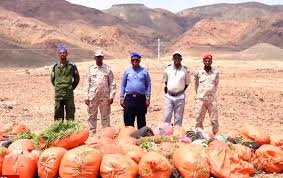


Djibouti (KAAB TV) – Authorities in Djibouti on Saturday destroyed more than 3,500 kilograms of illegally imported khat following a coordinated security operation aimed at curbing cross-border smuggling and cracking down on the unregulated trade of the stimulant plant.
The operation, which was carried out in the Ali Sabieh region near the southern border with Ethiopia, involved close collaboration between Djiboutian customs officials, border patrol units, and the national security forces.
According to officials, the intercepted shipment was en route to the capital, Djibouti City, where it was intended for illegal sale on the black market.
In a public demonstration of law enforcement, the confiscated khat was transported to a designated site and set ablaze in front of government representatives, law enforcement officers, and members of the local community.
The dramatic destruction served both as a symbolic gesture and a deterrent to traffickers operating in the region.
“The smuggling of khat and other contraband goods continues to pose a significant threat to our national economy,” said Ahmed Omar Elmi, a senior customs official present at the scene. “These illicit activities not only deprive the government of vital tax revenue but also undermine the formal market and fuel the growth of criminal networks.”
Khat, a leafy plant containing stimulant compounds, is widely consumed in parts of East Africa and the Arabian Peninsula.
While its use is legal in Djibouti under regulated conditions, the unlicensed import and distribution of the drug is strictly prohibited under national customs laws.
Officials warn that unchecked smuggling fosters corruption, facilitates other forms of trafficking, and creates health and social risks, especially when consumed without regulation.
Saturday’s seizure and destruction mark the latest in a series of intensified efforts by Djiboutian authorities to disrupt the flow of illegal goods across the country’s porous borders.
In recent months, the government has increased patrols, launched surveillance operations, and introduced stricter penalties for smugglers caught in violation of customs and trade regulations.
According to the Ministry of Interior, similar operations have been conducted in the regions of Dikhil, Tadjourah, and Obock, resulting in the confiscation and destruction of thousands of kilograms of contraband khat.
Authorities believe the majority of the smuggled product originates from neighboring Ethiopia, where the plant is widely cultivated and traded.
In a statement released Saturday evening, the Djibouti Customs Authority reaffirmed its commitment to protecting the integrity of the country’s borders and promoting lawful commerce.
“We are sending a clear message to traffickers: Djibouti will not tolerate illegal trade that harms our society and economy,” the statement read.
Local residents and community leaders have largely welcomed the government’s crackdown, noting the negative social consequences of khat abuse and the disruption caused by the black-market economy.
“This is a necessary step,” said Halima Warsame, a community health advocate in Ali Sabieh. “Many young people are drawn into this trade, and it has long-term consequences on families and communities.”
As part of its broader anti-smuggling strategy, the government is also working with regional partners and international agencies to strengthen border control measures, share intelligence, and provide training and resources to frontline enforcement personnel.
Officials say Saturday’s successful operation is a sign of progress but acknowledge that continued vigilance and public cooperation are essential to maintaining long-term security and economic stability.