


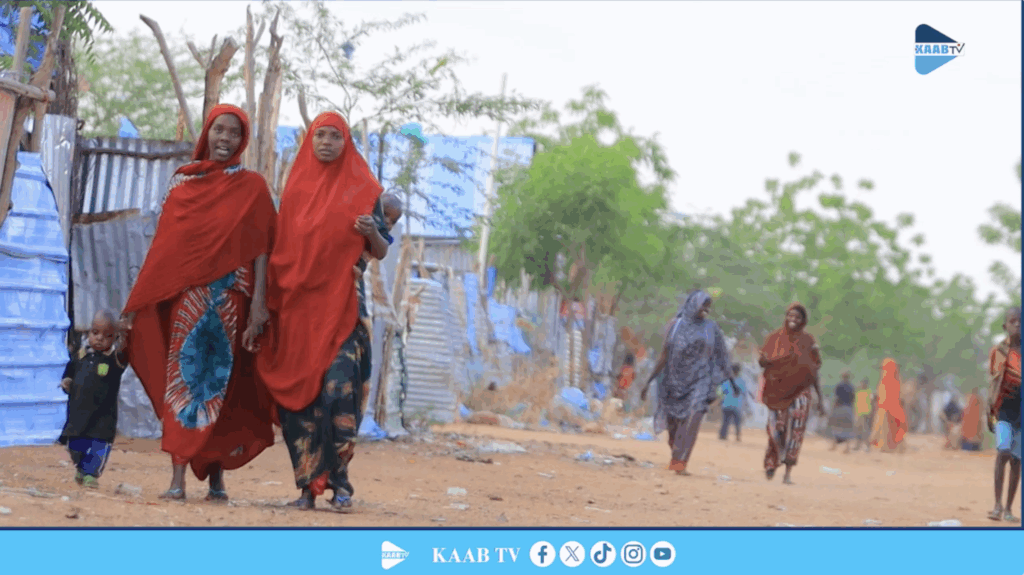


MOGADISHU (Kaab TV) – Thousands of internally displaced Somalis living in the Kabaase camp near Doolow are facing an escalating humanitarian crisis, with residents citing extreme food shortages, lack of healthcare, and growing despair due to aid suspensions and worsening security conditions.
Yarow Isaaq Iman, 52, who fled to the camp in 2011, described the situation as “hopeless,” saying displaced families are stuck in dire poverty with no access to employment or basic services.
“There are no jobs, no development — the general situation is very bad,” Yarow told Kaab TV.
The crisis in Kabaase is part of a broader displacement emergency across Somalia.
According to the United Nations, more than 3.8 million people are currently displaced within the country, driven by conflict, drought, and insecurity.

Residents say conditions in the camp have deteriorated further following recent political tensions and international funding cuts.
Magaalo Aadan Ali, 38, said the Federal Government’s decision to suspend domestic flights to Doolow—amid a dispute with the Jubaland administration—has deepened the isolation of vulnerable communities.
“The situation worsened after the U.S. government cut humanitarian aid, particularly assistance from USAID,” said Magaalo. “We are in urgent need of help. Young people here have no income or opportunities.”
Ali Ibrahim Ahmed, 43, who fled from the Bakool region in 2016, said he has not received any aid in four years.
“When the U.S. pulled its support, food shortages became even more severe,” he said.
Aid workers and community leaders report growing concerns over malnutrition, especially among children.
Yarow noted that many school-aged children have been forced to drop out due to hunger.
“Even children who used to attend school have returned home — they’re too hungry to continue learning. There’s no food at all,” he said.
Compounding the crisis is the deteriorating security situation around Doolow.
Al-Shabaab militants maintain a presence in surrounding areas, restricting access and undermining the safety of civilians.
With hope diminishing, some displaced families have begun making the risky journey across the border into Ethiopia, seeking refuge in camps like Melkadida.
The residents of Kabaase are now calling on both the Somali government and the international community to restore aid flows and establish long-term resettlement and recovery plans.
“We don’t just need emergency food,” said Magaalo. “We need lasting solutions — a future.”