


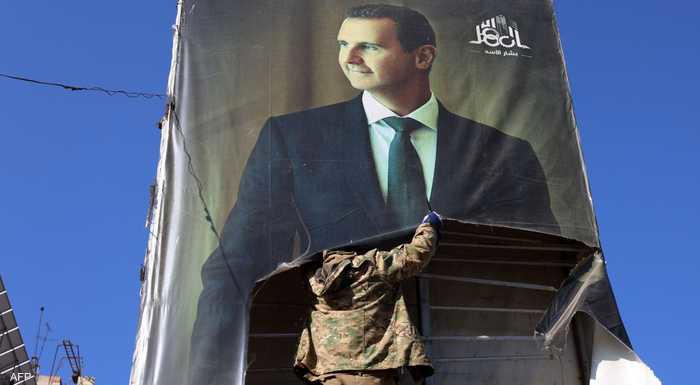


A criminal court in Damascus has reportedly issued a landmark ruling against former Syrian President Bashar al-Assad, sentencing him to death in absentia along with several senior figures from his former government.
The ruling represents one of the most significant legal steps taken by Syria’s new authorities against senior officials associated with the former regime.
It comes after years of civil war, political repression and widespread allegations of serious human rights violations during Assad’s rule.
Because Assad and the other defendants are not in Syrian custody, the death sentences were issued in absentia, meaning the court reached its decision while the accused were outside the country and unable to appear before it.
A major step toward accountability
The case is particularly significant because Bashar al-Assad ruled Syria for nearly a quarter of a century and remained at the center of the country’s political and military system throughout the civil war.
His government faced longstanding accusations of arbitrary detention, torture, extrajudicial killings and other abuses against civilians and political opponents.
International investigations and human rights organizations have previously documented extensive allegations of violations committed by forces linked to the former government.
The Damascus court reportedly based its ruling on charges including murder and crimes against humanity, making the case an important test of how Syria’s new authorities intend to address alleged crimes committed during the former government’s rule.
The decision could also establish a precedent for prosecuting other senior officials, military commanders and security figures who were closely associated with the former system.
Assad and his brother remain outside Syria
The biggest obstacle to the ruling is that Assad is not under the control of the Syrian judiciary.
Bashar al-Assad and his brother, Maher al-Assad, left Syria following the collapse of the former government and have reportedly been living in Russia.
Their absence means that the court’s decision and its actual enforcement are two separate issues. While the Syrian judiciary can issue a sentence, carrying it out would require the defendants to be brought under Syrian jurisdiction.
This could create a major diplomatic challenge, particularly if Russia continues to provide protection to former Syrian officials.
The Syrian authorities could therefore face difficult negotiations over extradition or the transfer of suspects if they seek to enforce the sentences.
What does the ruling mean for Syria?
The verdict could have major implications for Syria’s ongoing transition.
For victims of the former government’s alleged abuses and their families, the ruling may be viewed as an attempt to provide legal accountability after years in which many cases could not be brought before an independent court.
It could also strengthen calls for a broader transitional justice process, including investigations into alleged abuses, identification of victims, preservation of evidence and prosecution of individuals accused of serious crimes.
However, transitional justice is not limited to punishment. Syria’s new authorities will also face pressure to ensure that prosecutions are conducted through credible legal procedures and that defendants receive basic rights guaranteed under law.
This will be important because the legitimacy of the new judicial system could depend heavily on whether such cases are viewed as genuine efforts to establish accountability rather than political retaliation against members of the former government.
A difficult balance between justice and reconciliation
The Assad case also highlights one of the central challenges facing post-war Syria: how to pursue justice while preventing renewed political and social divisions.
Thousands of Syrians were killed or disappeared during the conflict, while millions were displaced inside and outside the country. Families of victims have spent years seeking information about relatives who disappeared or died during the war.
For these families, accountability remains a central demand.
At the same time, Syria’s new authorities must decide how broadly prosecutions should be conducted and how to deal with former officials and security personnel who were not directly responsible for the most serious crimes.
A process perceived as collective punishment could deepen divisions, while a process that fails to prosecute those accused of the most serious abuses could leave victims without justice.
The question of enforcement
The most immediate question following the verdict is whether Syria can ever bring Assad and other senior defendants before its courts.
A death sentence issued in absentia does not automatically mean that the punishment can be carried out. The accused would first have to be arrested and placed under the jurisdiction of the Syrian authorities.
If Assad remains in Russia, Damascus would face a significant diplomatic obstacle in seeking his return.
The situation could therefore turn the case into a wider test of relations between Syria and Russia, particularly because Moscow was one of Assad’s most important international supporters during the Syrian civil war.
A new chapter in Syria’s transitional justice process
The Damascus ruling opens a new chapter in efforts to hold senior figures from Syria’s former government accountable.
Its broader importance, however, will depend on what happens next. The Syrian authorities will need to demonstrate that the judicial process is transparent, evidence-based and consistent with the rule of law while also addressing the demands of victims and their families.
The verdict may provide an important symbolic step for Syrians seeking accountability, but the practical enforcement of the sentence remains uncertain as long as Assad and other senior defendants remain outside the reach of Syrian authorities.
Ultimately, the case will test whether Syria’s new judicial system can balance accountability, due process and national reconciliation as the country attempts to move beyond decades of authoritarian rule and years of devastating conflict.