




Mogadishu (KAAB TV) – The International Crisis Group (ICG) has released a comprehensive new report urging the administration of U.S. President Donald Trump to fundamentally reorient Washington’s policy toward Somalia.
The Brussels-based think tank calls for a departure from the current military-dominated approach and a renewed focus on strengthening governance, promoting political reforms, and supporting sustainable institution-building.
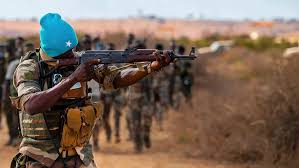
In its report, titled “Retooling the Trump Administration’s Somalia Policy,” the ICG argues that the United States’ heavy reliance on drone strikes, air campaigns, and support for Somalia’s elite Danab (“Lightning”) commando unit has failed to bring about lasting peace or stability.
Despite significant military investments and years of counterterrorism operations, the report notes that al-Shabaab, the al-Qaeda-linked militant group, continues to control large portions of rural southern Somalia and frequently carries out deadly attacks in the capital, Mogadishu.
According to the ICG, Washington’s security-first strategy has unintentionally undermined Somalia’s fragile federal government by diverting resources and attention away from critical political and institutional reforms.
The result, the report warns, has been persistent insecurity, weak governance, and growing political fragmentation that al-Shabaab has exploited to entrench its influence in rural communities and within local economies.
The report recommends that the U.S. adopt a comprehensive, long-term strategy that blends security assistance with robust political, developmental, and institutional engagement. Specifically, it calls for Washington to:
Support stronger local governance and help Somali federal member states deliver essential services and enhance transparency.
Empower Somali civil society and independent media to promote accountability, counter extremist narratives, and foster public trust in government.
Encourage inclusive national dialogue among Somalia’s political stakeholders to address long-standing disputes between the federal government and regional administrations.
Provide incentives for political and economic reform, while maintaining measured pressure to discourage corruption and abuse of power.
Coordinate closely with international and regional partners, including the African Union (AU), the Intergovernmental Authority on Development (IGAD), and neighboring countries such as Kenya, Ethiopia, and Djibouti, to prevent Somalia from becoming a battleground for competing foreign interests.
The ICG cautions that a continued overreliance on military tools — particularly drone strikes and special operations raids — risks fueling corruption, eroding public confidence, and exacerbating socio-economic grievances that drive extremist recruitment.
It also emphasizes that short-term counterterrorism victories can prove hollow without parallel progress in governance, reconciliation, and institution-building.
The report concludes that the United States should redefine success in Somalia — not as the mere military defeat of al-Shabaab, but as the creation of a functioning, legitimate, and self-sustaining Somali state.
Such a state, the report argues, would be capable of maintaining peace, delivering services to its citizens, and contributing to stability and economic cooperation across the Horn of Africa.
By shifting from a narrowly militarized policy to one that prioritizes political inclusivity, accountability, and local empowerment, the International Crisis Group believes the U.S. can help Somalia move toward the enduring peace and stability that decades of foreign intervention and conflict have so far denied it.