


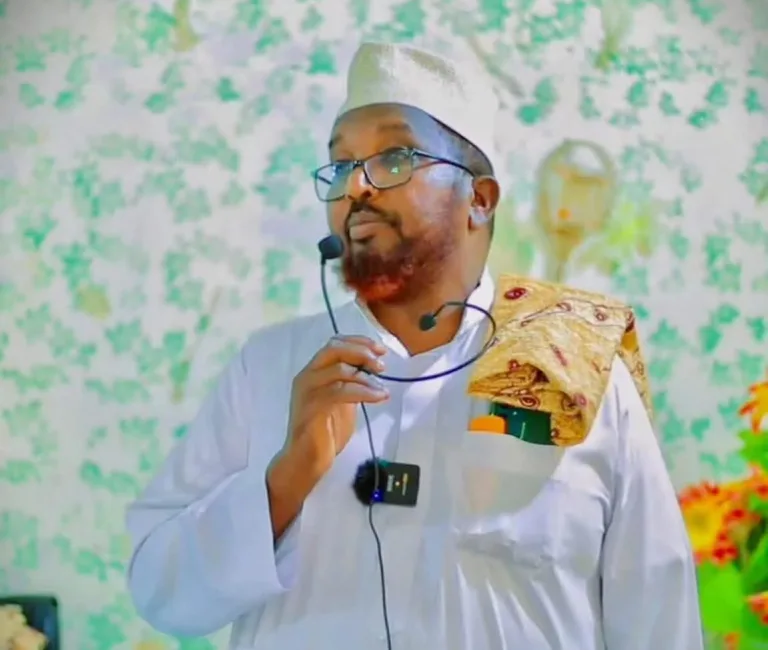


Badha (KAAB TV) – A U.S. airstrike conducted on September 13, 2025, in Somalia’s northern Sanaag region has sparked widespread controversy and confusion after local residents claimed that the person killed was not a militant, but a well-known community elder.
Meanwhile, officials from United States Africa Command (AFRICOM) and the Somali government maintain that the strike targeted a high-level arms dealer affiliated with extremist groups.
AFRICOM confirmed carrying out what it described as a “precision strike” in the Elbuh district, aimed at an unnamed “al-Shabaab arms dealer.” However, the lack of transparency surrounding the identity of the target has fueled anger and distrust among local communities.
A Respected Elder or a Militant Facilitator?
Residents of Elbuh district identified the deceased as Aqil Omar Abdullahi Ali, a highly respected traditional chief known for his role in mediating local disputes and preserving community cohesion. Community leaders and elders condemned the airstrike, calling it an affront to their traditions and dignity.
“We lost a peaceful man—a symbol of wisdom and justice,” said Nabadon Hussein Haji Yusuf (Indha-Deero), another elder from Elbuh, in an interview with BBC Somali. “He was not someone connected to any armed groups. His death has left the entire region in shock.”
Despite repeated inquiries from BBC Somali, AFRICOM declined to confirm whether the individual killed was indeed Aqil Omar Abdullahi Ali, stating that they had no further information beyond what was published in their press release.
When pressed about the possibility of civilian casualties, AFRICOM said such incidents are “closely monitored,” and findings are typically included in their quarterly public reports. However, they did not confirm whether an investigation is underway regarding this specific strike.
Somali Government Claims Militant Ties
A Somali government official, who spoke on condition of anonymity, told the BBC that the strike was part of a joint counter-terrorism effort between the Somali National Intelligence and Security Agency (NISA) and the United States.
The official alleged that Aqil Omar Abdullahi Ali was a senior figure involved in facilitating arms transfers to both al-Shabaab and ISIS, and had suspected connections to the Houthi movement in Yemen.
According to the official, the airstrike was preceded by weeks of surveillance and intelligence gathering, and the operation was executed with precision to avoid civilian harm.
Despite this, the Somali federal government has not released a formal statement confirming the identity of the target or providing additional details.
Al-Shabaab Denial and Community Outcry
Adding to the confusion, al-Shabaab publicly denied that Omar Abdullahi Ali was a member of their organization, a rare statement from the group regarding individuals killed in U.S. airstrikes.
Their denial, combined with the community’s strong defense of the deceased, has deepened doubts about the true identity and affiliations of the person targeted.
The situation raises serious questions about the transparency and accountability of U.S. airstrikes in Somalia, particularly in regions where distinguishing between civilians and combatants can be complex and fraught with error.
Lack of Clarity Fuels Tensions
The key question remains: Why have AFRICOM and the Somali government not officially named the target, especially amid such public scrutiny? Without a clear and unified explanation, the incident is likely to remain a flashpoint for tension in the region.
So far in 2025, AFRICOM has announced 55 airstrikes across Somalia—31 of them targeting ISIS fighters in the mountains of Puntland, and the rest targeting al-Shabaab operatives.
While U.S. airpower is considered a critical tool in the fight against terrorism in Somalia, strikes that result in disputed casualties risk undermining local support and fueling anti-American sentiment.
A Controversy That Demands Answers
Until AFRICOM or the Somali government provide definitive evidence identifying the target and clarifying the intelligence behind the strike, the death of Aqil Omar Abdullahi Ali will remain a deeply controversial and painful episode for the people of Sanaag.