


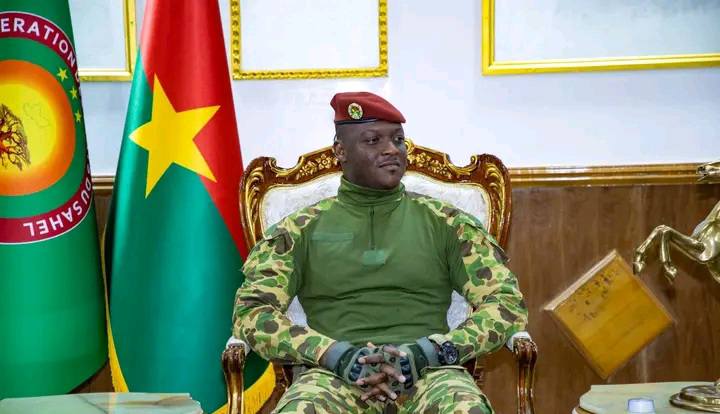


NAIROBI (KAAB TV) — Burkina Faso’s military-led government has officially dissolved the country’s Independent National Electoral Commission (CENI), describing it as a “financial burden” and a potential channel for foreign influence. The announcement, made through a broadcast on state-run RTB TV, marks yet another significant shift under the leadership of Captain Ibrahim Traoré, who seized power in a coup in September 2022.
According to the new directive, future elections will be organized directly by the Ministry of Interior. This decision effectively centralizes electoral oversight within the military-led administration, raising fresh concerns about transparency and democratic accountability.
Minister of Local Government Administration Emile Zerbo defended the move, revealing that the electoral commission was allocated approximately $870,000 annually. He claimed the dissolution would reduce “external interference” in Burkina Faso’s electoral affairs and increase national sovereignty over the democratic process.
“This decision will strengthen our independent control over the electoral process and reduce foreign interference,” Zerbo told state media, referencing what he described as “alien” influence over domestic governance structures.
A Lengthened Road to Democracy
Initially, elections were anticipated to take place in 2024 as part of a transitional roadmap to civilian rule. However, Traoré’s military council extended the transition period by five more years — until July 2029 — effectively enabling the junta leader to remain in power and potentially run in the next presidential election.
This extension has drawn criticism from opposition groups, civil society organizations, and international observers, who accuse the government of undermining democratic progress under the guise of national security concerns.
Shifting Alliances and Rising Instability
Captain Traoré and his government came to power citing the failure of the previous civilian administration to combat a growing jihadist insurgency. Since the coup, the junta has dramatically shifted Burkina Faso’s foreign alliances, cutting ties with its former colonial ruler France and turning instead to Russia for military and logistical support.
Human rights organizations, however, allege that the military has used its broadened authority to crack down on dissent. Reports have surfaced of abuses against civilians, the repression of political opposition, and increasing limits on press freedom.
Security remains a central issue. In the first half of 2025 alone, the jihadist coalition known as Jama’at Nusrat al-Islam wal-Muslimin (JNIM) claimed responsibility for more than 280 attacks across the country — nearly double the number recorded during the same period in 2024. This alarming trend has raised serious questions about the effectiveness of the military’s strategy and its long-term capacity to restore order.
As Burkina Faso navigates its complex political and security landscape, observers warn that the continued centralization of power and the erosion of democratic institutions could have lasting consequences for both governance and regional stability.