


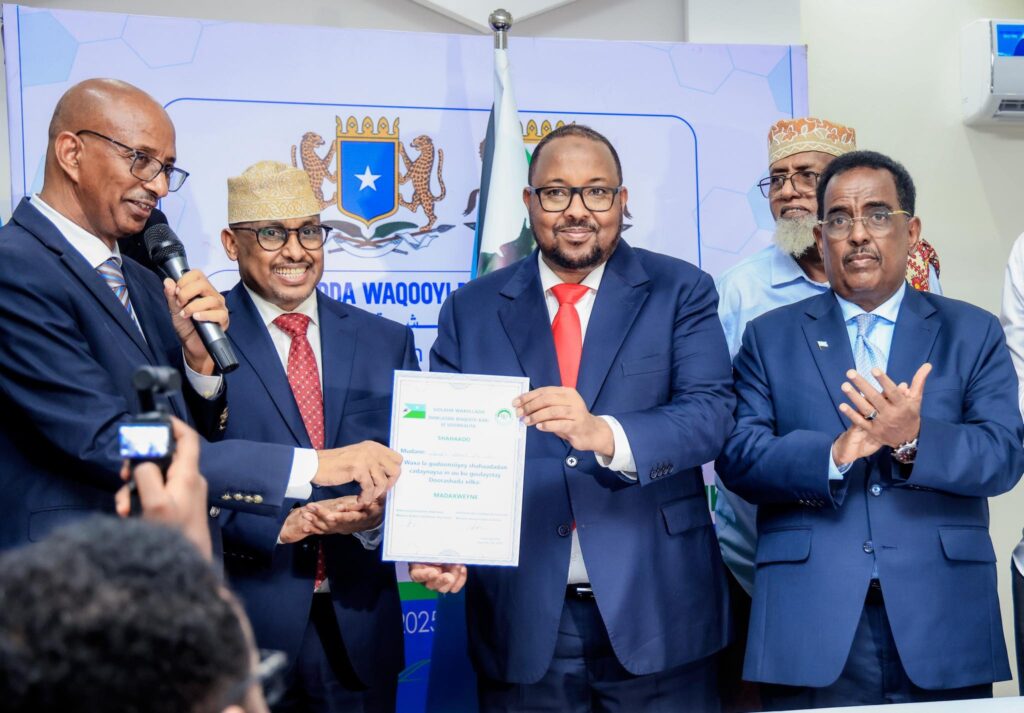


LAASCAANOOD (Kaab TV) – The newly declared Northeast State of Somalia has re-elected Abdukadir Ahmed Aw-Ali “Firdhiye” as its president, following a turbulent vote in Laascaanood on Saturday, August 30, that has been overshadowed by reports of massive vote-buying.
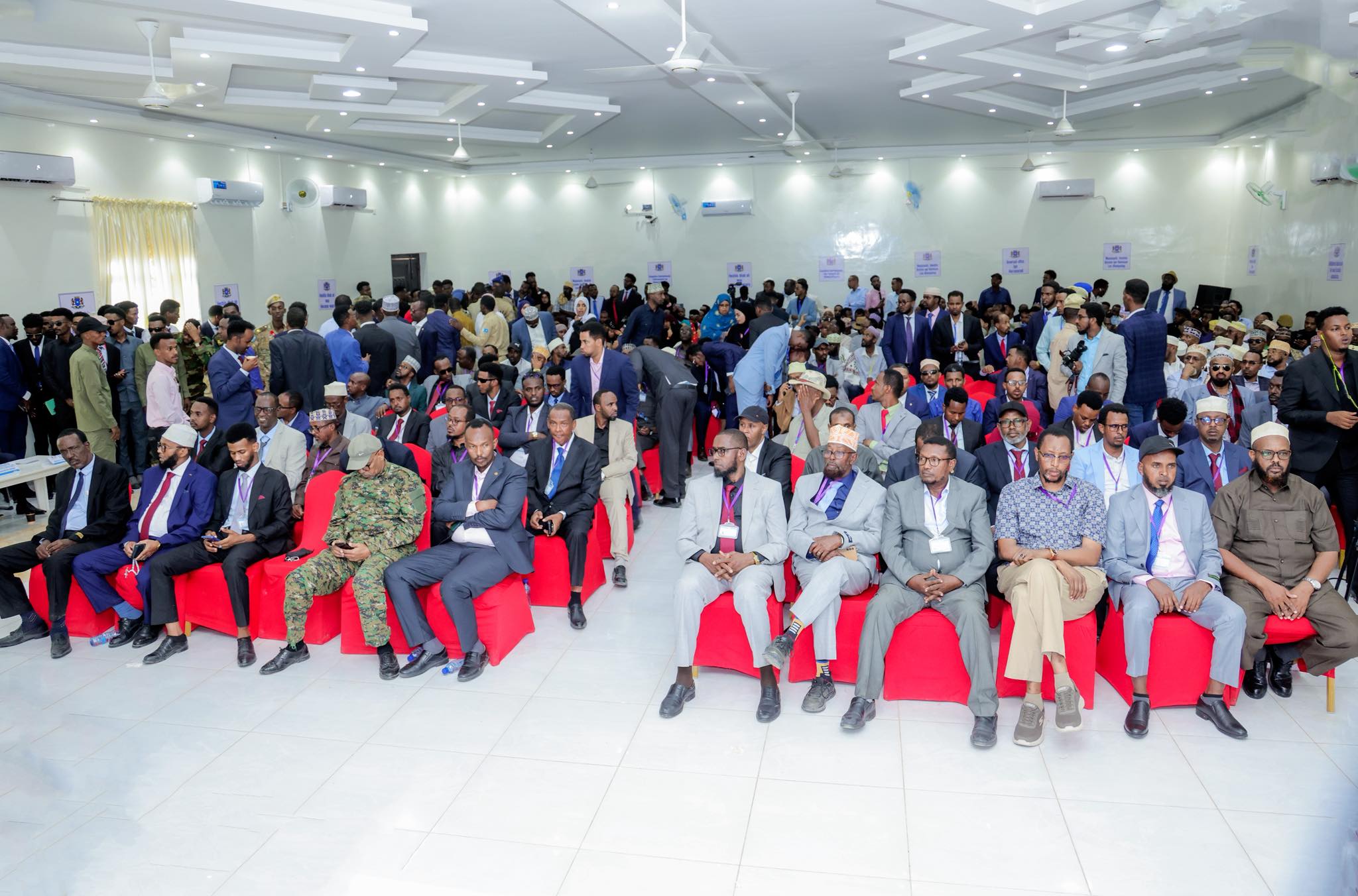
Firdhiye, who previously headed the SSC-Khaatumo administration before it was rebranded as Northeast State, secured 62 votes in the second round of balloting by the 83-member regional parliament, whose MPs were handpicked by clan elders.
His main challenger, Abdirisak Khalif—a former Somaliland parliamentary speaker and prominent Dhulbahante politician—walked out of the hall during the second round in protest.
Khalif, who had garnered 20 votes in the opening round, rejected the process as illegitimate.
A third contender, ex-planning minister Jamal Mohamed Hassan, picked up 15 votes in the first round but later threw his weight behind Firdhiye, tipping the balance further in the incumbent’s favor.
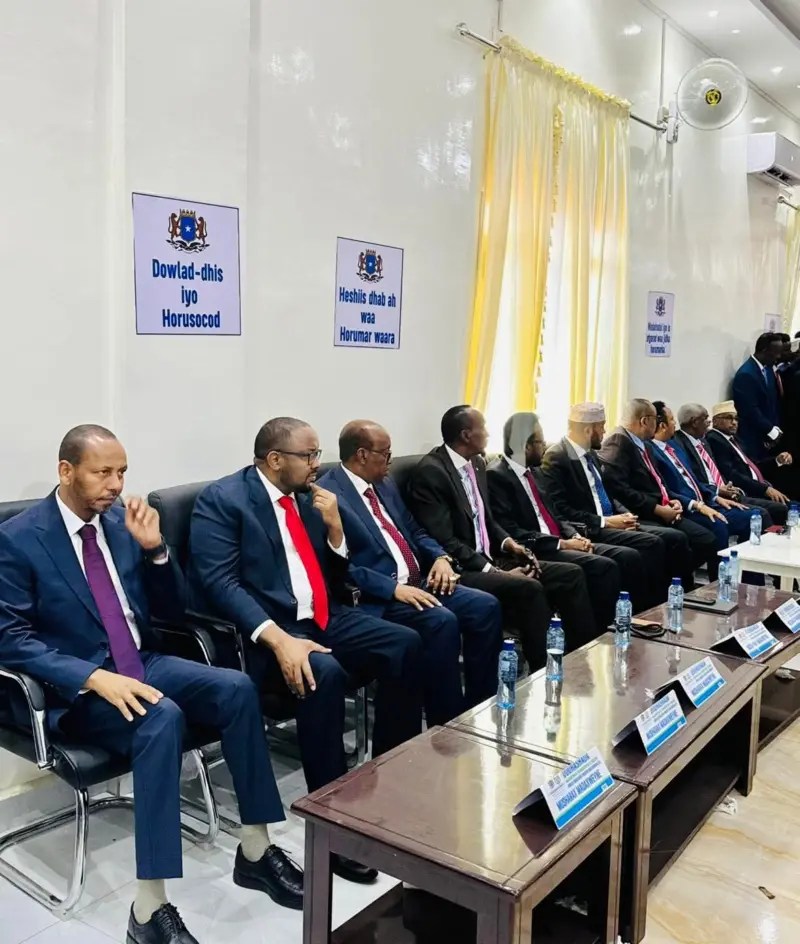
In the vice-presidential race, Firdhiye’s ally Abdirashid Yusuf Jibril, a former speaker of Puntland’s parliament who defected after losing his seat, won overwhelmingly with 65 votes.
Jibril hails from Sanaag, a disputed region between Puntland and Somaliland, though influential clan elders there have already distanced themselves from the new administration.
Both Puntland and Somaliland have condemned the creation of the Northeast State. Somaliland maintains that Laascaanood falls within its territory, while Puntland insists the people of Sool and Sanaag remain part of its jurisdiction.
President Hassan Sheikh Mohamud and Prime Minister Hamza Abdi Barre quickly congratulated Firdhiye, promising federal support for his administration.
A Vote Drenched in Cash
Investigations by Kaab TV revealed that nearly all candidates distributed money to MPs in an attempt to secure votes, with payments ranging from $15,000 to $30,000 per lawmaker.
Firdhiye was identified as the biggest spender, handing out between $25,000 and $30,000 to around 60 MPs. Multiple sources confirmed that the federal government flew in $3 million in cash to Laascaanood to strengthen his campaign.
By some estimates, Firdhiye’s spending totaled at least $1.65 million.
Abdirisak Khalif reportedly paid about $20,000 each to 50 MPs, or roughly $1 million in total. He is believed to have received backing from Puntland, allies of former president Mohamed Farmaajo, and funds traced to a Gulf country.
Jamal Mohamed Hassan, who had limited backing, allegedly offered some MPs $5,000 each before aligning himself with Firdhiye and the federal government. In return, insiders say, he was promised a future political post, while his wife retained her ambassadorial post in China.
Mohamed Yusuf, a businessman and brother to the owner of the HASS Petroleum, is said to have spent about $750,000, giving $15,000 each to nearly 50 MPs. He won just 8 votes and was eliminated in the first round.
Associates of Yusuf’s campaign say he is now demanding refunds from MPs who failed to support him—a tactic not unprecedented in Somalia’s money-driven politics, where failure to deliver on “paid-for” votes has at times led to threats or violence.
One of the new MPs of the Northeast Somalia State posted photos of cash in his hands as a show-off following the hugely costly presidential election in Laascaanood last week.
The election involved heavy bribes given to MPs by the five candidates contesting for the regional… pic.twitter.com/NPDygmVq0o
— Kaab TV (@KaabTV) September 4, 2025
Mogadishu’s 2026 Calculations
Analysts argue that the federal government’s push to establish the Northeast State is tied directly to President Hassan Sheikh Mohamud’s re-election strategy for 2026.
By shifting the federal parliamentary elections for Sool and Sanaag from Puntland to Laascaanood, Mogadishu could tilt future voting blocs in its favor. Such a move, however, risks igniting new disputes and could heighten tensions in the run-up to the next national polls.
For now, Firdhiye’s re-election tightens Mogadishu’s grip on Laascaanood—but it may also deepen political fractures across Somalia’s already fragile federal system.