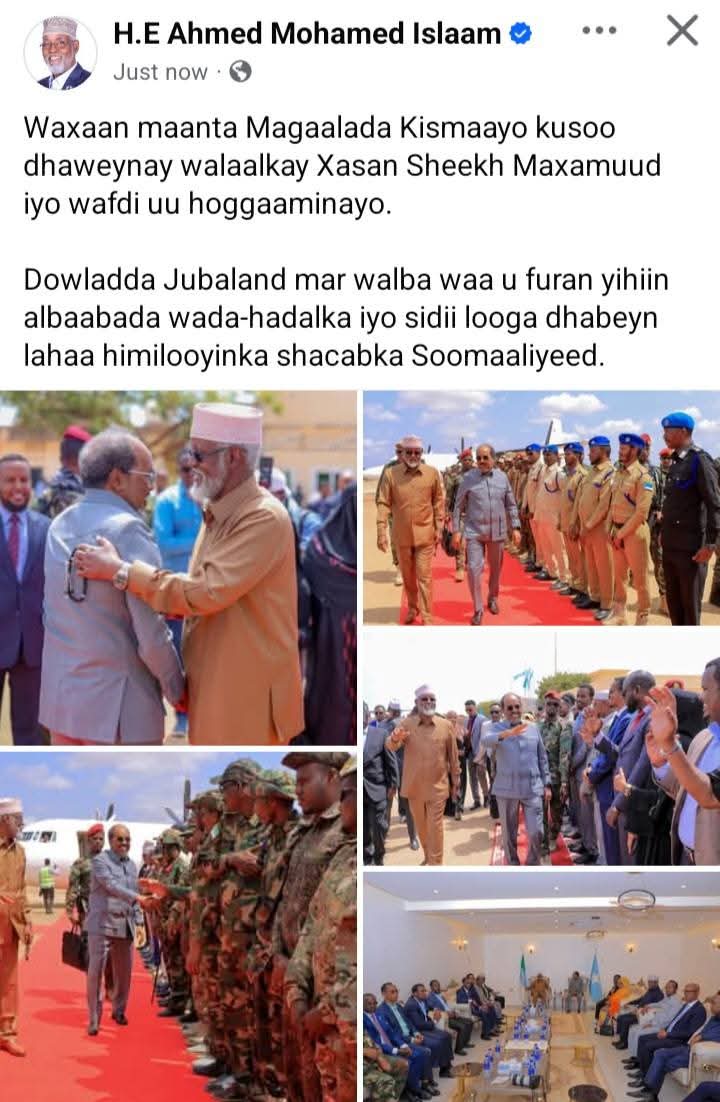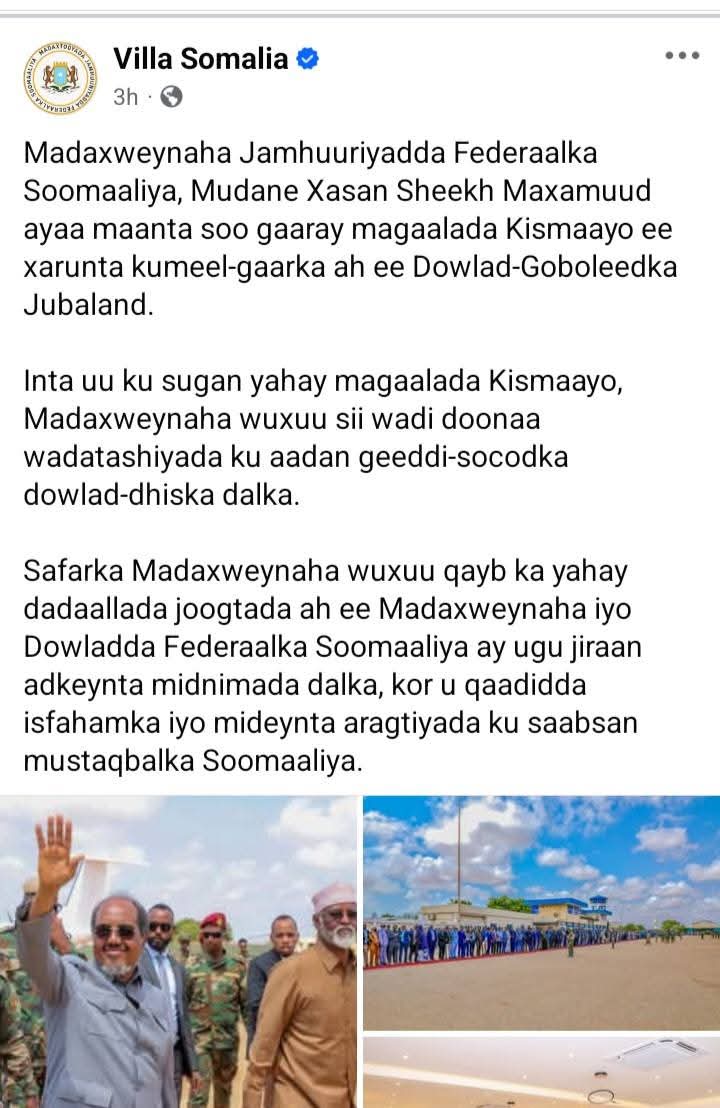

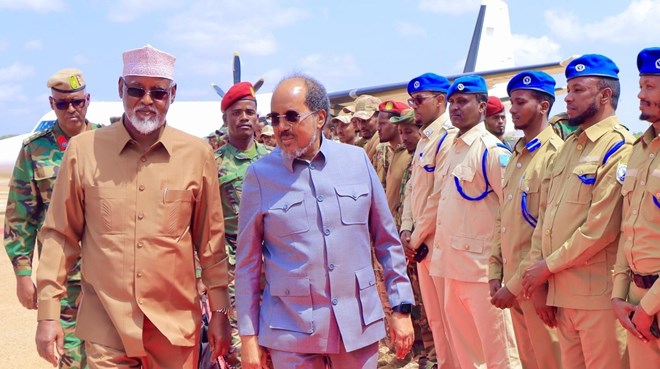

KISMAYO (Kaab TV) – The much-anticipated meeting between Somalia’s Federal President Hassan Sheikh Mohamud and Jubaland State President Ahmed Mohamed Islam (commonly known as Ahmed Madobe) has officially collapsed after more than four hours of intense negotiations that began last night in the port city of Kismayo.
Despite efforts from regional intelligence officials from Kenya and Ethiopia who attempted to mediate, the meeting ended in a deadlock with both sides refusing to compromise on several critical issues — particularly the legitimacy and future of the recent Jubaland elections and the state’s federal alignment.
Key Disagreements and the Breakdown of Negotiations
According to reliable sources close to the negotiations, President Hassan Sheikh Mohamud informed President Ahmed Madobe during the talks that the Federal Government intends to conduct new elections in Jubaland. He emphasized that both the electorate and candidates — including himself — must have the opportunity to participate directly in the voting process, implying that the previous regional election results would not be recognized by the federal administration.
In a firm response, President Ahmed Madobe refused to concede on the issue, strongly defending the legitimacy of the election held in November 2024, in which Jubaland’s regional parliament had already re-elected him as president. He insisted that any attempt to nullify that election would be unconstitutional and politically motivated.
The Federal Government delegation also proposed that a controversial and disputed electoral committee based in Mogadishu should oversee the new elections in Jubaland — a suggestion that was flatly rejected by Madobe’s side. Jubaland representatives asserted that the November 2024 elections were legal and valid, and that any attempts to impose a new process undermined the autonomy of the regional state.
Mediation Efforts by Kenya and Ethiopia Fall Short
Mediators from the Kenyan and Ethiopian intelligence services, who were present in Kismayo to facilitate dialogue, were unable to bridge the deepening divide between the two camps. According to preliminary reports, a second attempt at mediation may be made tonight, though prospects remain uncertain due to entrenched positions and mutual distrust.
Key Figures Present at the Talks
Representing the Federal Government:
-
Sadiyo Yasin Samatar – Deputy Speaker of the Federal Parliament
-
Sabir Shuriye – A close aide to President Hassan Sheikh and his representative in land auctions
-
Ali Yusuf Hoosh – Federal Minister of Interior
Representing Jubaland Administration:
-
MP Abdirashid Mohamed Hiddig
-
MP Mohamed Omar Ananuug
-
MP Hassan Ibrahim (Hassan Yare)
-
MP Abdirashid Jire Qalinle – Former Minister of State and a long-time ally of President Madobe
Conditions and Counter-Conditions
Sources privy to the discussions revealed that the Federal Government proposed reinstating World Bank budgetary support to Jubbaland — a grant that has been withheld for over a year — if Jubbaland agreed to the proposed electoral re-run.
Jubbaland, however, refused this offer, asserting that the budget subsidy is a constitutional right of every federal member state, and not a political bargaining chip under the control of Villa Somalia.
Further exacerbating tensions, the Federal Government reportedly demanded that President Madobe and his administration rejoin the National Consultative Council, which has, over time, evolved into a platform closely aligned with President Hassan Sheikh’s political party. Jubaland officials rejected this, stating that the council no longer serves its intended purpose and has instead become a partisan vehicle.
One of the more contentious points came when the Federal side asked Jubaland to cut political ties with the Puntland administration — another federal member state currently at odds with Villa Somalia.
This demand was immediately dismissed by the Jubaland delegation, with some insiders calling the proposal “unrealistic” and “absurd.”
With negotiations having officially collapsed and both sides holding firm to their positions, Somalia now faces a heightened risk of deepening political instability.
The rift between the Federal Government and the Jubaland administration threatens to stall key national processes, including security coordination, economic development, and federal state integration.
As regional actors — particularly Kenya and Ethiopia — continue to watch developments closely, their mediation efforts may yet offer a narrow path toward reconciliation.
However, unless a breakthrough is achieved soon, Somalia could be headed toward a deeper constitutional crisis that may jeopardize the fragile federal system and the broader quest for lasting peace and stability.