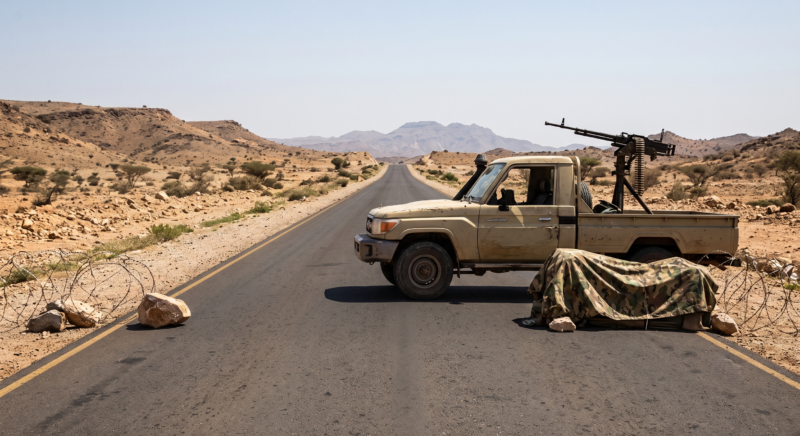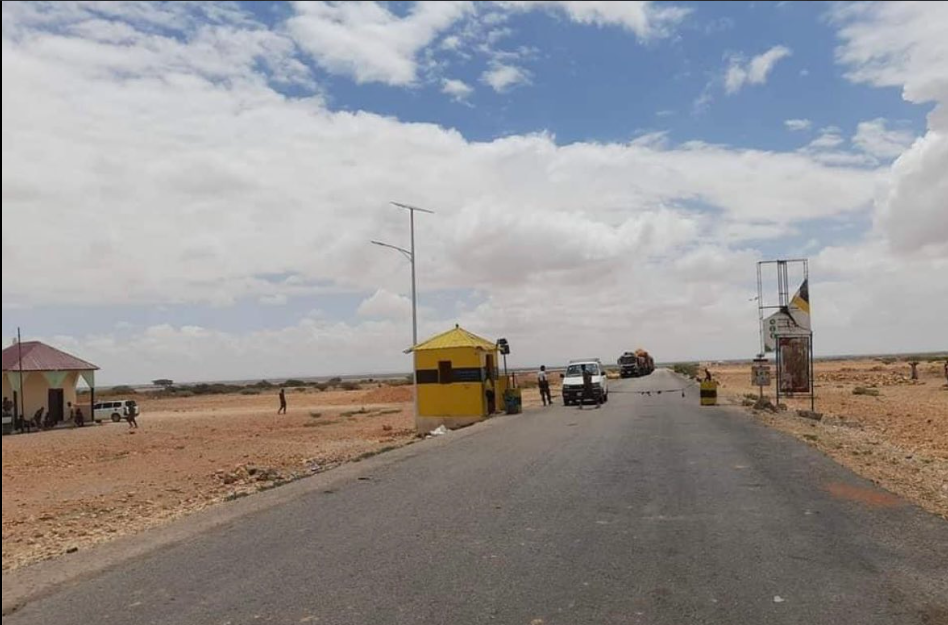


Puntland’s economic and security challenges intensified on Monday after armed Darawiish forces blocked the Bosaso–Garowe highway, the region’s principal trade corridor, over months of unpaid salaries, adding further strain to an economy already reeling from the continued shutdown of Bosaso Port.
Darawiish troops established positions along the highway in the Faluuja area of Carmo district, preventing the movement of vehicles, passengers, and commercial goods.
The soldiers are demanding the immediate payment of overdue salaries and allowances, which they say have remained outstanding for several months.
The troops, who reportedly withdrew from combat positions in the Almiskaad Mountains about a week ago, have deployed military vehicles and heavy weapons to enforce the road closure.
The highway blockade marks the latest dispute over unpaid wages involving Puntland’s security forces. The protesting soldiers have vowed to maintain the closure until their financial demands are met. Neither Puntland authorities nor senior military officials had issued an official response at the time of publication.
The disruption comes as Bosaso Port, Puntland’s largest commercial gateway, remains closed following a dispute between DP World and local traders over newly introduced service charges and tax increases.
The port has remained shut since July 1, after traders rejected the additional fees imposed by the Dubai-based port operator. DP World has not indicated any intention to reverse the measures, prolonging the standoff and leaving commercial operations at the port suspended.
Bosaso Port serves as the primary entry point for imports and exports destined for Puntland and parts of central Somalia.
Business groups and economic analysts have warned that the prolonged shutdown could interrupt supply chains, increase the cost of essential commodities, and place further pressure on the regional economy.
In solidarity with the traders, many businesses across Bosaso have also suspended operations, affecting the availability of food, fuel, medicine, construction materials, and other basic goods.
Traders have repeatedly accused DP World of maintaining high operating costs while failing to deliver the infrastructure upgrades and modernization promised under its management agreement.
Similar disputes have occurred in the past, including a major confrontation in 2017 that triggered widespread protests and resulted in at least one fatality.
The latest developments coincide with mounting financial difficulties facing the Puntland administration, which is projected to face a 32.4% budget deficit in 2026.
The shortfall has raised concerns over the government’s ability to finance public services, infrastructure projects, and salary payments for public employees.
The regional government’s financial constraints have already led to repeated complaints from security personnel and civil servants, many of whom say they have gone months without receiving their wages.
The crisis also unfolds against the backdrop of continuing political tensions between Garowe and Mogadishu.
In January 2026, Somalia’s Federal Government announced the cancellation of its bilateral agreements with the United Arab Emirates, including those related to the management of the ports of Bosaso, Berbera, and Kismayo.
Puntland rejected the decision, insisting that it retains authority over the Bosaso port agreement.
Puntland officials have accused the Federal Government of attempting to undermine the region’s autonomy through the dispute.
Vice President Ilyas Osman Lugatoor has previously alleged that the federal administration is directing significant resources toward destabilizing Puntland, saying regional security priorities have increasingly shifted toward countering what he described as political interference.
With the Bosaso–Garowe highway remaining blocked and Bosaso Port still closed, pressure is mounting on Puntland authorities to resolve both disputes.
Prolonged disruptions to the region’s main transport and trade routes are expected to worsen shortages of essential goods, accelerate inflation, and place additional strain on Puntland’s fragile economy, while further exposing the broader political and financial challenges facing the region.