

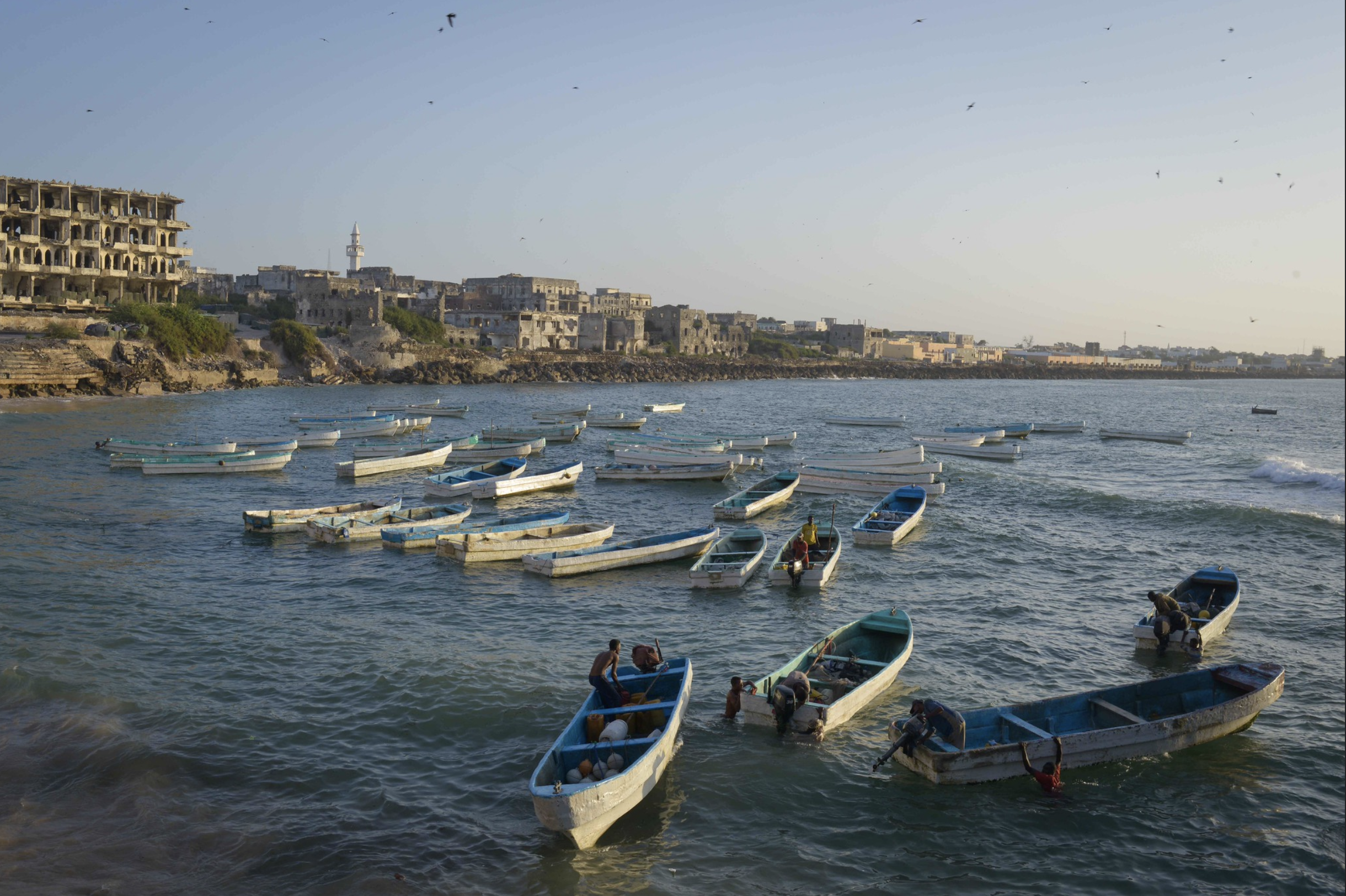

At first light, the Port of Mogadishu moves to the rhythm of a national economy. Cargo ships discharge food, fuel and manufactured goods destined for cities across Somalia as customs officers process manifests and truck convoys head inland.
Several hundred kilometers to the northwest, the Port of Berbera begins a different day.
There, container vessels, logistics companies and foreign investors focus less on supplying a single country than on connecting an expanding trade corridor stretching into landlocked Ethiopia and beyond.
The two ports serve different markets, answer to different political authorities and embody competing visions of the Horn of Africa. Together, they reveal how a coastline once synonymous with piracy has become one of the world’s most consequential geopolitical frontiers.
Today they form parts of the same geopolitical story in the region.
For much of the early twenty-first century, the Horn of Africa occupied a narrow place in the international imagination. The region was viewed primarily through the lens of piracy, famine, terrorism and fragile states. International engagement reflected that perception.
Foreign navies escorted merchant ships through the Gulf of Aden, humanitarian agencies responded to recurring crises and diplomats concentrated on containing instability before it spilled into international commerce.
That framework increasingly belongs to another era.
The Horn has undergone one of the most significant strategic transformations in contemporary international politics. The central question is no longer how to suppress pirates operating from isolated coastlines. It is who will shape the political and economic architecture surrounding one of the world’s most consequential maritime corridors.
Ports, logistics corridors, naval facilities, energy exploration, submarine cables and diplomatic recognition have become the region’s new strategic currency, highlighted by the geopolitical maneuvers surrounding the controversial Ethiopia-Somaliland Port Deal.
What has changed is not simply the Horn itself. It is the geography of global power.
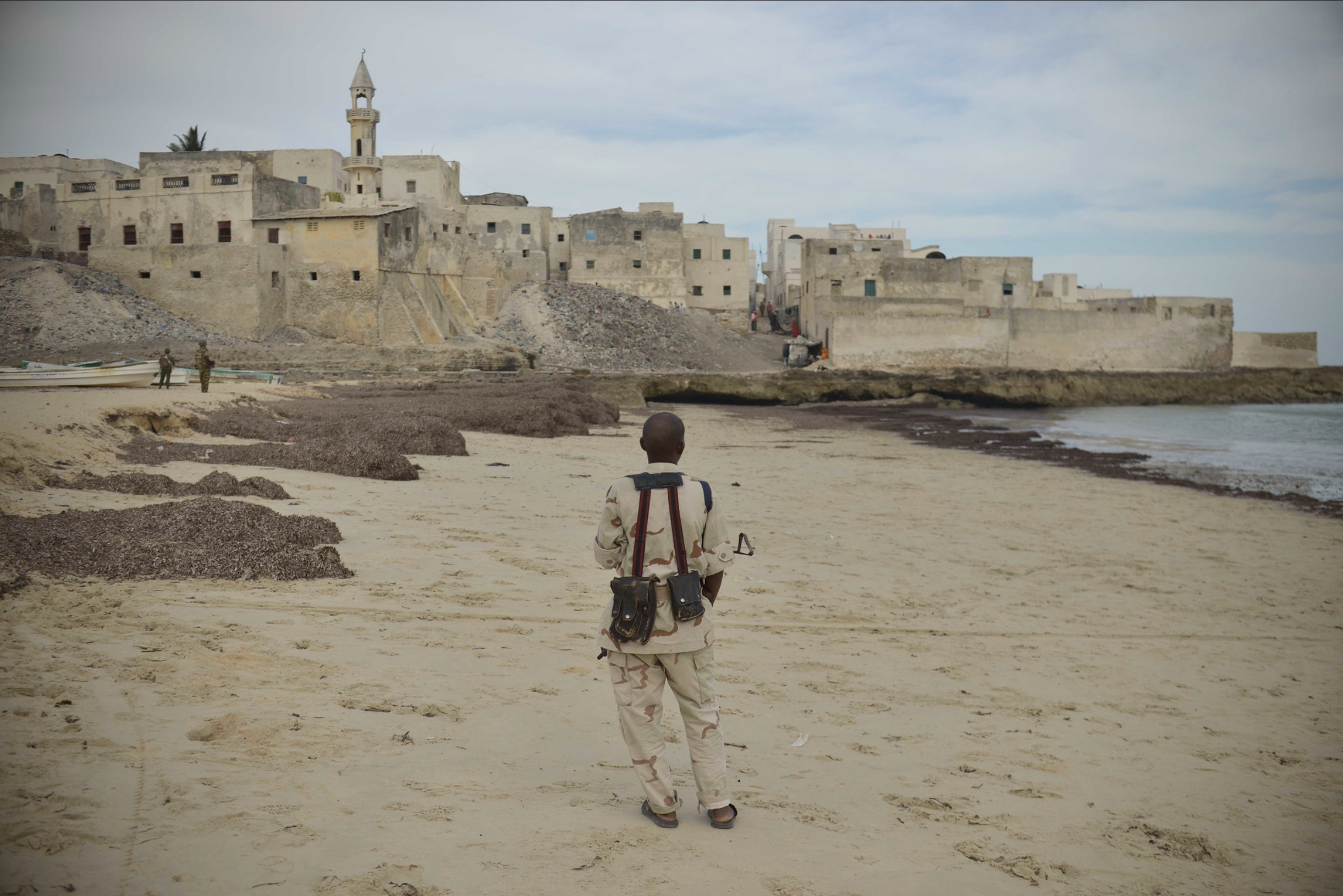
For generations, policymakers treated the Red Sea as a boundary separating two distinct strategic systems. The Middle East occupied one side; the Horn of Africa occupied the other.
Although conflicts occasionally crossed the water, each region largely maintained its own political logic, but today, Gulf states and African littoral countries are forming an interconnected Red Sea Arena where their security and economic fates are deeply intertwined.
That distinction has steadily eroded.
The disruption of commercial shipping by Yemen’s Houthi movement demonstrated that instability on one shoreline could rapidly reshape political calculations on the other.
Insurance costs rose, shipping companies diverted vessels around southern Africa, Suez Canal revenues declined sharply and governments throughout the region were forced to reconsider long-held assumptions about maritime security.
“The Bab el-Mandeb Strait is no longer a peripheral commercial highway separating two distinct continents,” observes Kaan Devecioğlu, a regional geopolitics specialist at ORSAM.
“It has become a highly integrated security continuum where land, maritime and energy politics are completely inseparable.”
The water separating Arabia from Africa has become less a frontier than a shared strategic space.
That transformation has fundamentally altered how regional governments perceive themselves.
Few events illustrated this shift more dramatically than Ethiopia’s memorandum of understanding with Somaliland in early 2024.
By pursuing guaranteed maritime access through Somaliland in exchange for the prospect of diplomatic recognition, Addis Ababa challenged long-standing assumptions surrounding sovereignty, access to the sea and regional diplomacy.
For Ethiopia, home to well over 120 million people yet lacking direct maritime access, the agreement reflected a strategic imperative. For Somalia, it represented an unacceptable challenge to territorial integrity.
What might once have remained a bilateral dispute rapidly acquired regional dimensions.
Egypt, already locked in a prolonged confrontation with Ethiopia over the Grand Ethiopian Renaissance Dam, deepened its strategic engagement with Somalia. Military cooperation between Cairo and Mogadishu increasingly reflected broader calculations extending far beyond Somali territory.
The Nile and the Red Sea, once treated as separate strategic questions, have become increasingly interconnected.
Turkey’s mediation efforts demonstrated another emerging reality.
Unlike many outside powers, Ankara has cultivated substantial political, economic and security relationships with both Somalia and Ethiopia. Rather than choosing between competing partners, it has attempted to preserve influence across both capitals.
The resulting diplomacy has often emphasized managing disagreements rather than definitively resolving them.
That preference for ambiguity reflects a wider characteristic of contemporary geopolitics.
Increasingly, governments seek flexibility instead of fixed alliances.
Perhaps the clearest illustration can be found in Djibouti.
Over the past decade the small state has transformed strategic geography into national leverage by hosting military facilities belonging to countries that compete globally, including the United States, China, France and Japan.
Rather than viewing those relationships as contradictory, Djibouti has converted competing interests into mutually reinforcing sources of political and economic relevance.
The arrangement reflects a broader regional strategy that might best be described as distributed dependency.
Instead of aligning exclusively with a single external patron, governments increasingly cultivate overlapping partnerships, diversifying investment, security cooperation and diplomatic engagement while avoiding complete dependence on any one power.
Cold War notions of choosing sides have become progressively less useful here. The competition itself has become more fluid.
Somaliland, the self-governingbreakaway territory in northern Somalia, offers perhaps the clearest example of this evolving approach.
Rather than relying solely on traditional diplomatic recognition through international institutions, it has increasingly sought to convert strategic geography into political influence.
Access to coastline, ports and logistics infrastructure has become an instrument through which an unrecognized territory seeks greater international engagement.
Whether that strategy ultimately succeeds remains uncertain. Its significance lies elsewhere.
It suggests that geography itself is becoming a negotiable political asset in an era when maritime access carries growing strategic value.
Recognition, in this sense, is no longer shaped exclusively through diplomatic declarations. It is increasingly influenced by infrastructure, logistics and commercial calculation.
The implications extend well beyond the Horn.
Western engagement has historically emphasized counterterrorism, humanitarian assistance and stabilization.
Those priorities remain important. Yet they now compete with a broader agenda centered on supply chains, critical minerals, energy exploration, digital connectivity, military logistics and competition among middle powers seeking greater regional influence.
The region has become a crossroads where African politics, Gulf security, Mediterranean strategy and Indo-Pacific commerce increasingly converge.
This evolution also requires rethinking piracy itself.
Piracy has not disappeared. Isolated incidents continue to occur, particularly during periods of wider maritime insecurity. But the phenomenon no longer defines the strategic landscape.
Statecraft has replaced criminality as the principal driver of geopolitical change.
The greater danger today is not that armed men in small boats interrupt global commerce. It is that overlapping rivalries involving Ethiopia, Somalia, Egypt, the Gulf states, Turkey and Israel create pathways through which localized disputes could escalate into wider regional confrontations.
The Horn now sits at the intersection of several overlapping strategic competitions simultaneously.
That convergence explains why governments once only marginally engaged in the region now devote increasing diplomatic, military and economic attention to it.
The reinvention of the Horn of Africa has occurred gradually, almost quietly.
There was no singular turning point announcing the transition from peripheral crisis zone to geopolitical centerpiece. Instead, a succession of events, the Red Sea shipping crisis, Ethiopia’s maritime ambitions, renewed competition among Gulf powers, Turkish mediation, Egypt’s expanding military role and the growing importance of strategic ports, collectively altered the region’s place within the international system.
History rarely announces such transformations while they are unfolding. Yet one conclusion is becoming increasingly difficult to ignore.
The era when the world looked toward the Horn of Africa and saw principally piracy has passed.
Today, governments, investors and military planners see something fundamentally different: a maritime crossroads where the future balance of power linking Africa, the Middle East and the wider Indo-Pacific may increasingly be shaped.
Abdi Guled is a Horn of Africa analyst and journalist focusing on political risk, armed groups and geostrategic competition in the region.