


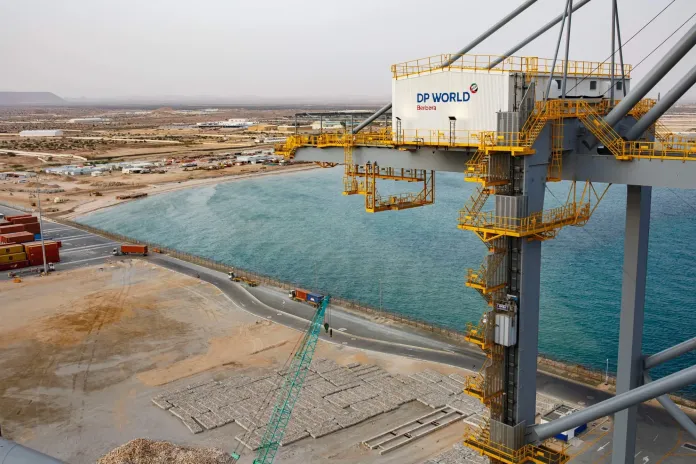


The Port of Berbera, Somaliland’s main maritime gateway and one of the Horn of Africa’s most strategically located ports, is reportedly operating at only 30 percent of its capacity, raising concerns about underutilization despite significant investments in recent years.
Berbera Port has undergone major expansion and modernization through investments led by DP World, which transformed the facility into a larger regional trade hub capable of handling increased cargo volumes and serving markets beyond Somaliland.
The expansion was designed to position Berbera as a key gateway for trade across the Horn of Africa, particularly for neighboring Ethiopia, one of Africa’s largest landlocked economies.
Improved port infrastructure, expanded container-handling capacity, and upgrades to the Berbera Corridor were expected to attract greater regional commerce.
However, reports indicate that cargo volumes remain well below the port’s full potential.
Analysts point to several factors, including strong competition from other regional ports, logistical challenges, trade patterns, and the slower-than-expected shift of Ethiopian imports and exports toward Berbera.
The port faces competition from established gateways such as Port of Djibouti, which continues to handle the majority of Ethiopia’s international trade.
Despite efforts by Somaliland and DP World to market Berbera as an alternative route, Djibouti remains Ethiopia’s dominant maritime outlet.
Regional political and economic factors have also influenced cargo flows.
Trade volumes through ports are often affected by infrastructure connectivity, customs procedures, transport costs, security considerations, and broader diplomatic relations between countries in the region.
Nevertheless, officials and investors continue to view Berbera as a long-term strategic asset.
Supporters of the project argue that the port’s modern facilities and location along major Red Sea shipping routes provide significant growth potential if regional trade integration expands in the coming years.
Berbera’s position on the Gulf of Aden places it near some of the world’s busiest maritime routes, linking Africa, the Middle East, Asia, and Europe. This strategic location has made the port an important component of regional economic and geopolitical planning.
While operating at only around 30 percent of its current capacity presents economic challenges, port authorities and investors remain focused on attracting additional shipping lines, increasing transit trade, and expanding commercial links with neighboring countries to improve utilization and strengthen Berbera’s role as a regional trade hub.