


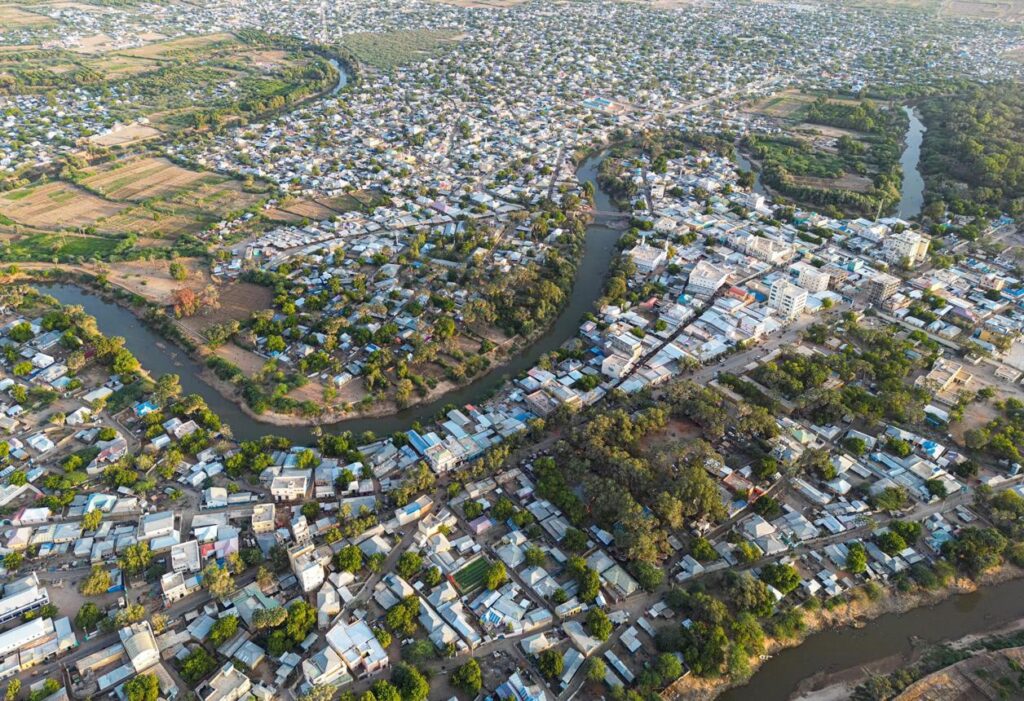


The city of Beledweyne, the administrative capital of Somalia’s Hiiraan region, is facing growing political and security tensions as disagreements between the Hirshabelle administration, regional politicians and traditional leaders increasingly translate into military movements and competing power struggles.
Beledweyne is a strategically important city with a long history of community cooperation and resistance against Al-Shabaab.
However, it is now experiencing deep divisions over who should govern Hiiraan, how political power should be distributed and what role the region should have in the future of Hirshabelle State.
The crisis extends beyond disagreements among political figures, with potential consequences for public safety, commercial activities, movement of residents and cooperation between government forces and local security groups.
Tensions intensified following the October 24, 2026, election in which Ali Abdullahi Hussein Guudlawe was re-elected as Hirshabelle president, while Abdifatah Hassan Afrah was chosen as his deputy.
Several Hiiraan politicians, traditional elders and sections of the community rejected the electoral process, arguing that the region’s political representation and its share of power within Hirshabelle had not been adequately addressed.
The dispute escalated on October 31, when local armed groups took control of parts of the Hiiraan regional administration headquarters at Lamagalay. The move followed disagreements over the removal of the region’s governor, Mohamed Hussein Mohamed.
The takeover demonstrated that the political confrontation had moved beyond statements and meetings, reaching government institutions and key administrative facilities in the city.
Throughout November, military movements involving different groups aligned with opposing political positions further heightened tensions.
On November 7, Hirshabelle Vice President Abdifatah Hassan Afrah and politician Abdirahman Mohamed Ali Sanbaloolshe travelled separately to Beledweyne, each accompanied by armed security personnel.
Their arrivals increased concerns that the political dispute could develop into direct armed confrontation.
The situation deteriorated further on November 19, when fighting broke out between local militia members and Djiboutian troops serving under the African Union Support and Stabilization Mission in Somalia (AUSSOM) at Ugaas Khaliif Airport.
Reports from the incident indicated that at least one local fighter was killed and six others wounded. The Djiboutian Embassy said its troops had repelled an attack on the airport and that no Djiboutian soldiers were injured.
Ugaas Khaliif Airport is one of Beledweyne’s most important facilities, connecting the city with Mogadishu and supporting travel by residents, businesspeople, humanitarian organisations and security personnel.
Following the clashes, Somalia’s Civil Aviation Authority suspended flights to and from the airport until December 1, 2026, according to an aviation notice.
The closure illustrates how the political and security crisis is already disrupting essential services, creating difficulties for travel, trade and humanitarian operations.
Developments reported on November 27 indicated that hundreds of local fighters had been mobilised in Beledweyne and were reportedly provided with military equipment and salaries.
Traditional leader Ugaas Yusuf Ugaas Hassan Ugaas Khalif visited fighters stationed at the Lamagalay camp and in the Hiiraan Bile area. He was accompanied by politicians, clan elders and military officers.
The mobilisation comes as disagreements between Hirshabelle’s leadership and Hiiraan politicians and elders opposed to the administration’s election remain unresolved.
According to a report by Hiiraan Online, traditional leaders have not publicly clarified what action they intend to take next, but the growing military preparations have heightened fears of another confrontation.
With armed groups operating under competing chains of command, political disagreements and military movements continuing across the city, ordinary residents are increasingly exposed to the consequences.
Business owners fear that deteriorating security could disrupt markets and weaken the local economy.
Residents are also concerned about restrictions on movement, interruptions to education and healthcare services, and the possibility of renewed fighting in residential neighbourhoods.
There are further concerns that an escalation could force families to flee their homes, particularly in areas surrounding military positions and disputed government facilities.
Beledweyne has previously experienced deadly clashes and bombings that caused casualties and extensive property damage. Residents are therefore concerned that the current political confrontation could once again plunge the city into widespread insecurity.
One of the most serious consequences of the dispute could be its impact on military operations against Al-Shabaab.
Hiiraan is a strategically important region for operations involving Somali government forces, local Ma’awisley fighters and troops supported by the African Union.
If government forces, local security groups and community leaders become divided along political lines, their ability to coordinate operations against Al-Shabaab could be weakened.
The militant group could exploit such divisions to expand its influence in areas where it has previously faced strong resistance.
An analysis by HACSID has also warned that tensions between Hirshabelle and Hiiraan could undermine military coordination and create opportunities for Al-Shabaab to take advantage of internal divisions.
The future of Beledweyne will largely depend on decisions made by the federal government, Hirshabelle authorities, traditional leaders, Hiiraan politicians and military commanders.
The Federal Government of Somalia has an important responsibility to protect national security and preserve the country’s unity.
It is expected to avoid actions that could be interpreted as taking sides in the dispute and instead encourage an inclusive dialogue process that all parties can trust.
It is equally important that the Somali National Army not be drawn into political rivalries and that the unity, discipline and chain of command of the national forces are maintained.
Hirshabelle’s leadership and Hiiraan’s political representatives must also address grievances over regional representation, power-sharing and local administration through negotiations rather than military pressure.
Without a credible political settlement, the growing presence of armed groups and competing political authorities risks pushing Beledweyne towards another period of instability, with consequences extending beyond the city and potentially affecting the wider fight against Al-Shabaab.