




The city of Beledweyne, has entered a period of heightened tension amid a growing dispute over voter registration and the electoral process, raising concerns about both political stability and security in the area.
Local reports indicate that Ali Jeyte Osman, a prominent political figure from the Hawadle community and a former governor of Hiraan, is heading to Beledweyne, where he is expected to join community elders and other influential figures amid the escalating standoff.
Ali Jeyte became nationally known during the anti-Al-Shabaab offensives launched between late 2022 and 2024.
He played a key role in mobilizing the local Ma’awiisley community forces, which helped recapture several areas in Hiraan that had long been under Al-Shabaab control.
However, his influence later declined following political disagreements with the Federal Government, reducing his role in military and political affairs.
His return to the center of events comes at a critical moment for Beledweyne, where disagreements over the electoral process have intensified in recent days.
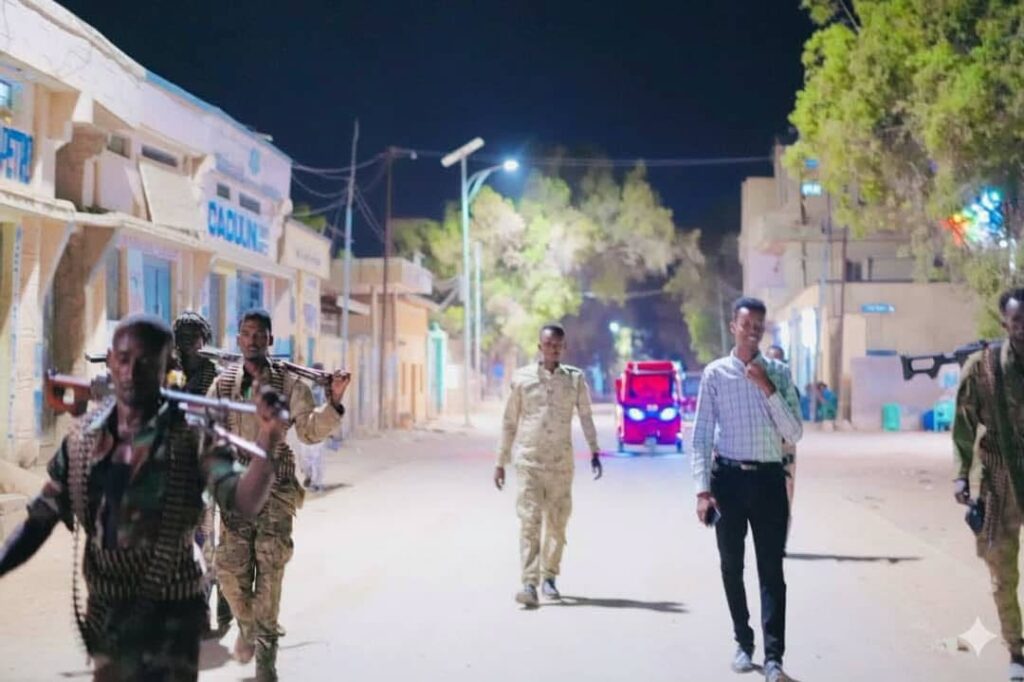
Reports from the city suggest that local armed forces loyal to community leaders are patrolling parts of Beledweyne, underscoring concerns that the political dispute could evolve into a broader security challenge.
At the heart of the controversy is the reported suspension of voter registration activities in the city.
The registration process is considered a key component of the planned elections, and its interruption has raised questions about the feasibility and legitimacy of the electoral timetable.
The dispute has exposed divisions among political leaders, community representatives, and residents.
Some local stakeholders argue that the current environment is not suitable for conducting elections, while others insist that the electoral process should continue as planned.
The situation has been further complicated by reports that three aircraft carrying a delegation of Hawadle elders, politicians, and lawmakers are en route to Beledweyne.
The delegation is reportedly led by the Ugaas, the traditional leader of the Hawadle community, and is expected to hold consultations with local elders and community representatives regarding the ongoing crisis.
The arrival of the delegation is viewed as significant given the Hawadle community’s strong political and social influence in Hiraan. The visit is widely seen as an effort to address the growing tensions and seek a way forward on the disputed electoral process.
Meanwhile, reports have emerged suggesting that the Federal Government is considering preventing the aircraft carrying the delegation from landing at Beledweyne Airport.
Although these reports have not been officially confirmed, such a move could further inflame tensions between federal authorities and influential political and community figures in Hiraan.
If the delegation is allowed to land, observers expect a series of political and traditional consultations aimed at easing tensions and reviving dialogue.
However, if the delegation is blocked from entering the city, many fear the crisis could deepen and be perceived as an attempt to sideline local leaders and community representatives.
The crisis in Beledweyne now extends beyond a conventional election dispute.
The combination of suspended voter registration, the mobilization of local forces, the arrival of prominent political figures, and uncertainty surrounding the Hawadle delegation has created a volatile environment that requires careful political management.
Analysts warn that without a swift political solution, the standoff could have wider implications for relations between the Federal Government, the Hirshabelle administration, and communities in Hiraan.
They also caution that relying on security measures rather than dialogue could increase the risk of confrontation.
For now, attention remains focused on the next steps taken by federal authorities, the Hirshabelle administration, Hiraan elders, and the Hawadle delegation.
The outcome of these developments is likely to shape not only the future of the electoral process in Beledweyne but also the broader political landscape of the region.