


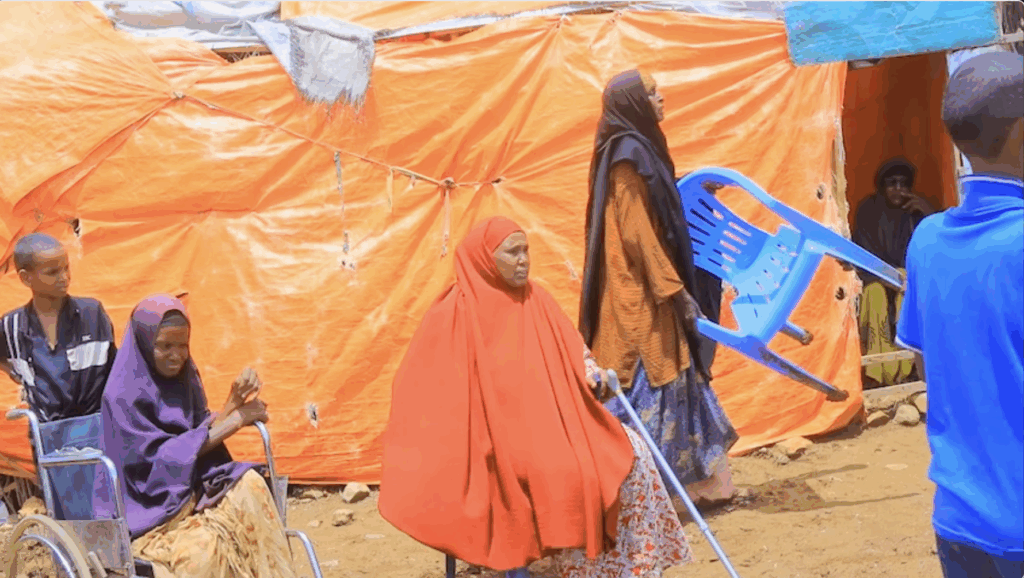


BAIDOA, Somalia (Baraarug) — In a landmark step toward inclusive governance and social justice, Southwest State of Somalia officially enacted its first Disability Rights Act on February 4, 2025.
The new law, signed by President Abdiaziz Hassan Mohamed (Laftagareen), follows months of consultation with civil society organizations, particularly those advocating for the rights of people living with disabilities.
“This marks the beginning of a long journey toward realizing full human rights for people with disabilities,” said Shamso Mohamed Yarrow, the regional Minister of Women and Human Rights.
Speaking to Baraarug, she emphasized the broader historical context: “For over three decades, Somalia has suffered conflict and instability, during which the rights of many—including persons with disabilities—were neither protected nor prioritized.”
Luul Ali Ahmed, director of the Baidoa-based Women Health and Relief Organization, welcomed the law as a long-overdue breakthrough.
“We have advocated for this for years. People with disabilities have unique needs, yet there was no legal framework to recognize or respond to them. Their rights were routinely violated.”
According to the Somalia National Bureau of Statistics (SNBS), around 8.3% of the population lives with some form of disability.
The rate is higher in rural areas (9.1%) and among women and children—groups often subjected to what experts call “double discrimination.”
Disabled women are particularly vulnerable to gender-based violence and economic exclusion, while children with disabilities frequently miss out on education and social services.

The legislation comes as a beacon of hope, especially in Baidoa, where humanitarian crises have displaced hundreds of thousands.
The city and its surrounding areas are home to an estimated 500,000 to 700,000 internally displaced people (IDPs).
Among them are many individuals with physical and psychosocial disabilities who face severe barriers to mobility, healthcare, and protection.
Muhudin Nor Abdi, a spokesperson for persons with disabilities in Baidoa, called the new law a long-awaited milestone.
“This is a very good law. If it is implemented properly and reaches the grassroots level, people with disabilities will finally be able to live with dignity,” he said.
Muhudin noted that people with disabilities actively participated in the consultations that led to the bill’s development.
From inside one of Baidoa’s many displacement camps, Kaltumo Mohamed, a mother of five and head of the local women with disabilities committee, reflected on what the law could mean.
“We were like forgotten people—like we didn’t exist,” she said. “Now that the Disability Rights Act is passed, I hope it’s not just words on paper. We want real change in our lives.”
Salima Shueb, director of the local NGO Garab Walaal, stressed the importance of the law in improving both visibility and safety.
“This act is designed to combat discrimination and protect people with disabilities from harm,” she said. “It makes their existence and rights visible in society.”
Despite the passage of the law, challenges remain.
Disabled IDPs—especially women and girls—still face extreme risk of abuse, and camp infrastructure is largely inaccessible.
Experts warn that meaningful progress will require not just legislation, but strong political will, dedicated funding, and a cultural shift toward inclusion.
Still, for many, the Southwest State’s Disability Rights Act represents an unprecedented step forward—and a chance to turn long-standing neglect into national recognition.