


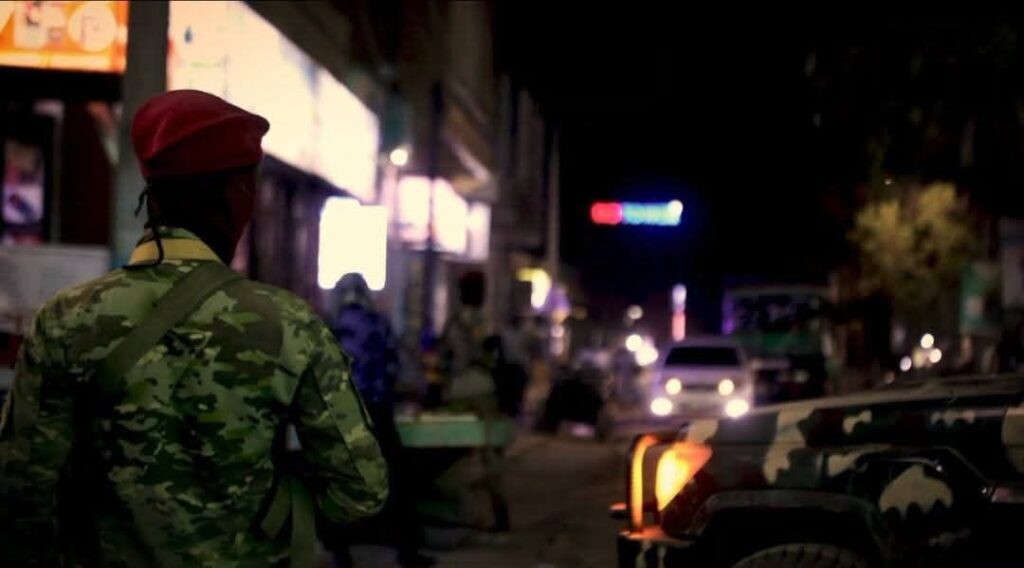


Baidoa, the administrative capital of Somalia’s Southwest State, is increasingly slipping into a state of insecurity and contested authority, with rising violence, political fragmentation, and growing civilian displacement.
Since the beginning of June 2026, forces aligned with the ousted Southwest State President Abdiaziz Hassan Mohamed “Laftagareen” have launched at least four major armed attacks in and around Baidoa.
Laftagareen’s forces reportedly came close to seizing the presidential palace on the night of 21 June. These clashes have turned the city into an active zone of contest between rival political and military blocs, deepening fears among civilian population.
At the centre of the confrontation is a political struggle between Aden Mohamed Nur (Madobe)-backed, Federal Government and a rival group under Laftagareen.
Aden Madobe, the former Speaker of Somalia Lower House (Parliament) comes from Hadamo/Rahanweyn clan while Laftagareen is from the Harin/Rahanweyn.
The fighting involves a complex mix of clan-aligned forces, including Turkish-trained units such as Gorgor and Haramcad – mainly coming from Hawiye clans.
The Laftagareen-aligned forces, largely based in the outskirts of Baidoa, continue to carry nighly attacks.
Casualties from the ongoing clashes have not been independently verified, as both sides have largely withheld information on losses.
Meanwhile, journalists face increasing pressure and risk when reporting on the conflict, particularly in a city that hosts one of the largest internally displaced populations in Somalia.
Claims of battlefield success have instead shifted to social media, where both sides circulate competing narratives of control and legitimacy.
Just last week there were reports of attempted mediation efforts involving President Hassan Sheikh Mohamud, though these were publicly denied by Laftagareen’s spokesperson.
On Friday last week, media reported that additional federal-aligned forces have arrived in Baidoa, reinforcing the Madobe forces.
At the same time, dissatisfaction has reportedly grown among key local clans, including the Leysan and Eelay—two groups previously opposed to Laftagareen who now feel politically marginalised following recent appointments by Aden Madobe’s.
Humanitarian organisations warn that the deteriorating security situation is compounding an already severe crisis.
Parts of Southwest State, including the Buurahakaba area, are experiencing near famine signs due to prolonged drought, and aid agencies caution that continued conflict, combined with climate shocks, could significantly increase the risk of famine if access and stability are not restored.
To make matters worse, Al-Shabaab continues to expand its influence on the outskirts of Baidoa, as the rival groups remain locked in fighting against each other.
With no clear political settlement in sight, Baidoa remains highly volatile—caught between competing authorities, armed mobilisation, and deepening humanitarian strain.