


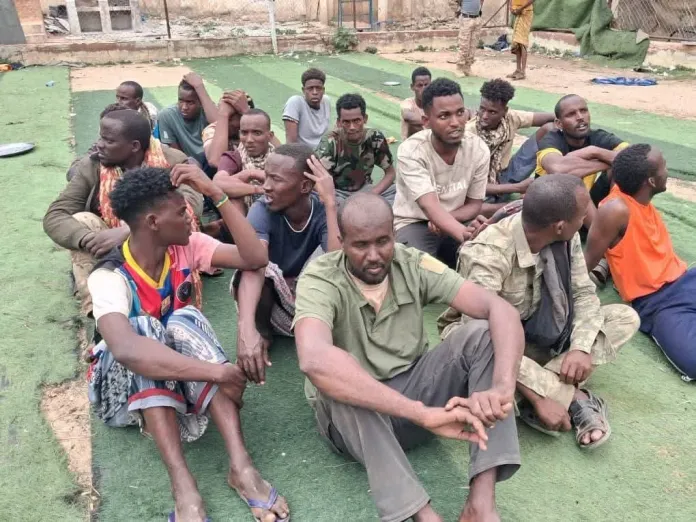


More details have emerged about the fighting that broke out in Baidoa this morning between forces aligned with South West State and troops from the Federal Government of Somalia, with preliminary reports indicating casualties, injuries and the capture of fighters.
The security situation in the city remains tense, while military movements are reportedly continuing as government forces work to secure key areas and prevent further clashes.
Preliminary information on the casualties indicates that 105 wounded people were taken to medical facilities, reportedly including members of the Federal Government forces.
Around 80 of the wounded were reportedly evacuated to Mogadishu, where they are receiving treatment at Medina Hospital and the Somali Armed Forces Hospital. Another approximately 25 wounded personnel are being treated in Baidoa.
The wounded are reportedly from several federal security units, including the Gorgor special forces, Haramcad police, military police and elements of the 9th Brigade, which sources said had been deployed from Xudur.
On the South West State-aligned side, preliminary reports indicate that 11 fighters were killed during the fighting. Among those reportedly killed was the deputy commander of the South West State Darawish forces.
However, there is still no comprehensive, independently verified figure for the total number of people killed and wounded on both sides.
17 Prisoners Reportedly Captured
Authorities have also displayed prisoners said to have been captured during the fighting. The number of detainees reportedly presented is 17.
Reports indicate that some of the prisoners are being held in Baidoa, including a man identified as Moallin Adan.
South West State authorities have accused him of involvement in activities they described as contributing to insecurity and problems affecting residents of the city. The allegations have not been independently verified.
Forces Loyal to Laftagareen Attempted to Enter Baidoa
The fighting began early this morning inside Baidoa, as forces loyal to former South West State President Abdiaziz Hassan Mohamed Laftagareen reportedly attempted to seize control of parts of the city.
Initial reports indicated that the forces briefly captured several locations before later withdrawing from some of the areas they had taken.
Federal Government forces, meanwhile, said they had repelled the attack and pushed back the advancing fighters.
Somalia’s Ministry of Defence said in a statement that nearly 30 fighters from what it described as the attacking militias were killed during the confrontation.
The ministry also said that some members of the attacking force were captured alive and that government troops seized weapons and military vehicles.
According to the ministry, security forces are continuing operations to secure Baidoa and pursue members of the group involved in the attack.
Civilian Casualties and Displacement
Reports from Baidoa also indicate that civilians were among those affected by the fighting, with some residents reportedly sustaining injuries.
However, there is currently no independently verified figure for civilian casualties.
Some residents have fled neighborhoods where fighting took place, while others have remained trapped inside their homes because of heavy gunfire and the movement of armed forces.
The violence has also disrupted movement across the city and affected access to essential services, adding to concerns about the humanitarian consequences if the security situation deteriorates further.
Political Dispute Escalates Into Armed Confrontation
The latest fighting comes amid growing political and security tensions between the Federal Government and the South West State administration.
Baidoa is the interim capital of South West State and holds major political and strategic importance for both sides.
Control of the city has therefore become closely linked to the wider dispute over political authority, security arrangements and the relationship between Mogadishu and the federal member states.
The confrontation marks a significant escalation of those tensions, with a political dispute now spilling into direct armed clashes in a densely populated city.
The situation remains fluid, and competing claims from the two sides mean that casualty figures, territorial control and reports of military gains should be treated cautiously until they can be independently verified.
Continued fighting could have serious consequences for civilians in Baidoa, while also creating additional security challenges in Bay region and diverting attention from ongoing efforts to counter Al-Shabaab.