

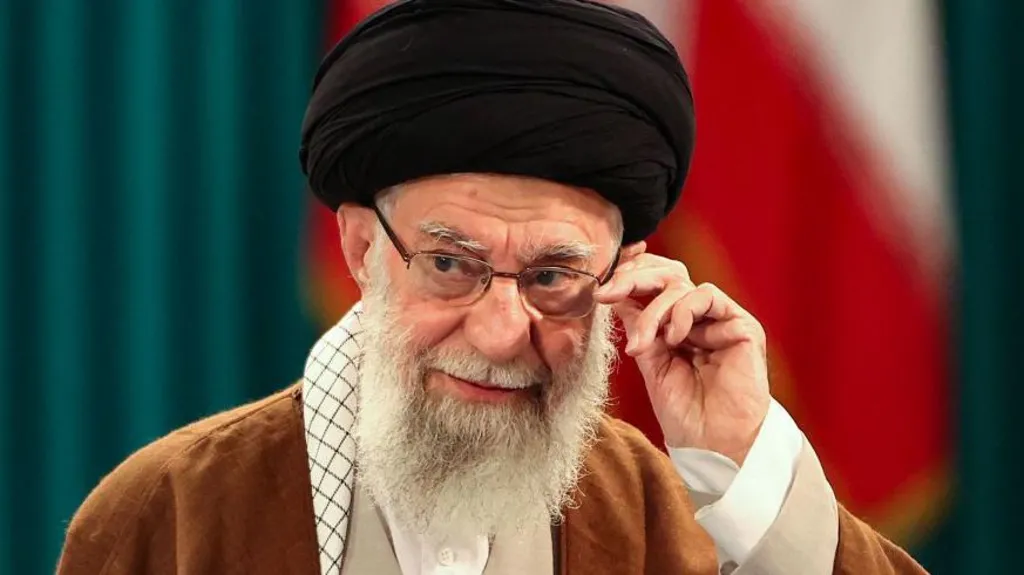

Tehran (Kaab TV) – Ayatollah Ali Hosseini Khamenei, the long-serving Supreme Leader of the Islamic Republic of Iran, has died at age 86, Iran’s state media confirmed early Sunday following intense speculation about his fate amid a major U.S.-Israeli military offensive.
Iranian authorities declared an extended period of national mourning and vowed retaliation as diplomats and analysts around the world warned of a precarious regional future.
Iranian state television announced at around 5:00 a.m. local time that Khamenei had “reached martyrdom,” with black mourning banners displayed across broadcasts. State media said he was killed on Saturday, February 28, while at his office — without immediately detailing the cause of death. The government announced 40 days of national mourning and a seven-day public holiday to mark the period of grief.
The confirmation came after earlier claims by U.S. and Israeli officials that Khamenei had been killed in a coordinated wave of air strikes on Tehran and other strategic sites across Iran. U.S. President Donald Trump publicly acknowledged Khamenei’s death, describing it as a pivotal moment and casting the offensive as a move against what he called “one of history’s most evil people.”
Israeli Prime Minister Benjamin Netanyahu had previously said there were “many signs” suggesting that Khamenei was no longer alive, although Tehran initially neither confirmed nor denied those reports. Satellite imagery later showed heavy damage to the compound believed to be associated with Iran’s leadership.
Khamenei had led Iran since 1989, succeeding the Islamic Republic’s founder, Ayatollah Ruhollah Khomeini. Over more than three decades, he became the central authority in Iran’s political, religious, and military hierarchy, exercising ultimate control over its government, judiciary, and armed forces.
Under his leadership, Iran charted a course of assertive foreign policy and regional activism, supporting allied groups like Hezbollah in Lebanon, Shiite militias in Iraq and Syria, and movements in Yemen and elsewhere. Analysts say this approach entrenched Iran’s role as a leading force in the so-called “Axis of Resistance” against U.S. and Israeli influence.
Domestically, Khamenei maintained a tight grip on power, crushing dissent and overseeing crackdowns on protesters demanding political and economic reforms. His tenure was marked by persistent tensions with the West over Iran’s nuclear program and chronic economic problems exacerbated by sanctions.
The announcement of Khamenei’s death has sent shockwaves through the Middle East and beyond. Iran’s Islamic Revolutionary Guard Corps vowed “severe punishment” for those it called responsible, signaling likely military retaliation. Experts warn that the leadership vacuum could embolden hard-liners, unsettle internal power balances, and spark broader conflict.
Even before the confirmation, U.S. and Israeli strikes had sparked retaliatory missile and drone attacks targeting Israel and several Gulf states hosting American forces, contributing to heightened fears of a wider war. Global oil markets reacted with volatility as traders weighed the potential for disruption in the strategically vital Middle East.
Iran’s constitution dictates that the Assembly of Experts — a body of senior clerics — selects the next Supreme Leader, but no clear successor has yet emerged. Tehran now faces a fraught transition period amid political uncertainty and deep public frustration.
Some Iranians have reportedly issued defiant calls for systemic change rather than a simple appointment of a new Supreme Leader. The future of the Islamic Republic’s governance structure remains a subject of intense debate both inside Iran and in diplomatic circles.
Regional and global leaders have reacted with a mix of caution and concern. The United Nations Security Council convened emergency consultations, and several countries called for de-escalation, urging diplomacy even as geopolitical tensions run high.
The death of Ayatollah Ali Khamenei marks a historic turning point for Iran and the wider Middle East, with immediate implications for regional stability, international relations, and internal governance in Tehran.