

Mogadishu (Kaab TV) – Somalia’s foreign policy has recently been marked by allegations related to nepotism and appointments based on personal relationships rather than merit.
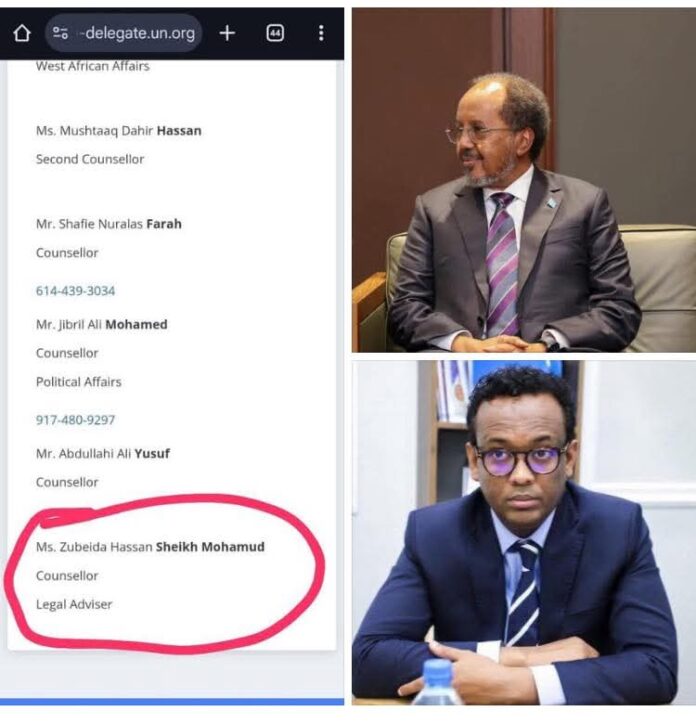
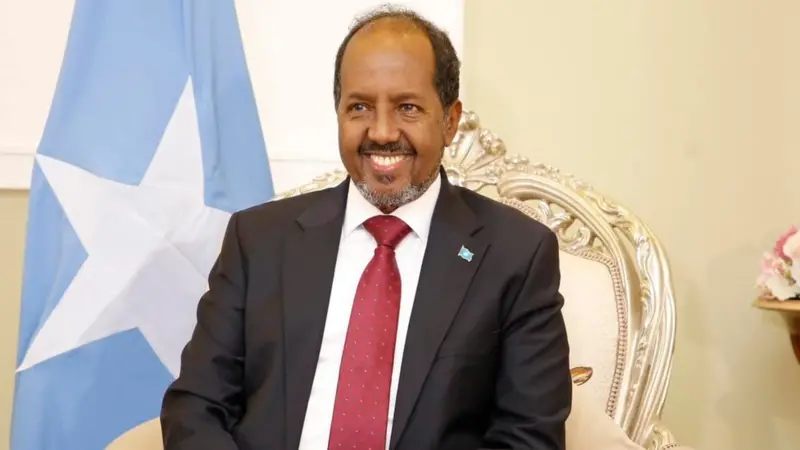
Zubeida Hassan Sheikh, the daughter of President Hassan Sheikh Mohamud, was recently appointed as a Counsellor and Legal Adviser at Somalia’s Permanent Mission to the United Nations.
Despite lacking prior experience in government service or international organizations, she is now among the figures expected to contribute to the advancement of Somalia’s foreign policy.
Similarly, Mushtaq Dahir Hassan, the sister of Kamal Dahir Hassan (Kamal Guutale)—a senior official in the Office of the Prime Minister—has also become part of the diplomatic staff. This appointment has further fueled debate about the influence of family ties within Somalia’s foreign affairs sector.
As this continues, President Hassan Sheikh, whose term is nearing its end, is seen as defending his administration by distributing key responsibilities as follows:
Foreign affairs have been entrusted to Jihaan and Subayda.
National security has been assigned to Maslax and Abdifataah.
National development has been handed to his brother-in-law, Adam Rooble.
Major government contracts have reportedly been delegated to his son, Abdiqani Hassan.
With the exception of General Maslax, who has some military background and limited experience, the others are viewed as lacking the professional skills or expertise required for the positions they hold.
Critics argue that instead of selecting qualified Somali intellectuals at home and abroad, President Hassan Sheikh has chosen to place his own children and close relatives into government roles, expanding their influence into offices they were never previously expected to occupy.
This situation, according to sections of the Somali public, has caused widespread frustration and concern.