

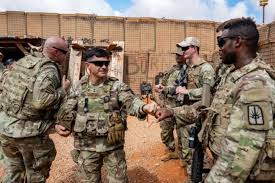
Kismayo (KAAB TV) – On September 4, 2025, U.S. and African partner forces stationed near Kismayo, a strategic city in southern Somalia, came under indirect fire—specifically mortar or rocket attack—likely launched by the militant group Al-Shabaab. According to U.S. Africa Command (AFRICOM), there were no injuries, and no damage to personnel or infrastructure reported.
The group Al-Shabaab later claimed responsibility, asserting that they inflicted casualties and destroyed military vehicles—a claim that has not been verified independently.
This attack is set against a backdrop of sustained, complex counterterrorism operations:
In 2025 alone, AFRICOM, alongside Somali forces, has conducted 73 airstrikes targeting Al-Shabaab and ISIS‑Somalia across regions like Golis mountains and Jubaland.
A two‑week joint operation wrapping up on August 23, 2025, targeted ISIS safe havens in Puntland, demonstrating intensified cooperation between U.S. and Somali authorities.
Al-Shabaab has maintained pressure through indirect fire and IED tactics, regularly targeting bases in Lower Shabelle, Kismayo, and Mogadishu.Kismayo Airport and nearby installations are vital logistical hubs.
Media outlets initially reported “no damage,” some sources noted “minor damage to the runway” The region remains a flashpoint: Al-Shabaab continues to exploit indirect fire capabilities despite counter-strikes, aiming to disrupt operations and morale.
Indirect fire—mortar or rocket attacks—are a hallmark of their tactics. These weapons offer the advantage of striking from distance while reducing exposure to direct combat.
The frequency of indirect fire attacks as part of Al-Shabaab’s operational pattern has been well documented in recent years,.
The 2025 Shabelle Offensive (Operation Ramadan) began on February 20, 2025, with Al-Shabaab attempting to seize central regions near Mogadishu.
The offensive involved ground assaults and reached some towns briefly before being repelled.
Counterterrorism operations in Puntland, notably Operation Hilaac, continued to target ISIS-Somalia strongholds with support from U.S. forces and Puntland-based units.
Additional high-profile attacks, such as the July 9, 2025 bombing at Jaalle Siyaad Military Academy and the March 2025 attack on the Cairo Hotel in Beledweyne, highlight Al-Shabaab’s ability to strike both military and civilian targets.
The attack’s lack of physical harm may reduce immediate alarm—but indirect fire’s unpredictability fuels ongoing insecurity and forces operational vigilance.
Even without verifying Al-Shabaab’s claims, the attack sends a psychological message that U.S. and allied forces are still targets.
The incident underlines that indirect fire remains a key tactic for insurgents across Somalia, particularly in southern and central regions.
The incident reaffirms the need for improved intelligence, base defense, and regional cooperation, especially in Southern Somalia where Al-Shabaab maintains footholds.
While civilian impact wasn’t reported in this incident, similar attacks in Mogadishu have injured civilians and damaged infrastructure—highlighting the collateral risks of indirect fire.