


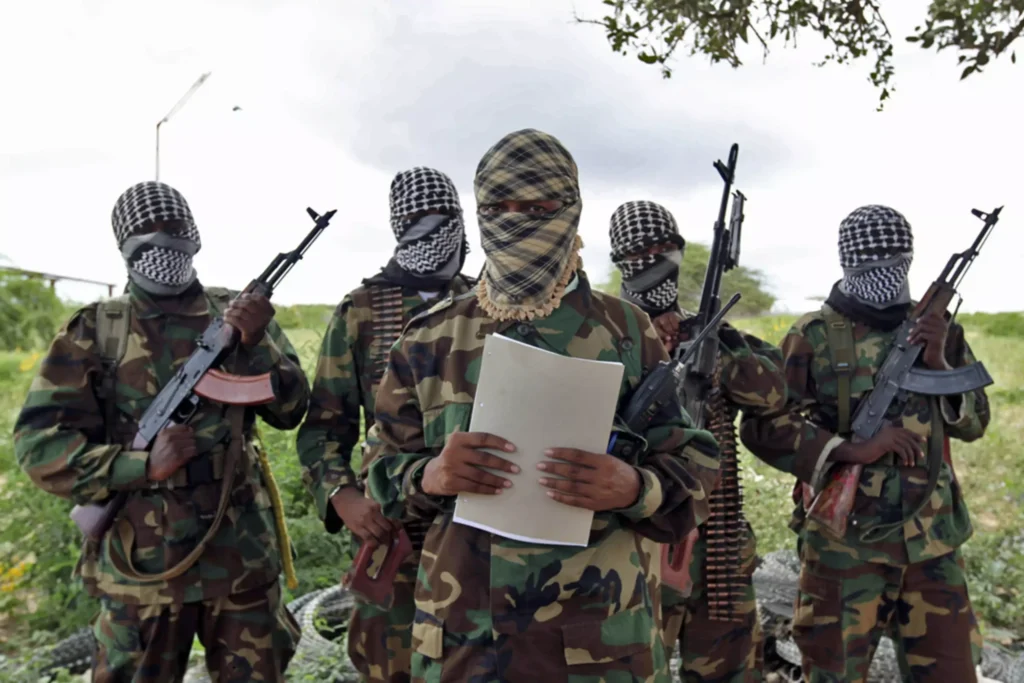


Al-Shabaab has reportedly released five humanitarian aid workers who were abducted in the Raar area near Buurhakaba district in Bay region, ending days of uncertainty over their fate.
According to local sources, the aid workers were seized while carrying out humanitarian activities in the area, where relief organizations operate to support communities affected by insecurity, displacement and recurring humanitarian crises.
Their abduction sparked concern among local residents, relatives and aid agencies, highlighting the persistent security risks facing humanitarian personnel in southern Somalia.
Reports from the area indicate that the five workers were freed after a ransom was allegedly paid. Local sources claim that $1,000 was paid for each individual, bringing the total amount to approximately $5,000.
However, the circumstances surrounding the release have not been independently verified, and no official statement has yet been issued regarding the reported payment.
The identities of the workers, the organization they were employed by and the exact duration of their captivity have not been publicly disclosed.
It also remains unclear where they were held during their detention and whether they suffered any mistreatment while in captivity.
The incident has renewed concerns about the safety of humanitarian workers operating in conflict-affected regions of Somalia.
Aid personnel frequently work in remote communities where access to food, clean water, healthcare and other essential services depends heavily on humanitarian assistance.
However, these workers often face threats including kidnapping, extortion, intimidation and armed attacks.
Security analysts warn that kidnappings remain a significant challenge in areas where armed groups maintain influence. Such incidents not only endanger humanitarian staff but can also disrupt the delivery of life-saving assistance to vulnerable populations.
The reported ransom payment has also raised broader questions about how armed groups generate revenue.
If confirmed, the payment could underscore concerns that kidnappings continue to serve as a source of income for militant organizations operating in parts of Somalia.
Humanitarian organizations often face difficult choices when staff are abducted, balancing efforts to secure the safe release of their employees against concerns that ransom payments could encourage future kidnappings.
The issue remains a contentious one among aid agencies and security experts worldwide.
The Bay region, including Buurhakaba and surrounding areas, has long experienced a combination of security challenges and humanitarian needs.
Thousands of residents rely on aid agencies for support, particularly in communities affected by drought, displacement and limited access to basic services.
Aid groups fear that continued threats against humanitarian workers could hinder relief operations and make it more difficult to reach people in urgent need of assistance.
As a result, the latest abduction case is likely to renew calls for stronger security measures to protect humanitarian personnel and ensure the uninterrupted delivery of aid across southern Somalia.
While the reported release of the five workers has been welcomed by local communities, questions remain about the circumstances of their captivity and the broader security environment facing humanitarian organizations working in Somalia’s conflict-affected regions.