

Mogadishu (KAAB TV) – An audacious and prolonged attack by the Al-Shabaab militant group on one of Somalia’s most secure detention facilities, the Godka Jilicow Prison in Mogadishu, was brought to an end early Sunday morning after a fierce 11-hour battle.
The assault, which began on the afternoon of Saturday, October 4, is one of the most daring operations Al-Shabaab has launched in the capital in recent years.
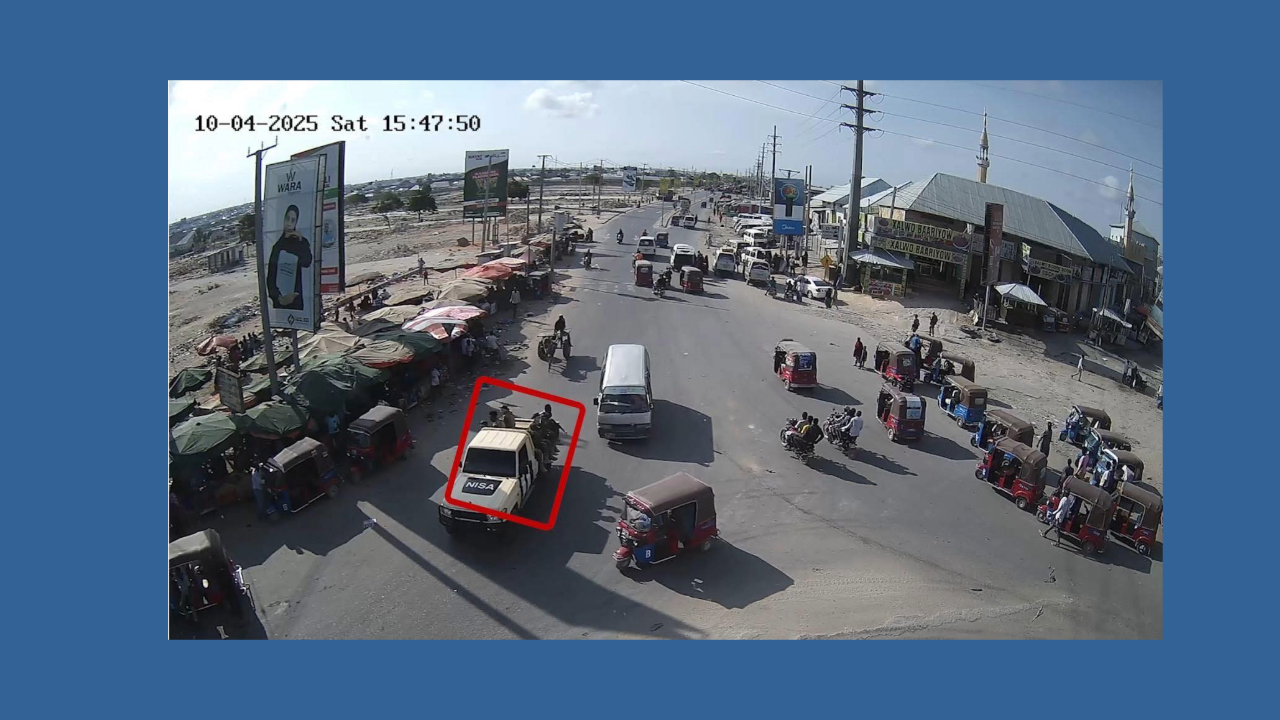
According to security sources, the attack commenced when a vehicle laden with explosives, reportedly a pick-up truck commonly referred to as “Abdi Bile” and previously used by Somalia’s National Intelligence and Security Agency (NISA), detonated at the main entrance of the heavily fortified prison.
The explosion was immediately followed by a direct assault by armed Al-Shabaab militants who stormed the facility.
The attackers were said to be well-coordinated and familiar with the layout of the prison, suggesting possible insider support.
Security officials confirmed that the vehicle used in the attack had been seen circulating in Mogadishu for weeks and had access to normally restricted areas — indicating it may have retained official clearance or belonged to a defected NISA unit.
Siege Ends After Hours of Intense Combat
The attack stretched into the early hours of Sunday, October 5. It was eventually quelled after elite units of the U.S.-trained Gashaan special forces intervened and engaged the militants in a drawn-out firefight.
According to intelligence sources, all of the attackers were neutralized by dawn.
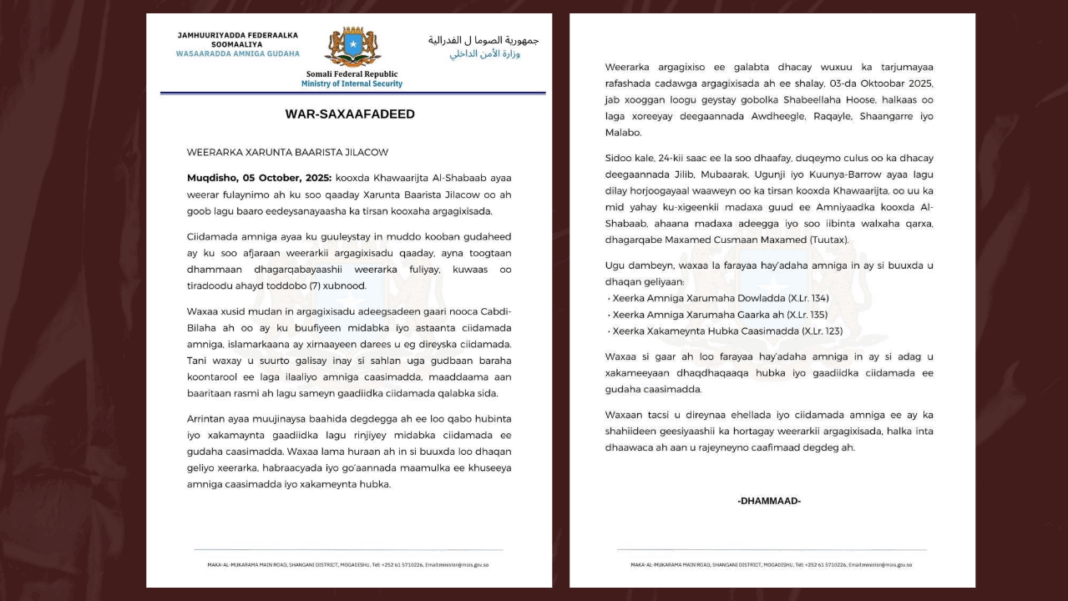
Sources within the Ministry of Internal Security reported that seven Al-Shabaab fighters were killed during the confrontation. However, Kaab TV has independently confirmed through multiple security officials that up to 10 militants were involved in the assault.
Before the arrival of Gashaan forces, Turkish-trained Haram’ad police units, who initially responded to the attack, withdrew from the scene late Saturday night, reportedly due to the intense level of firepower deployed by the attackers.
Alarming Insider Support and Prison Break
Perhaps the most alarming aspect of the attack was the revelation that at least four of the attackers were recent Al-Shabaab defectors who had been absorbed into NISA’s intelligence ranks.
These defectors, who had been providing information on militant operations in Mogadishu, are now under investigation, with NISA suspecting they may have been double agents.
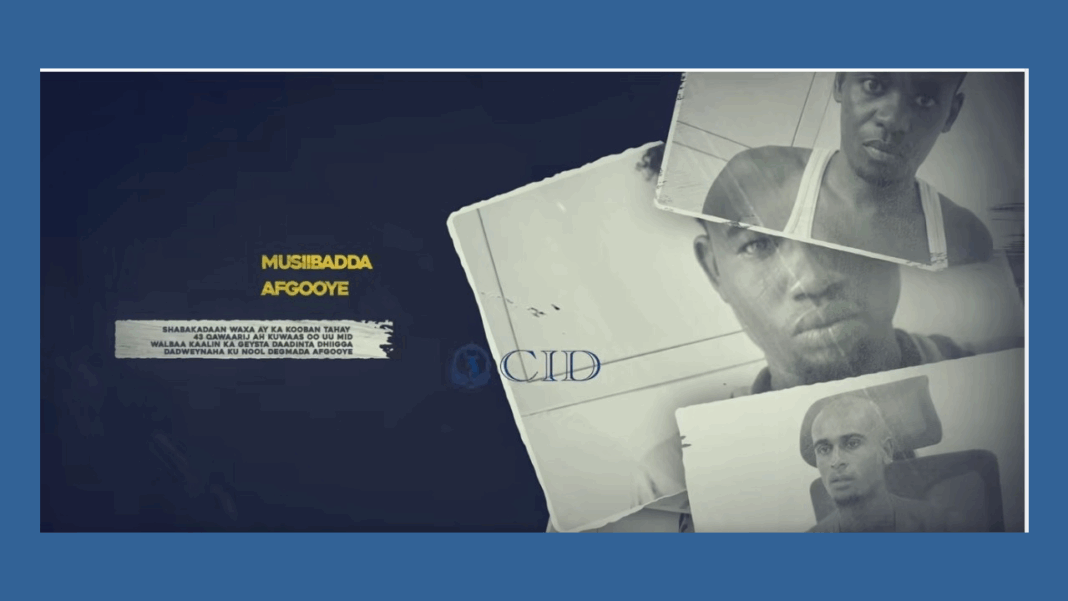
Additionally, in a shocking twist, several prisoners — including three high-value Al-Shabaab detainees recently arrested in Afgooye District — managed to escape during the chaos.
These individuals were awaiting trial for their involvement in bombings and targeted assassinations in the Lower Shabelle region.
An official in the Afgooye administration confirmed to Kaab TV that the escaped detainees were part of a larger group under investigation in what has become known locally as the “Afgoye Tragedy.”
NISA has so far refused to comment on the attack or the escape of these prisoners.
Casualties and Damage
While the government has not released official figures regarding casualties or the extent of the damage, sources who visited the prison site following the battle reported grim scenes.
A military officer who entered the compound after the siege said he personally counted more than 20 bodies, including both attackers and what appeared to be prison guards and detainees.
Some prisoners were reportedly caught in the crossfire, while others were either forcibly armed or chose to join the attackers once the facility was breached.
One NISA source indicated that some former Al-Shabaab fighters who had been imprisoned may have rejoined the group during the attack, having been supplied with weapons and explosives once the compound was overrun.
Implications and Aftermath
The timing of the attack is significant. It came just hours after Somali Prime Minister Hamse Abdi Barre, NISA Director Mahad Salad, and Minister of Internal Security General Abdullahi Ismail Fartaag announced the reopening of several major roads in Mogadishu that had been closed for nearly a decade due to security concerns, particularly the threat of car bombings by Al-Shabaab.

In the wake of the assault, security was dramatically heightened across the capital. Major intersections and roads were swiftly closed, and public transportation and private vehicles were restricted, leading to widespread disruption across the city.
Investigation Underway
A major investigation has been launched by Somali authorities into how the attackers gained access to the prison, how NISA vehicles were used in the operation, and the apparent infiltration of intelligence ranks by Al-Shabaab sympathizers.
NISA is also reviewing its vetting process for defectors and informants, following accusations of negligence in the handling of former militants.
The attack on Godka Jilicow — a prison that has long symbolized the Somali government’s effort to contain terrorism — represents a serious breach of national security and highlights the persistent challenges Somalia faces in rooting out Al-Shabaab influence, even within its own institutions.