

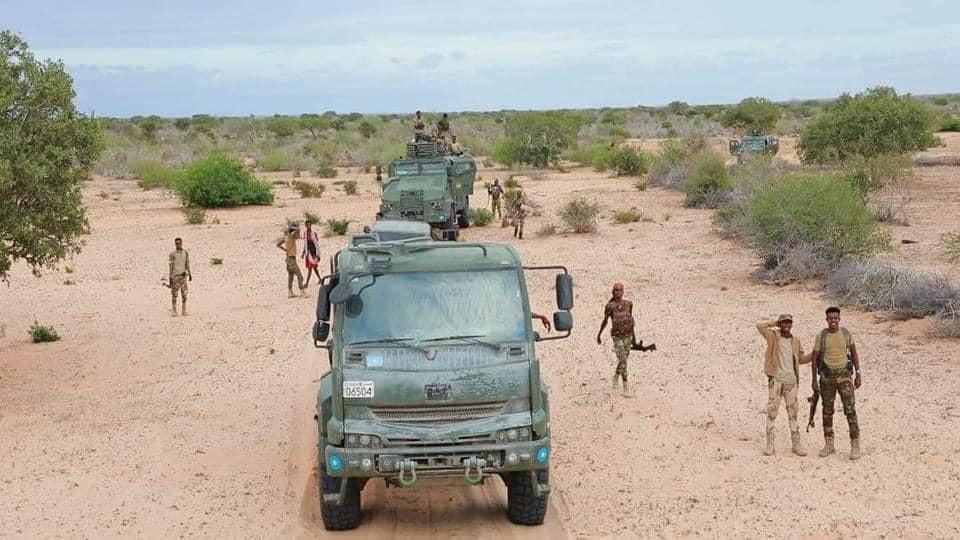

Reports from parts of Somalia’s Galmudug state indicate that Al-Shabaab has stepped up its activities in the region, with claims emerging that the militant group has taken control of additional locations.
The reported movements have raised fresh concerns about the security situation in Galmudug, particularly in rural areas where government forces and armed groups continue to compete for territorial control.
Although the names of the newly captured settlements have not been independently verified, recent security assessments show that Al-Shabaab retains a significant presence in parts of the Galgaduud and Mudug regions.
A May 2026 report by the European Union Agency for Asylum (EUAA) identified several settlements in Galgaduud as being under Al-Shabaab control.
These included El Buur, Wabxo, Galhareeri and Osweyne. The report also described large parts of rural southern Galgaduud as areas where the group maintains influence or where control is contested.
In Mudug, security assessments have similarly pointed to continued militant activity and a presence in parts of the countryside.
The available information indicates that Al-Shabaab has not been completely displaced from areas it previously occupied in Galmudug.
However, claims that it has recently seized additional locations require specific verification before the extent of any territorial gains can be established.
One of the major challenges facing efforts to defeat Al-Shabaab is the group’s ability to operate across vast rural areas, taking advantage of the distances between towns and the roads connecting remote communities.
Government forces maintain important bases and security installations in major towns, but securing the surrounding countryside requires a sustained military presence, reliable supplies, transport and coordinated security planning.
Al-Shabaab has also spent years using tactics to pressure local communities and disrupt civilian and commercial movement. Such activities can weaken local administration and make it harder for government forces to maintain control beyond major urban centres.
Previous analysis by the Armed Conflict Location and Event Data project (ACLED) has highlighted the importance of relations between government forces, local militias and communities in determining the progress or setbacks of military campaigns against Al-Shabaab.
The latest security concerns come as Galmudug begins a new political administration following the election of Liibaan Ahmed Hassan as state president on October 22, 2026.
During his inauguration ceremony in Dhusamareb on November 5, Liibaan pledged to make the fight against Al-Shabaab a central priority of his administration.
He also promised closer cooperation with the Federal Government, neighbouring federal member states and the people of Galmudug.
The new president said his administration would work to remove the militant group from areas where it continues to operate across the state.
The commitment presents an early political and security test for the new leadership, particularly given the size of the rural territory that government forces are expected to secure.
On November 7, 2026, President Liibaan transferred weapons, vehicles and other military equipment that he personally owned to Galmudug’s security institutions.
The handover ceremony was attended by Somali President Hassan Sheikh Mohamud.
Liibaan said the equipment, which had previously been used in operations against Al-Shabaab, would become the official property of the state’s security agencies.
The move forms part of efforts to place security assets under government institutions rather than leave them under the ownership or control of individual politicians and other private actors.
However, transferring weapons and vehicles alone will not guarantee that areas held by Al-Shabaab can be recovered. Sustained operations will require effective planning, trained personnel, reliable logistics and continued government support.
Al-Shabaab’s activities and the fighting in parts of Galmudug have direct implications for civilians, particularly those living in rural communities.
Many families depend on livestock, farming, small businesses and regular travel between towns for their livelihoods. Renewed clashes could force residents to abandon their homes, disrupt markets and reduce commercial transport.
Pastoral communities may also face difficulties accessing grazing land, water sources and livestock markets, particularly if roads become unsafe.
These challenges demonstrate that the conflict is not simply a military contest over territory. It also affects livelihoods, economic activity and access to essential services.
Improving security in Galmudug will require close cooperation between the Federal Government, the state administration, the Somali National Army and local security forces.
Better coordination of military operations, logistics and intelligence will be essential to prevent settlements recovered from Al-Shabaab from falling back under the group’s control.
The new administration will also need to strengthen relations with local communities, traditional elders and Macawiisley forces, which have played an important role in counterinsurgency efforts across central Somalia.
Reconciliation among Galmudug’s clans is another important factor. Internal disputes and divisions can undermine security efforts by weakening cooperation between communities, local authorities and forces fighting Al-Shabaab.
President Liibaan has previously pledged to begin clan reconciliation efforts during the first 100 days of his administration.
Three major factors are likely to shape Galmudug’s security outlook in the coming months: coordination between government and local forces, reconciliation among communities, and the ability to sustain military operations beyond short-term offensives.
If government and local forces establish consistent cooperation, protecting settlements and strategic routes could become more manageable. Genuine reconciliation could also reduce internal tensions and create a stronger foundation for joint security efforts.
Ultimately, military operations will need to be followed by effective administration, public services and a permanent security presence. Without those measures, areas cleared of militants could remain vulnerable to renewed attacks or a return of armed groups.