


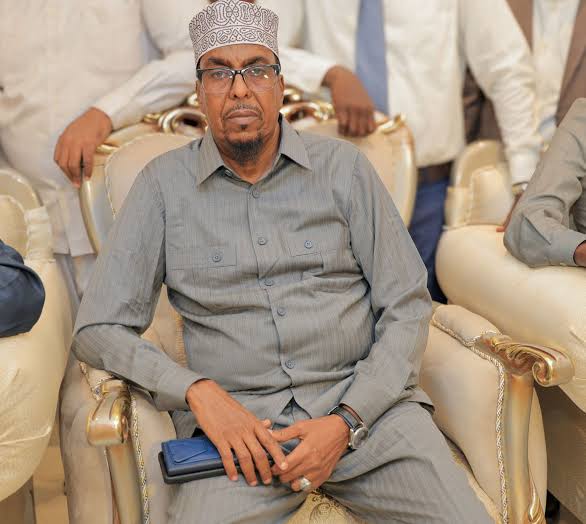


Jubaland President Ahmed Mohamed Islam, widely known as Ahmed Madobe, has appointed Mukhtaar Sheikh Ahmed Abdulle as the regional administration’s second deputy president, filling a senior leadership position that had remained vacant for more than a year.
The appointment was announced on November 14, 2026, through an official decree issued by the president’s office in Kismayo.
The position became vacant following the death of the previous officeholder, Abdulqadir Haji Mohamud, popularly known as Lugadheere, who died in Nairobi in June 2025.
The appointment places Mukhtaar among the senior officials in Jubaland’s executive leadership at a time when the regional administration is dealing with political, security and governance challenges, including its strained relationship with Somalia’s Federal Government.
According to the presidential decree, the appointment was made under the constitutional powers of the Jubaland president.
The document specifically cites Chapter Four, Article 67, Clause Five of the Jubaland Constitution, which the presidency says provides the authority to appoint members of the regional executive.
The move is intended to restore the administration’s senior leadership structure by filling a position that has remained unoccupied since Lugadheere’s death.
However, the constitutional reference cited in the decree requires further clarification.
A copy of the Jubaland Constitution available on the Somali Federal Government’s Ministry of Interior website identifies Article 67 as dealing with electoral matters, while provisions concerning appointments to the Council of Ministers are addressed elsewhere in the document.
It is therefore important to establish whether the Jubaland presidency relied on a revised version of the constitution or subsequent amendments when making the appointment.
The applicable constitutional text would be needed to verify the precise legal basis cited in the decree.
Lugadheere died in Nairobi on June 28, 2025, leaving the second deputy presidency vacant. During his tenure, he was part of Ahmed Madobe’s senior leadership team and the regional administration’s executive structure.
Mukhtaar’s appointment now ends the prolonged vacancy, although the presidency has not yet provided details about his professional background, previous government positions or political experience.
The announcement also did not outline his specific responsibilities or identify the duties he will be expected to undertake once he formally assumes office.
As second deputy president, Mukhtaar will become part of Jubaland’s senior executive leadership and is expected to participate in administrative and political responsibilities assigned to him by the president.
His precise role will depend on the regional constitution, applicable regulations and the responsibilities delegated by Ahmed Madobe.
Unlike some other Somali federal member states, which have a single deputy president, Jubaland has two deputy presidential positions.
Its executive leadership therefore consists of the president and two deputies, although their individual responsibilities depend on the administration’s governing arrangements.
The appointment comes amid reports of possible changes within Jubaland’s political and administrative institutions. A November 14 report by Garowe Online said Ahmed Madobe was expected to travel to Garowe for talks with Puntland President Said Abdullahi Deni.
The anticipated discussions are expected to focus on Somalia’s political situation, disagreements over the electoral process and efforts to establish a political framework acceptable to the country’s competing political stakeholders.
Other reports have also pointed to possible changes within Jubaland’s Council of Ministers and other government institutions.
Although the administration has not confirmed that Mukhtaar’s appointment is part of a wider restructuring plan, the decision comes at a time when it faces pressure to strengthen its leadership and improve the functioning of government institutions.
Jubaland has been among the federal member states involved in prolonged political disagreements with Somalia’s Federal Government.
The disputes have centred on the electoral framework, constitutional amendments, the division of powers between the federal government and regional administrations, and the direction of the country’s political transition.
Ahmed Madobe has been one of the most outspoken regional leaders on these issues, with Jubaland repeatedly calling for dialogue and a negotiated political settlement.
Against this backdrop, filling senior government positions is important for the Kismayo-based administration as it prepares to navigate further political discussions and decisions affecting Somalia’s future.
There is, however, no confirmed evidence that Mukhtaar’s appointment is directly linked to Jubaland’s dispute with the Federal Government or the anticipated talks between Ahmed Madobe and Said Deni.
Attention will now turn to Mukhtaar’s formal assumption of office, the responsibilities assigned to him and how he works with Ahmed Madobe and the first deputy president.
His involvement in internal political affairs, coordination between government institutions, security planning and development programmes will also help clarify the role he is expected to play in the administration.
For now, Jubaland’s presidency has not released a detailed work plan or further information about the new deputy president’s mandate.

