


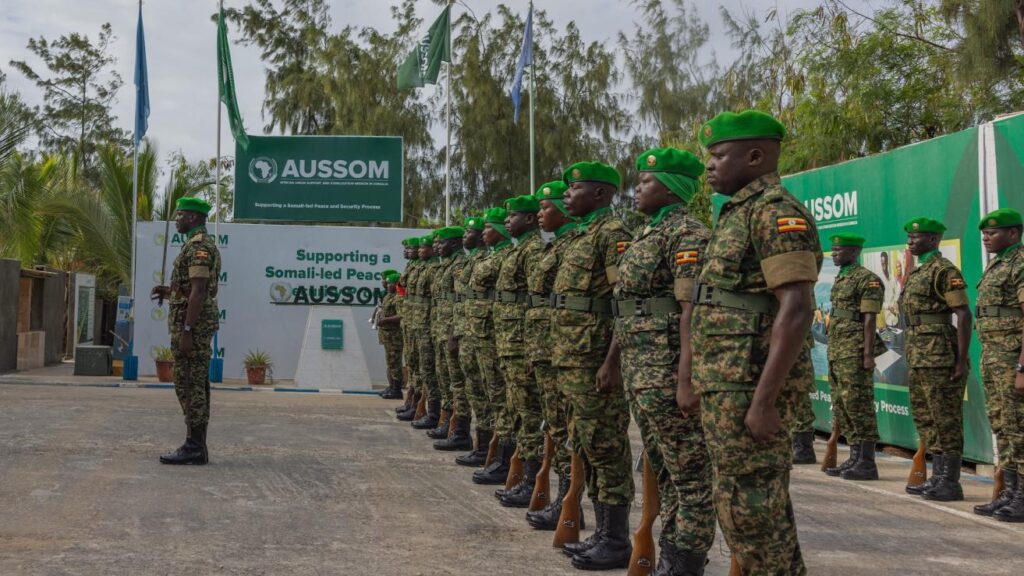


The African Union has agreed on a three-stage plan to reduce and eventually end the deployment of its forces in Somalia, while warning that Al-Shabaab could exploit the withdrawal to regain control of key towns, military positions and strategic supply routes.
The plan comes as Somalia continues to face a prolonged conflict with Al-Shabaab.
Federal government forces and local security units are working to secure areas previously recaptured from the group, but significant challenges remain, including shortages of equipment, inadequate salaries, limited military capacity and weaknesses in coordination among security forces.
The AU Peace and Security Council has stressed that reducing the African Union Support and Stabilization Mission in Somalia (AUSSOM) should not be treated simply as a withdrawal exercise.
Instead, the process must be guided by a coordinated security strategy that ensures Somali forces are capable of taking over positions currently held by AU troops.
Under the proposed framework, the transition will take place in three phases, with the mission’s presence gradually reduced as responsibility for security is transferred to Somali institutions.
The first phase is scheduled to run from November to the end of December 2026. During this period, more than 2,000 AUSSOM personnel are expected to be withdrawn, marking the initial step in the wider transition process.
The planned reduction is likely to require close monitoring of its impact on areas where AU forces are deployed, particularly locations critical to protecting government facilities, strategic installations and major roads connecting towns and cities.
The second phase is expected to begin in January 2027 and continue through December of that year.
It is considered the most significant stage of the transition, as it will involve a substantial reduction in AU personnel and the transfer of greater security responsibilities to Somali forces.
During this period, Somali security forces are expected to take over more of the areas where AUSSOM troops have been operating.
The success of this phase will depend on the capacity of national forces, the availability of funding, military equipment, training and their ability to withstand attacks by Al-Shabaab.
The third phase will cover the period beyond 2027, with the objective of bringing AUSSOM’s presence in Somalia to an end and transferring full responsibility for national security to Somali institutions.
However, the final stage will depend heavily on the progress made during the first two phases and the government’s ability to replace the security role currently performed by AU forces.
One of the AU’s main concerns is that Al-Shabaab could take advantage of the troop reductions, particularly if Somali forces are not adequately prepared to assume control of the areas being vacated.
The AU Peace and Security Council has warned that withdrawing international troops without a coordinated security arrangement could create opportunities for the group to recapture important towns, military bases and strategically significant supply routes.
The concern reflects Al-Shabaab’s continued ability to carry out coordinated attacks, ambushes and operations aimed at disrupting roads linking major population centres.
If Somali forces cannot move quickly to secure positions vacated by AUSSOM, some areas could face renewed insecurity.
The situation also highlights that defeating Al-Shabaab requires more than capturing towns and territory. Maintaining control over recaptured areas and ensuring lasting security for civilians and government institutions remain equally important.
The AU has said that responsibility for locations currently secured by its forces will be transferred gradually to Somali troops.
Before that happens, however, assessments will be conducted to determine whether national forces have the capacity to take control of military bases and other strategically important positions.
Those assessments will help determine the pace of the AUSSOM drawdown, with the aim of preventing the areas vacated by AU troops from becoming openings for Al-Shabaab to return.
Somalia will also need sustained support in funding, logistics, weapons, training and military coordination to ensure that its forces are not handed responsibilities they lack the resources and capabilities to fulfil.
The AU Peace and Security Council has further called for greater clarity on the mission’s future structure and the status of its personnel beyond December 2026.
It wants details on how many troops will remain, how many will be withdrawn, how personnel will be managed and what support will be provided to Somali forces throughout the transition.
The issue is particularly important for countries contributing troops to the mission, which need clear information about the future deployment of their personnel, the duration of their presence in Somalia and the arrangements for the planned reductions.
The three-phase plan places significant responsibility on the Somali government to prepare for the eventual departure of AU forces.
This will require accelerating the development of national security institutions, strengthening military command and coordination, and establishing a clear strategy to protect major towns, military installations and key transport routes.