


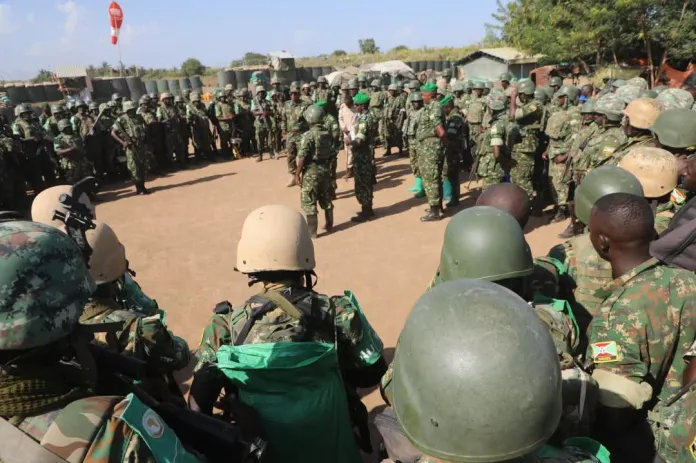


Some African Union forces stationed in the Lower Shabelle region are expected to withdraw from four key positions next week, according to submitted information.
This move is part of the African Union mission’s force drawdown plan in Somalia, with concerns being raised over the impact their exit could have on the region’s security situation.
The planned withdrawal comes at a time when Somali government forces are conducting military operations across various regions of the country, while facing challenges related to troop capacity, equipment, and maintaining security in areas vacated by African Union forces.
To date, the names of the four positions scheduled for handover have not been disclosed, nor has there been an official statement confirming the precise timing of the troop exit.
The exit of African Union troops raises concerns regarding the potential creation of a security vacuum in the Lower Shabelle region if forces taking over those locations are not adequately prepared.
The bases occupied by African Union forces are critical for securing supply routes, protecting local settlements, and supporting counter-operations against Al-Shabaab
If government forces are unable to swiftly assume control of the vacated sites, maintaining security across those areas could prove difficult.
The primary concern is that a mere exit of African Union forces is insufficient without a clear plan to ensure that replacement forces take over and possess the capability to maintain sustained security.
Lower Shabelle is critical to the overall security of Somalia, particularly for Mogadishu and the arterial transit routes connecting the capital to other southern regions.
The region is also among the primary operational zones where Somali government forces and their partners execute counter-insurgency operations against Al-Shabaab.
Consequently, any shift in the African Union troop presence could impact overarching security plans and government troop movements.
If the four positions are vacated without preparing sufficient forces to assume control, challenges facing government troops could intensify, especially while simultaneously engaged in active operations in other regions.
Concerns persist that Al-Shabaab may attempt to exploit areas vacated by African Union troops, particularly if they observe limited government capacity to maintain a sustained presence and defend those sectors.
The group may attempt to increase its operational movements or apply pressure on sites undergoing security handovers.
However, there is no verified official data here indicating that Al-Shabaab has already seized the targeted bases or possesses confirmed tactical plans regarding those specific sites.
The real-time outcome will depend on how the transition is managed, the operational capability of government forces, and security coordination among various institutions.
The African Union troop drawdown plan is tied to structural transitions within the security mission in Somalia and ongoing international funding constraints.
The mission transition period has reportedly been extended until the end of December 2026.
This transition requires a clear roadmap for transferring security responsibility to Somali forces, ensuring troops receive the necessary support, equipment, and capacity to safeguard critical sectors.
Should the African Union drawdown outpace government troop readiness, maintaining continuous security across all vacated sites will be challenging.
This renders troop coordination and handover planning vital to the transition’s success.
Official updates remain pending from the African Union mission command and the Somali government to clarify the specific positions being vacated, the exit timeline, and the operational strategy ensuring security remains uncompromised.
Furthermore, it remains critical to identify the replacement units assuming control, their holding capacity, and the logistical support they will receive once African Union contingents depart.
As of now, no official verified statement has named the four specific locations or confirmed the exact timetable for the withdrawal.