


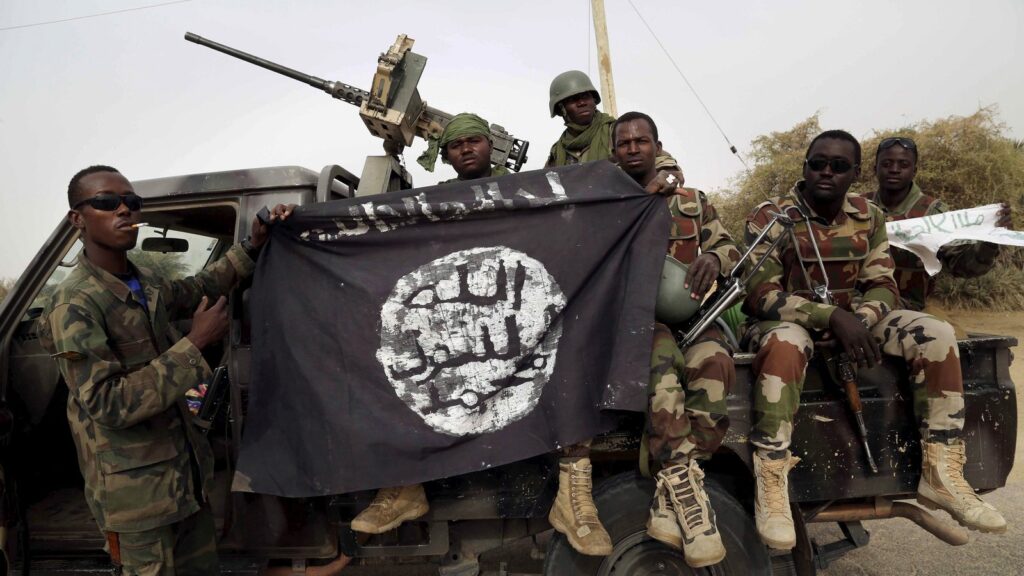


Dakar (KAAB TV) – In the rural village of Fambita (Kokorou), Western Niger, ISGS fighters stormed a mosque during Friday prayers. At least 44 civilians were killed and 13 injured as attackers surrounded worshippers, opening fire before setting fire to the market and nearby homes.
The attack prompted a national three-day mourning period and drew condemnation from international bodies, including the UN Human Rights Office, which called for impartial investigations and accountability.
In the Tillabéri Region, ISGS militants attacked Manda village at night, killing at least 71 civilians and injuring more than 20.
This massacre followed closely on the heels of another ISGS ambush in Banibangou that killed 31 Nigerien soldiers, marking a coordinated and intensifying campaign targeting both civilians and state forces.
A report from Amnesty International reveals a dramatic surge in violence:
Between January and July 2025, violence against civilians led to 544 conflict-related deaths—a sharp increase over the same period in 2024.
Over 60 children have been killed in Niger’s tri-border area (with Mali and Burkina Faso), with ISGS likely responsible for most of these attacks.
The security vacuum has had a devastating toll on displaced populations as well. Niger’s deteriorating stability since the 2023 coup has prompted a startling 49% increase in civilian fatalities from Islamist violence, with armed groups including ISGS driving massive displacement—now numbering over 3.5 million people across the region.
Analysts note that ISGS has become bolder and more opportunistic, exploiting reduced state presence and weak defense in rural areas:
Geopolitical shifts following Niger’s 2023 coup have weakened counterterrorism efforts. Resources have been diverted to secure the capital, Niamey, leaving border regions more vulnerable to insurgent expansion.
ISGS continues to press in tri-border areas, extending influence and conducting terror attacks across the Tillabéri region.
Though ISGS current attacks are particularly lethal, they form part of a grim pattern of atrocities in Niger:
January 2021: The Tchoma Bangou and Zaroumdareye massacres claimed at least 105 lives in two villages near Tillabéri.
April 2021: The Gaigorou massacre killed 19 civilians, mostly Zarma villagers, in yet another round of attacks.
August 2021: A mosque in Theim was attacked during Friday prayers, killing 16–17 worshippers; no group claimed responsibility, but ISGS was strongly suspected.
These past events reflect a long-standing strategy of targeting civilians, particularly via attacks on religious gatherings, villages, and communal leaders.
Since early 2025, the Islamic State group has dramatically escalated its attacks on civilians across Niger, marking a dangerous shift in the country’s security landscape.
The group’s growing presence, particularly in the Tillabéri and Tahoua regions, has resulted in a surge of deadly assaults on villages, mass killings, and widespread displacement.
This escalation reflects both the weakening of local defense forces and the group’s strategy to assert dominance by targeting unprotected communities. As a result, thousands of civilians have fled their homes, deepening the ongoing humanitarian crisis and straining the government’s already limited capacity to respond.