

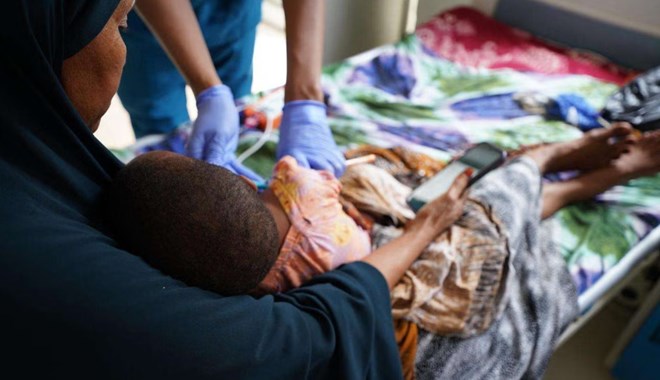
Galkayo (KAAB TV) – In an inspiring tale of strength and survival, pregnant Fadumo Abdi Ali walked over 120 kilometers with her husband from a remote village near the Ethiopian border to reach Mudug Regional Hospital in Galkayo, Somalia.
Exhausted and in critical condition, she was immediately attended to by doctors from Médecins Sans Frontières (MSF), who performed an emergency caesarean section that ultimately saved both her life and that of her newborn baby.
According to medical staff, Fadumo arrived at the hospital after several days of travel on foot and by occasional vehicle rides through harsh, drought-affected terrain.
Upon examination, doctors determined that her life was at serious risk due to complications during labor.
The surgical team acted swiftly, performing the life-saving operation. Fadumo’s baby was delivered safely and is now in stable condition, receiving postnatal care alongside the mother.
The Mudug region, which lies between Puntland and Galmudug, has long suffered from recurrent conflict, prolonged drought, and limited access to healthcare.
Many residents in rural areas have no nearby health facilities and must travel long distances, often on unsafe roads, to reach hospitals in Galkayo.
Many women and children do not make it in time, highlighting the severe shortage of maternal healthcare in central Somalia.
MSF, in collaboration with the Puntland Ministry of Health, continues to provide essential medical services in Galkayo, including emergency obstetric care, maternal and child health programs, treatment for malnutrition, and tuberculosis (TB) services.
These efforts have been crucial in saving countless lives amid worsening humanitarian conditions.
Health needs in Somalia are rising sharply, driven by a combination of food insecurity, climate shocks, and displacement.
According to recent humanitarian assessments, about 3.4 million people across Somalia are currently facing severe food shortages, a number projected to climb to 4.4 million by the end of 2025 if urgent aid is not scaled up.
The ongoing food crisis has also led to a surge in malnutrition among children and pregnant women, increasing pressure on already overstretched health facilities.
Despite these challenges, stories like Fadumo’s stand as a testament to resilience, the dedication of medical workers, and the vital role of humanitarian organizations working to ensure that even the most remote communities have access to life-saving care.