

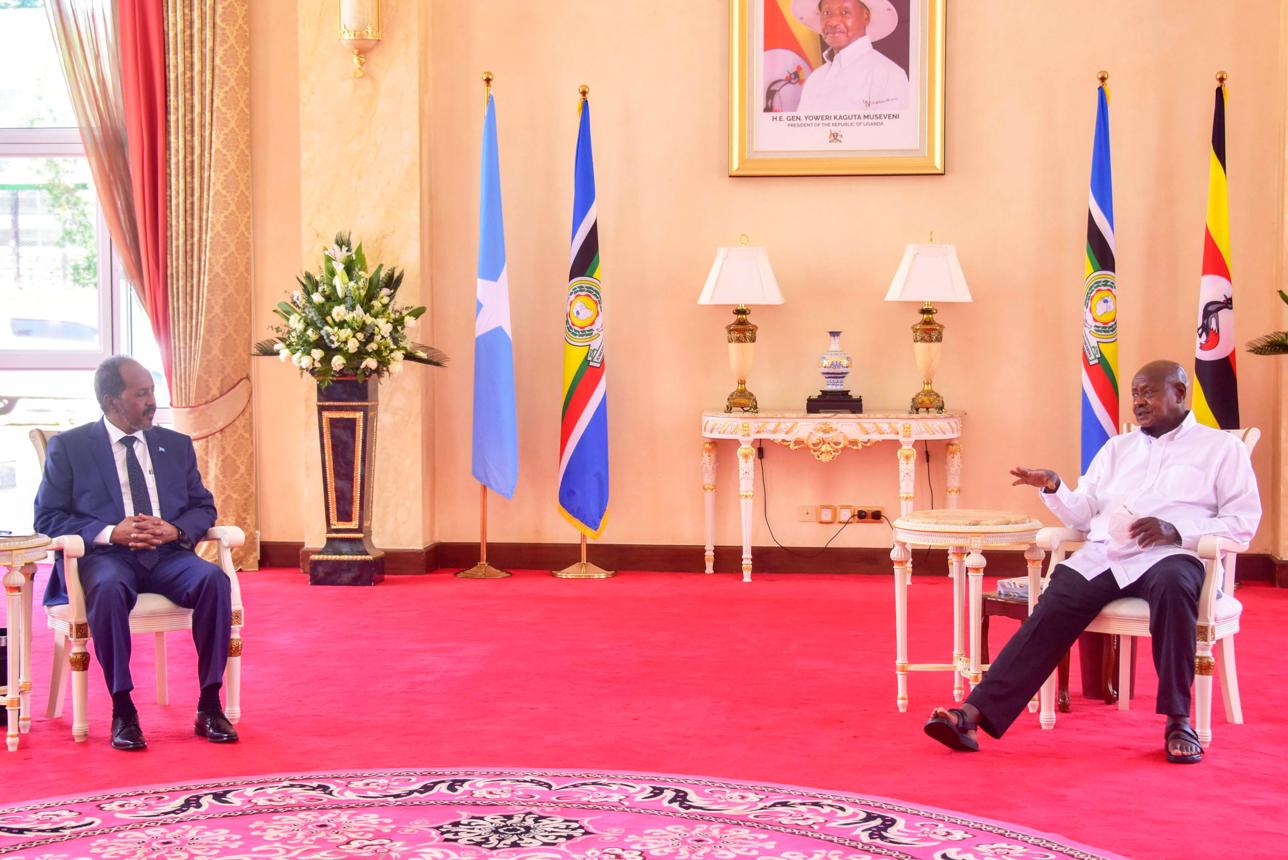

Somali President Hassan Sheikh Mohamud is expected to travel to Uganda today for a one-day visit, during which he will meet Ugandan President Yoweri Kaguta Museveni.
The trip comes amid a deepening political crisis in Somalia and renewed diplomatic efforts to resolve the dispute between the Federal Government and opposition politicians.
Although the visit to Kampala is expected to be brief, it carries considerable political significance.
It comes at a time when attempts to reach an agreement between the rival sides have stalled, with disagreements persisting over elections, constitutional changes and the country’s political direction.
There are growing concerns that the dispute could enter a more difficult phase unless the government and opposition agree on a credible dialogue process that addresses the concerns of all parties.
November 15 had been identified as a target date for President Hassan Sheikh and opposing political leaders to reach an understanding. However, the efforts undertaken ahead of that deadline have so far failed to produce a breakthrough.
For more than 70 days, Hassan Sheikh has faced sustained political and diplomatic efforts aimed at bringing the opposing sides together.
Several attempts to narrow their differences have taken place, but none has yet resulted in an agreement acceptable to all parties.
The prolonged deadlock has increased uncertainty over Somalia’s political future.
Opposition figures have continued to call for a negotiated settlement based on consultation, compromise and an electoral framework that enjoys the confidence of the country’s main political stakeholders.
Uganda is now emerging as a possible venue for further diplomatic engagement on the crisis, particularly if the Somali president and opposition leaders can be brought together at a meeting involving countries contributing troops to Somalia’s security mission.
Such a gathering could carry significant political weight if it brings together Hassan Sheikh, opposition representatives and leaders of countries supporting security operations in Somalia.
It could provide an opportunity to discuss the political deadlock alongside wider concerns about stability and the country’s security transition.
Foreign diplomats reportedly present in Kampala are also expected to play a role in efforts to ease tensions and encourage the Somali parties to return to negotiations.
Their involvement could help create an opportunity for renewed dialogue, although the prospects for an agreement remain uncertain.
There had previously been plans for President Museveni to visit Mogadishu and participate in mediation efforts over Somalia’s political dispute. However, that visit was reportedly postponed.
The meeting between Hassan Sheikh and Museveni in Kampala could now offer an opportunity to revive those diplomatic initiatives.
Uganda has long been involved in Somalia’s security and political affairs and is among the countries that have deployed troops to support security operations in the country.
Kampala has repeatedly expressed support for Somalia, while previous meetings between the two presidents have covered security cooperation, state-building, political reforms and bilateral relations.
The visit comes as Hassan Sheikh faces mounting political pressure over the unresolved dispute.
The challenge facing the Somali leadership is no longer simply to organise meetings or issue calls for dialogue, but to secure a substantive agreement that addresses the differences between the government and its opponents.
If the Kampala initiative produces a meaningful breakthrough, it could help reduce political tensions and create conditions for the rival sides to resume negotiations.
An agreement could also provide a basis for addressing disagreements over the Constitution, elections and the future arrangement of federal institutions.
However, if the diplomatic efforts fail to produce an understanding and the president maintains his position without making concessions, concerns could grow that the dispute will move into a more confrontational phase.
Such a development could affect national stability, security, the functioning of government institutions and the wider political process.
Kampala could therefore become an important venue for determining whether Somalia’s political leaders can return to negotiations and reach a compromise, or whether the country will remain caught in a prolonged dispute with uncertain consequences.