

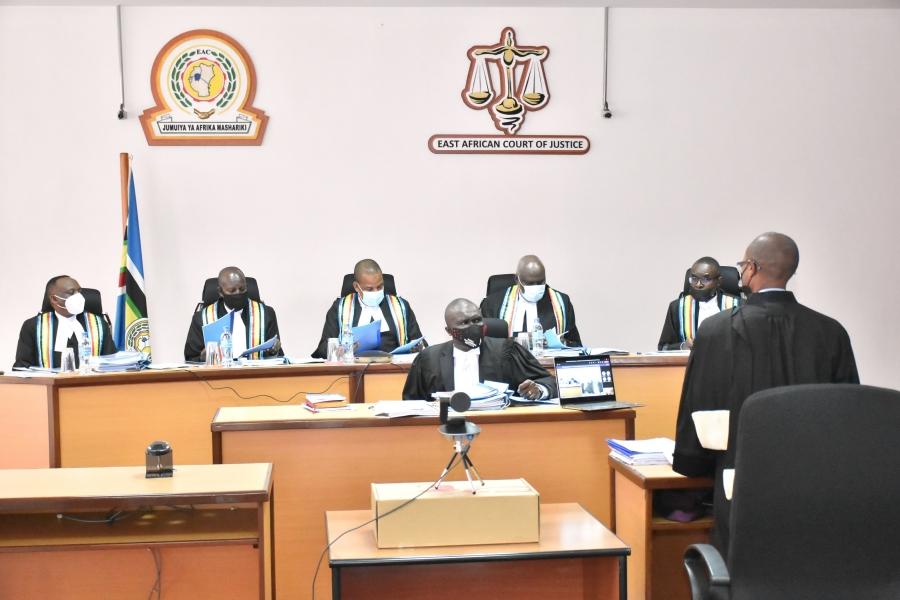

Former Somali Supreme Court Chief Justice Dr. Baashe Yusuf Ahmed and six other judges have reportedly filed a case against President Hassan Sheikh Mohamud before the East African Court of Justice (EACJ) in Arusha, Tanzania, escalating the dispute over the independence of Somalia’s judiciary.
The judges accuse the president of violating the Somali Constitution and interfering with the independence of the judicial branch.
They also allege that Supreme Court judges have faced threats and intimidation linked to their decisions on the country’s constitutional dispute.
According to information circulated about the case, the judges have asked the regional court to examine their complaints and consider appropriate legal action under the Treaty for the Establishment of the East African Community.
The reported filing comes amid an escalating confrontation between Villa Somalia and the Supreme Court following the removal of Baashe from his position and the court’s rulings on constitutional matters and the tenure of federal institutions.
On November 4, President Hassan Sheikh announced Baashe’s removal and appointed lawyer Ibrahim Idle Suleiman as his replacement.
The Supreme Court subsequently rejected the decision, describing it as unlawful and arguing that the president could not unilaterally dismiss the court’s chief justice.
Tensions have also intensified following the Supreme Court’s intervention in the dispute over the terms of the president and parliament, which has generated competing legal interpretations and deepened the wider political crisis.
The East African Court of Justice is responsible for interpreting and applying the East African Community Treaty.
However, whether it can hear the judges’ complaint will depend on the court’s jurisdiction, the legal basis of the application and whether the claims fall within the scope of the treaty.
There has been no official confirmation that the EACJ has registered or formally accepted the case. No case reference number or hearing schedule has been made public, leaving the status of the reported application unclear.
If confirmed, the move would mark a significant escalation of Somalia’s institutional dispute, taking the confrontation over judicial independence beyond the country’s domestic legal system and placing it before a regional court.
The Somali government and the presidency have yet to publicly respond to the allegations outlined in the reported filing.
Attention is now focused on whether the court will accept the application and how the authorities will address the growing confrontation with the Supreme Court.
The dispute has renewed concerns over the independence of the judiciary, the separation of powers and the need for a lawful resolution to Somalia’s institutional crisis.