


The most consequential political document to emerge in Mogadishu this month was just five pages long.
Issued by Somalia’s Supreme Court on November 5, the judgment challenged the legal basis on which President Hassan Sheikh Mohamud intended to remain in office for another year. It also set deadlines for political leaders to agree on an electoral framework and proceed towards elections.
The ruling was an extraordinary assertion of judicial authority in a country where political disagreements have more often been settled through negotiations among powerful individuals than through the consistent application of constitutional rules.
But the judgment arrived at an unusually consequential moment.
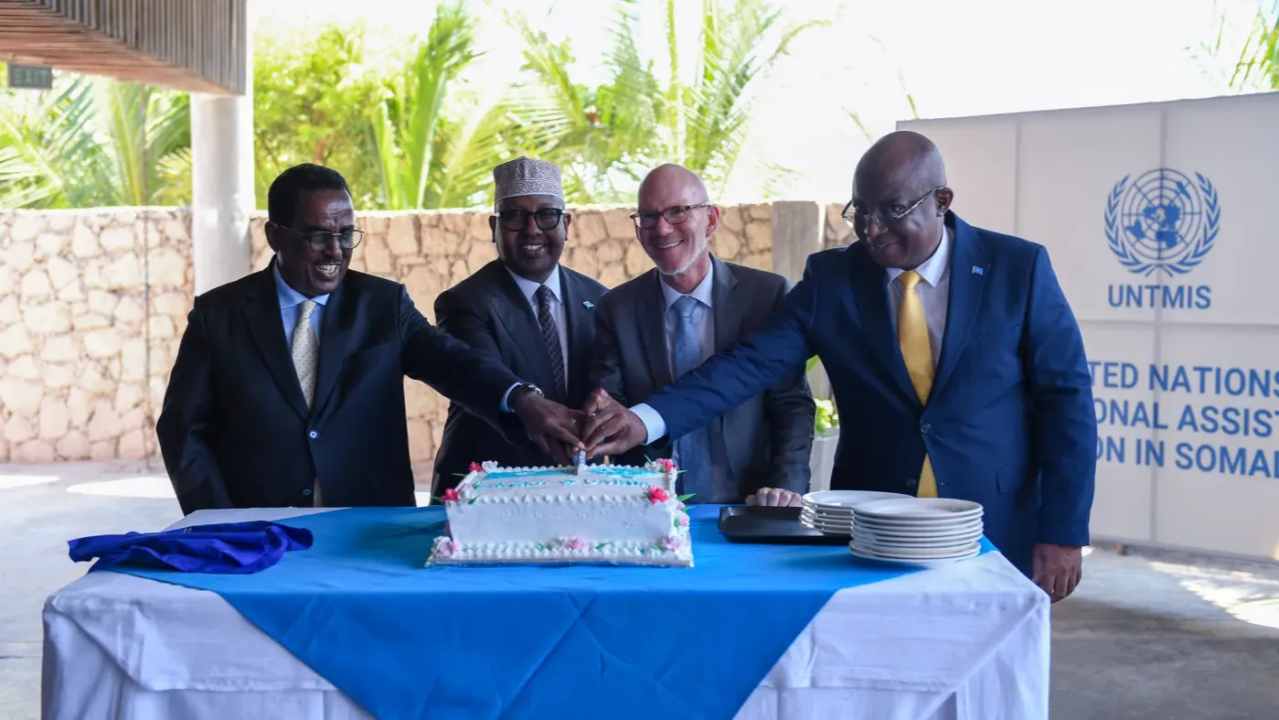
Five days earlier, the United Nations had closed its dedicated political mission in Somalia, ending a period of diplomatic engagement that included facilitating negotiations between the federal government, regional administrations and opposition figures.
Somalia was therefore entering a constitutional confrontation without an established international political mission to help manage it.
The convergence of these developments raises a broader question about Somalia’s political transition: whether the end of international political facilitation will be accompanied by stronger national institutions, or instead give the presidency greater latitude to shape the country’s political future without effective institutional checks and accountability.
For President Mohamud, the challenge is no longer simply how to advance his preferred electoral model. It is whether he can preserve his administration’s political position while confronting a judicial decision that questions its constitutional authority.
For Somalia, the stakes are more fundamental: whether the institutions of a still-fragile federal state can impose meaningful limits on those who exercise power.
international transition, Unfinished political settlement
On October 31, the United Nations Transitional Assistance Mission in Somalia, known as UNTMIS, formally completed its two-year transition and ceased operations.
The closure followed Security Council resolutions 2753, adopted in October 2024, and 2809, adopted in December 2025. The transition was undertaken at the request of the Federal Government, with responsibilities being transferred to Somali institutions and the wider United Nations Country Team.
The government regarded the development as an important milestone in national ownership.
Deputy Prime Minister Salah Ahmed Jama described the closure as a sign that Somalia had moved beyond its transitional period and difficult circumstances.
There is a legitimate argument behind that position.
A country cannot indefinitely depend on international missions to perform functions that should eventually belong to its own institutions. Somalia’s political authorities have long sought greater responsibility for state-building, security and governance.
But the transfer of responsibilities does not automatically transfer institutional capacity.
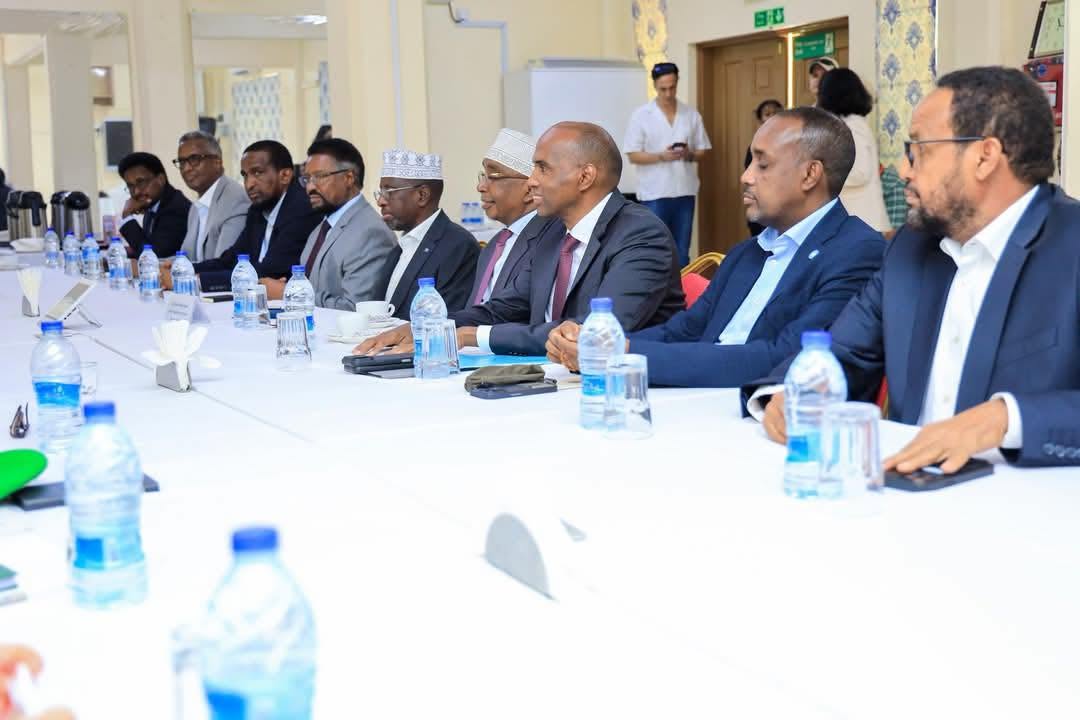
Successive United Nations political missions maintained relationships across Somalia’s complicated political landscape. Their responsibilities extended beyond technical assistance to include political facilitation, constitutional support, reconciliation and engagement with federal member states.
The mission was never an impartial authority with the power to compel Somali leaders to compromise. Its influence depended on access, diplomatic relationships and the willingness of domestic political actors to engage. Its practical value lay in providing an established channel through which disagreements could be discussed, political actors kept in contact and international partners could maintain a broader view of developments.
That function was particularly important in a political system where relations between Mogadishu and the federal member states have repeatedly deteriorated over the distribution of constitutional authority.
The 2021 confrontation between former President Mohamed Abdullahi Mohamed, known as Farmaajo, and his opponents then included the incumbent, which contributed to prolonged electoral delaysand institutional uncertainty, illustrated how quickly disagreements over political mandates could threaten the wider state.
International diplomacy did not resolve the underlying disputes, but it helped sustain engagement when domestic negotiations became difficult.
The closure of UNTMIS therefore removes more than an administrative structure. It ends a dedicated diplomatic presence at a time when the country’s political institutions are facing one of their most consequential tests since the establishment of the federal system.
As the Associated Press (AP) reported ahead of the closure, no agreed replacement mediator had emerged to handle the unresolved electoral dispute. That absence is now becoming more significant.
Contest Over Constitutional Authority
The current confrontation has its origins in the constitutional amendments approved by parliament in March 2024.
The government presented the reforms as part of a broader effort to move Somalia towards direct elections, reduce dependence on the longstanding clan-based indirect electoral system and establish a more coherent constitutional framework.
The ambition was politically significant.
Somalia’s existing electoral arrangements have long been criticised for concentrating considerable influence among clan representatives, political brokers and a relatively small circle of parliamentary actors.
But the reforms also exposed disagreements over the process through which constitutional change should occur and who should have the authority to determine the country’s political future.
The most consequential disagreement concerned the duration of political mandates.
The amendmentsintroduced five-year terms, replacing the previous four-year arrangement. The government maintained that the revised framework allowed the current president and parliament to remain in office until 2027.
Opponents argued that the amendments could not retrospectively extend the mandates of officials elected under the previous constitutional framework.
Last week, the Supreme Court substantially endorsed that distinction.
According to the judgment, the president’s four-year mandate had expired on May 15, 2026, while parliament’s mandate had expired on April 14. The court found that the constitutional amendments did not explicitly extend the terms of existing officeholders. It directed political stakeholders to agree on an electoral framework within 30 days and ordered elections within 90 days.
It also restricted the government to routine caretaker functions pending the electoral process.
The ruling was particularly consequential because it came amid a separate confrontation over the judiciary.
On November 4, the presidency announced the dismissal of Chief Justice Baashe Yusuf Ahmed and the appointment of a replacement. The Supreme Court subsequently rejected the dismissal, arguing that the president had not followed the constitutional procedures required to remove the chief justice.
Taken together, the developments have produced an unusually direct confrontation between the executive and judicial branches. The issue is no longer simply whether Somalia should adopt direct elections or retain elements of its existing electoral arrangements. It is whether constitutional institutions can operate independently when their decisions challenge the interests of the country’s political leadership.
A judicial ruling does not enforce itself. Its authority ultimately depends on whether government institutions and political actors recognise their obligation to respect it. The Supreme Court may have clarified its interpretation of the constitution, but the political and institutional mechanisms for securing compliance remain uncertain.
That is the central test now facing Somalia.
The political space created by the U.N.’s departure
The end of UNTMIS does not give Mohamud additional constitutional powers. But it potentially changes the political environment in which he exercises those powers.
The United States, United Kingdom and European Union retain substantial diplomatic relationships with Mogadishu. Türkiye and Qatar have their own political, economic and security interests in Somalia. The African Union and the Intergovernmental Authority on Development also retain regional diplomatic responsibilities.
But bilateral relationships are not necessarily substitutes for an established mediation mechanism.
International partners may share an interest in preventing instability while differing over how directly to challenge the government. Some will prioritise counterterrorism cooperation; others will be more concerned with constitutional legitimacy, democratic governance and the credibility of the electoral process.
A dedicated political mission provided a framework through which such concerns could be discussed and, to some extent, coordinated. Without it, the presidency may find itself negotiating with international partners individually rather than through a more consistent multilateral engagement.
That could make it easier for the government to manage external pressure, particularly if partners are reluctant to jeopardise security and development relationships.
It would be premature to conclude that the United Nations’ departure leaves the president free to act without international scrutiny.
The Security Council, bilateral partners and regional organisations retain considerable influence. But the absence of a dedicated political mission could reduce the capacity to translate that influence into sustained, coordinated diplomatic pressure.
For regional observers and diplomats, the central concern is whether Somalia retains the political and diplomatic mechanisms needed to manage a crisis in the absence of broad agreement over constitutional authority.
The Supreme Court’s judgment has sharpened the divide between the government and its opponents, potentially narrowing the space for political compromise. The danger lies less in an immediate deterioration of relations with international partners than in the diminishing capacity of a coordinated diplomatic response to influence decisions that remain politically contested.
In such circumstances, presidential discretion could expand even as constitutional legitimacy becomes more contested.
The federal question remains unresolved
The consequences of the confrontation will extend well beyond the presidential palace.
Somalia’s federal arrangement remains one of the country’s most persistent sources of political disagreement.
Puntland and Jubaland have maintained particularly difficult relationships with Mogadishu, questioning the federal government’s approach to constitutional amendments, electoral arrangements and the distribution of authority.
Their objections reflect a deeper disagreement about the nature of the Somali state and the extent to which political authority should be concentrated in the federal capital.
The dispute has become more complicated following the federal government’s intervention in Southwest State in March 2026, which resulted in the removal of President Abdiaziz Laftagareen and a further deterioration in relations between federal and regional political actors.
The November crisis is therefore unfolding against an already fractured federal landscape.
A negotiated electoral agreement in Mogadishu would not automatically resolve these underlying tensions. Nor would an agreement between the presidency and some opposition figures necessarily secure the participation of regional administrations.
The fragmentation has direct implications for security. Somalia’s campaign against Al-Shabaab depends on cooperation between federal institutions, regional administrations, local security forces and international military partners.
Political disagreements can complicate intelligence-sharing, military coordination and the distribution of resources. They can also create opportunities for al-Shabaab to exploit divisions among its adversaries and present itself as an alternative authority in areas where government legitimacy is contested.
The security environment is already difficult.
The group continues to conduct attacks across central and southern Somalia, while the international security transition faces financial and operational uncertainty. The withdrawal of Ugandan forces from forward positions and continuing questions about the financing and future of AUSSOM add another layer of pressure.
The African Union mission remains operational, but its ability to provide sustained support depends on predictable financing and a workable transition towards Somali security institutions.
Somalia is therefore confronting political and security transitions simultaneously. The departure of UNTMIS does not cause these problems, but it removes a dedicated political mechanism at a time when their interaction could become increasingly consequential.
A Narrowing Path to Compromise
The immediate test will be whether the government and opposition can agree on a political framework that accommodates the Supreme Court’s judgment.
President Mohamud’s proposed National Consultative Forum, scheduled for November 14-18, could provide an opportunity to negotiate an electoral settlement. But the political circumstances have changed substantially.
The opposition is no longer negotiating simply over the preferred electoral model or the technical arrangements for direct elections. It now has a judicial ruling challenging the government’s interpretation of its mandate.
If the government approaches the forum as an opportunity to secure broader acceptance of its existing electoral timetable, opposition participation may become more difficult. If discussions instead address the court’s judgment, the electoral framework and the participation of federal member states, they could provide a basis for a wider agreement.
The Somali Future Council, an opposition alliance involving prominent former national leaders, has challenged the government’s electoral approach. Its participation, alongside the positions of Puntland and Jubaland, will be important in determining whether any agreement has sufficiently broad political support.
There is also a question of enforcement.
The Supreme Court has established deadlines, but the political consequences of non-compliance remain uncertain. If leaders fail to agree on an electoral framework, or if the government does not implement the ruling, competing interpretations of political legitimacy could harden.
A government continuing to exercise executive authority could argue that it remains responsible for maintaining state functions. Its opponents could contend that its constitutional mandate has expired and that its continued exercise of power lacks legitimacy.
The longer the disagreement remains unresolved, the greater the risk that competing political claims will affect the operation of state institutions.
The United Nations Country Team will remain in Somalia, and the organisation has reaffirmed its commitment to peacebuilding, institutional development and inclusive political dialogue. The African Union and regional organisations also retain important diplomatic roles. But whether they can collectively provide an effective alternative to UNTMIS remains an open question.
The government has an opportunity to demonstrate that national ownership means stronger domestic political institutions rather than simply fewer international interlocutors. That will require more than convening a political forum. It will require a willingness to respect judicial decisions, negotiate with political opponents and recognise the role of federal member states in determining the country’s constitutional future.
Sovereignty is also about limits on power
There is an uncomfortable paradox at the centre of Somalia’s transition.
For years, the country has sought to reduce its dependence on international political and security structures. That ambition is understandable after decades in which external intervention became deeply embedded in the state-building process.
But the departure of international institutions does not, by itself, demonstrate that a country has acquired the capacity to manage its political affairs independently. That capacity is measured by the ability of domestic institutions to resolve disagreements, protect political participation and impose meaningful limits on executive authority.
Somalia’s constitutional arrangements remain incomplete, federal relations are strained and electoral processes continue to depend heavily on negotiations among political elites. The current confrontation exposes these weaknesses at a particularly sensitive moment.
For Mohamud, the challenge is to navigate the dispute without further undermining confidence in the institutions through which political authority is exercised. For the opposition, it is to translate its objections into a credible political settlement rather than another prolonged confrontation.
None of these challenges can be resolved simply by restoring a United Nations political mission. Its presence did not prevent previous electoral disputes, resolve disagreements over federalism or establish a durable constitutional settlement. Its departure may create an opportunity for Somali political actors to assume greater responsibility for resolving their differences.
But that opportunity comes with a corresponding obligation.
What happens next will help determine whether the end of international political supervision marks a genuine advance in Somali institutional independence or creates more room for political power to be exercised without sufficient accountability.
Somalia has spent decades trying to build a state capable of standing on its own. The test now is whether that state can also ensure that those who lead it remain answerable to the rules that are supposed to govern them.
Abdi Guled is a Horn of Africa analyst and journalist focusing on political risk, armed groups and geostrategic competition in the region.