

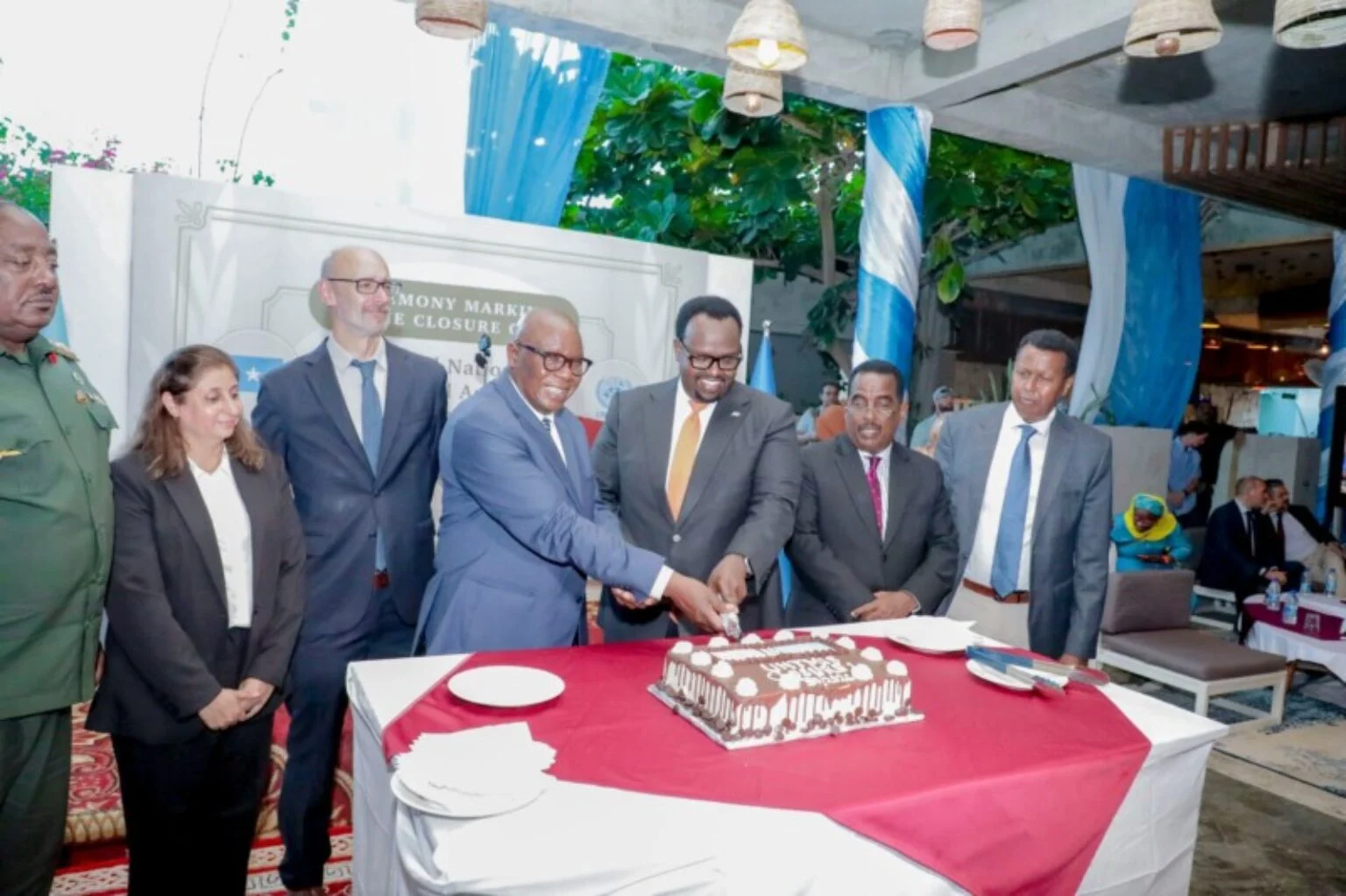

Somalia has entered a new phase of statehood and is increasingly managing its own affairs, Deputy Prime Minister Saleh Ahmed Jama said on Monday during a United Nations ceremony marking the closure of the UN’s political mission in the country.
Jama described the occasion as a historic milestone, arguing that the end of the United Nations Transitional Assistance Mission in Somalia (UNTMIS) reflected progress towards constitutional governance, federalism and democratic institutions, alongside greater national responsibility for security.
“This ceremony signals that Somalia has left behind the era of transition and difficult problems, and that it is a country with its own affairs, destiny and statehood, independent and with its own voice,” Jama told reporters.
He said Somalia was working to strengthen respect for its constitution and federal system while advancing democratic governance and giving citizens a greater role in political decision-making.
He also noted that Somali institutions now assume responsibility for much of the country’s security, although significant challenges remain.
The deputy prime minister said the UN’s departure would not end cooperation between the organisation and Somalia.
Instead, he expected relations to continue along the lines of the UN’s partnerships with other member states, with collaboration on development priorities and international issues.
Jama contrasted Somalia’s current position with earlier years, when the country was frequently discussed by the UN Security Council as a state facing severe crises and in need of international assistance.
He said Somalia’s presence on the 15-member council had changed the country’s role in international affairs, allowing it to participate directly in discussions on global issues.
He also pointed to Somalia’s growing engagement with regional and international economic institutions, including its participation in the East African regional market, efforts to join the World Trade Organization and relations with major international financial institutions.
Jama said the government’s priorities included combating al-Shabaab, expanding educational opportunities for young people, strengthening the rule of law and improving governance.
He thanked UN personnel who had worked in Somalia under difficult conditions, while stressing that development, accountable institutions and meeting citizens’ needs remained major tasks.
“It is a day of victory, a historic day. We congratulate the Somali people and thank the friends who worked with us,” he said.
UNTMIS replaced the UN Assistance Mission in Somalia (UNSOM) in November 2024 as part of a two-year transition requested by the Somali government.
Its mandate is scheduled to end on October 31, 2026, following the gradual transfer of responsibilities to Somali institutions and other UN agencies.
The closure marks the end of a specific UN political mission, rather than the termination of the organisation’s wider engagement in Somalia.
The United Nations has said it will continue supporting the country through its agencies and programmes, working with the federal government and international partners on peace, security, human rights and sustainable development.
Despite the milestone, Somalia continues to face serious security, political and humanitarian pressures.
The government’s ability to consolidate institutional gains and address these challenges will remain central to the country’s efforts to strengthen stability and reduce its dependence on international support.