

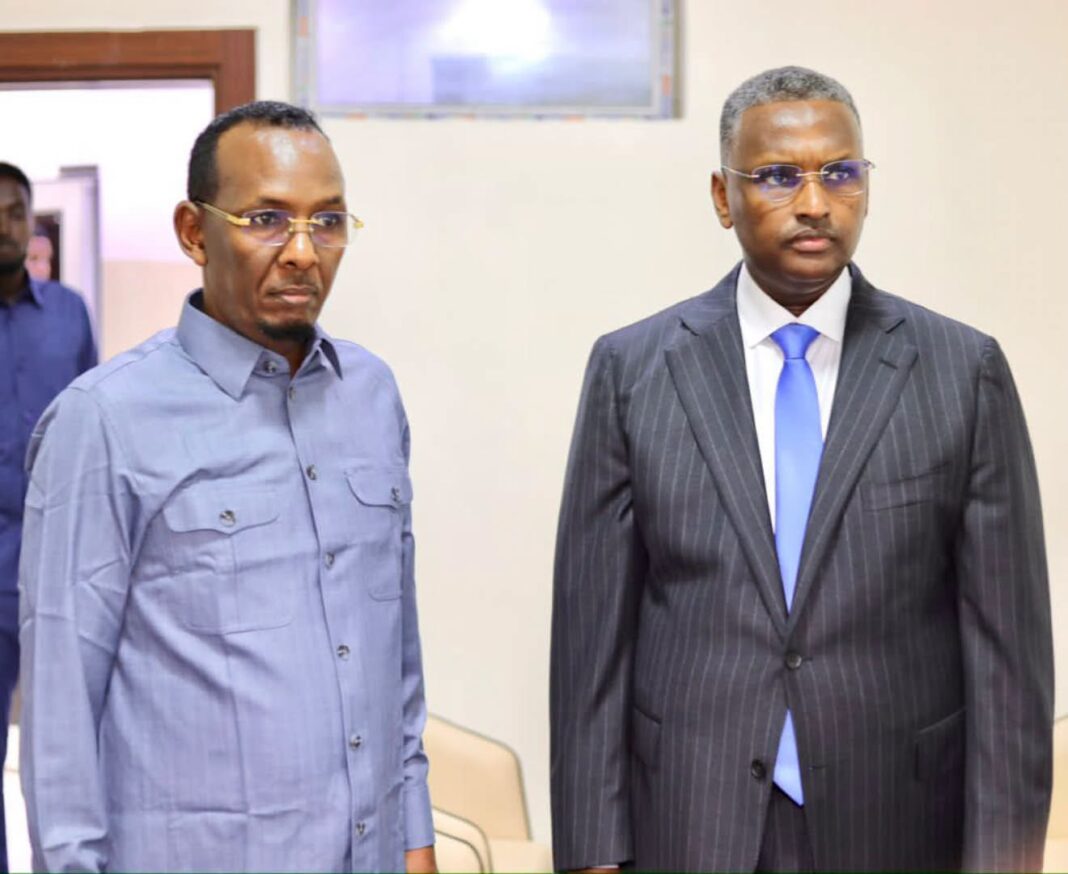

Reports indicate that a major leadership reshuffle has been conducted among officers of the National Intelligence and Security Agency (NISA) operating across various districts and divisions of Mogadishu. Several officers have reportedly been removed from their posts, with some replaced by newly appointed commanders.
The circulating reports also state that certain officers were arrested prior to being formally relieved of their duties, while others stand accused of maintaining unauthorized ties with government opposition factions.
Reports regarding the NISA restructuring specifically highlight an officer named Shakiib, who was reportedly subjected to arrest, dismissal, and physical abuse.
These allegations raise serious questions regarding the underlying motives behind the reported measures taken against him—specifically whether they stem from professional disputes or issues tied directly to agency operations.
It is further alleged that Officer Shakiib faced insubordination charges for refusing to lead an operation reportedly launched on June 3 against the residence of former Somali President Sheikh Sharif Sheikh Ahmed, an incident referred to as the Mirinaayo raid.
Additionally, Major Karkar was reportedly arrested and stripped of his position as NISA Operations Commander.
The reports add that another officer has already been appointed to assume that operational role.
The published reports list several other district-level intelligence commanders who were reportedly removed from their posts across Mogadishu.
The reported reshuffle within NISA raises fundamental questions regarding the official justifications for removing these officers, the mechanisms governing the appointment of new commanders, and whether these measures constitute genuine security sector reform or are driven by underlying operational and political disputes.
Security institutions periodically execute administrative adjustments tied to operational performance, organizational restructuring, and tactical needs.
However, when dismissals are accompanied by allegations of arrest, physical abuse, or accusations of clan bias and opposition alignment, obtaining official clarification and independently verifiable evidence becomes essential to substantiate such claims.