

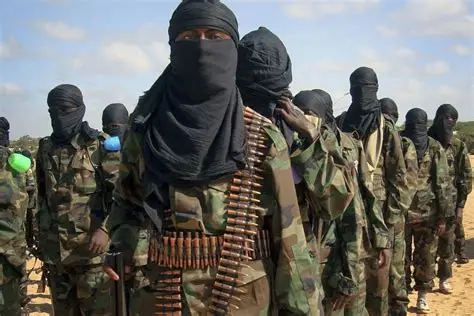

The political and security situation in the Hiiraan region has entered a new phase following reports that some traditional elders of the Hawadle clan and Al-Shabaab held a meeting in Maxaas district, where they reached an understanding to bring an end to the prolonged hostilities between the two sides.
According to reports, the meeting was attended by Hawadle elders and members of Al-Shabaab. Footage from the meeting has also been circulated by media outlets affiliated with Al-Shabaab.
In 2022, the Macawiisley forces, largely drawn from the Hawadle community, played a major role in driving Al-Shabaab out of large parts of Hiiraan.
These operations were backed by the Somali government and U.S. airstrikes.
The early victories of that offensive, however, did not last long.
Al-Shabaab recaptured much of the territory it had lost, and throughout 2025 and beyond, the group carried out attacks and staged a resurgence in parts of central Somalia.
The EUAA documented that between April 2025 and March 2026, Al-Shabaab was involved in numerous security incidents across Hiiraan, including attacks targeting security forces and Hawadle militias.
Maxaas itself was seized by Al-Shabaab in July 2025 following a heavy assault, according to available reports.
That event dealt a severe blow to local and government forces, as Maxaas had served as a vital operational hub for government troops and the Macaw’isley.
Rural communities in Hiiraan have long endured warfare, displacement, economic collapse, and security fears.
The local Macaw’isley fighters suffered heavy losses while fighting Al-Shabaab, whereas government support for the local forces became a matter of intense controversy.
Recent reports indicate that some former members of the Macaw’isley described the war during the Maxaas meeting as one that brought heavy losses, stressing the necessity of prioritizing the safety of the populace and the future of the region.
This may signify that a segment of the local population is now prioritizing physical security and daily livelihoods, even if doing so compels them to engage with a faction they have fought against for years.
Should the reported agreement prove genuine and effective, it could fundamentally alter the security landscape of Hiiraan.
The immediate consequence could be a significant decrease in hostilities between Al-Shabaab and the Hawadle militias, potentially affording the community an opportunity to resume freedom of movement, commerce, and daily life.
Conversely, if the Macaw’isley and other armed groups halt their campaign, Al-Shabaab could secure an opening to solidify its presence across rural Hiiraan.
This is precisely why this development is viewed as a security concern transcending a mere localized clan pact.
Horn Review assessed this development as a limited, localized understanding that remains vulnerable to shifts in political or military dynamics.
The Federal Government of Somalia faces a difficult dilemma: how will it respond to an arrangement struck between a faction of local elders and Al-Shabaab, should the pact be substantiated?
If the government forcefully opposes the agreement, certain local residents may perceive that Mogadishu fails to account for their acute security and political grievances.
Should the government accept or overlook it, Al-Shabaab could exploit the situation to demonstrate that the state lacks the capacity to resolve conflicts or protect the territories it claims to govern.
Therefore, the government’s response will need to combine security measures, political engagement, and community reconciliation.
This development occurred amid political friction between certain Hawadle leaders and the Federal Government concerning the political architecture of Hirshabelle.
Recent reports indicate that factions of Hawadle politicians and elders sought prior agreement regarding power-sharing and the leadership of Hirshabelle, whereas the federal government and other stakeholders were pushing forward with the electoral process.
This renders the Maxaas incident far more than a purely military matter. It represents an intersection of three core elements: security, Hirshabelle’s internal politics, and the relationship between the Federal Government and the Hawadle community.
Yet another risk persists. If Al-Shabaab exploits the agreement to expand its governance, taxation, and security dominance, the community could find itself trapped in an environment with severely constrained political and security options.
Internal divisions may likewise emerge. Some may support the agreement viewing it as a pathway to peace, while others reject it out of the conviction that the pact grants Al-Shabaab undue leverage.
Such a scenario could prove even more volatile than before, as mutual trust collapses and armed factions vie to recapture strategic territories or positions.
It is also possible that political friction between the government and segments of the Hawadle community could intensify if the arrangement with Al-Shabaab is perceived as a direct consequence of unaddressed political grievances.
Should the Somali government wish to prevent the proliferation of such agreements across central Somalia, the response cannot rely on military operations alone.
It is vital that local forces receive consistent support, salaries, logistics, and a formalized institutional framework under which they operate.
It is equally essential to resolve Hirshabelle’s political disputes through dialogue, particularly concerning matters of power-sharing and representation.
Ultimately, local populations require sustainable government services, security, and administrative presence.
If territory is liberated from Al-Shabaab but lacks enduring governance and security structures, the risk remains that the group will stage a comeback.
The EUAA has previously documented how Al-Shabaab successfully recaptured portions of territory it had lost.