

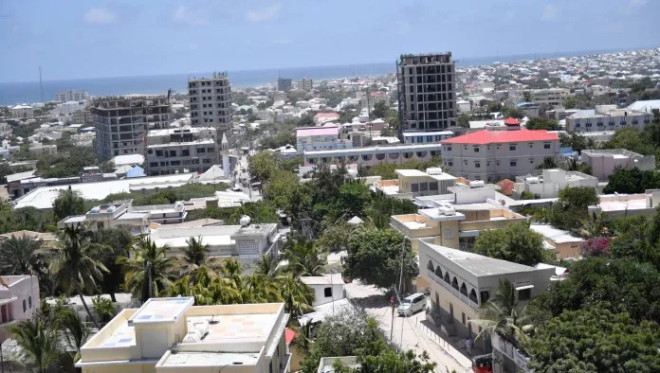

The Somali government has warned that buildings, rocks, and other man-made obstructions blocking Mogadishu’s natural drainage channels could significantly increase the risk of flooding as the country prepares for the 2026 Deyr rainy season and the anticipated effects of El Niño.
The warning emerged during a high-level meeting convened to assess the impact of recent rainfall in Mogadishu and strengthen preparedness for heavier rains expected in the coming months.
The meeting was held at the headquarters of the Somali Disaster Management Agency (SoDMA) and brought together government officials, Banadir regional authorities, religious leaders, civil society representatives, and members of the business community.
SoDMA has intensified preparations in recent weeks following climate forecasts indicating a heightened risk of heavy rainfall and flooding linked to El Niño during the October–December rainy season.
The agency has repeatedly urged residents to clear and reopen drainage systems to reduce flood risks.
Speaking at the meeting, Minister of Environment and Climate Change Bashir Mohamed Jama (Bashir Goobbe) said that rocks and other barriers erected near the road connecting Aden Adde International Airport and the Turkish Embassy have blocked natural water pathways that historically carried rainwater away from populated areas.
The minister warned that the obstruction of these channels could cause rainwater to accumulate in residential neighborhoods and low-lying areas.
He noted that a previous flooding incident in the area resulted in the deaths of two people and cautioned that nearly 40 households could be affected if the drainage problem is not addressed.
Goobbe called for the removal or redesign of structures obstructing water flow, emphasizing the need to protect nearby infrastructure while ensuring that natural drainage routes remain open.
Banadir Regional Administration Deputy Governor for Security and Politics Mohamed Ahmed Diriye “Yabooh” said authorities are currently working to remove standing water from several major roads in the capital.
However, he described these efforts as temporary measures and argued that the underlying problem stems from years of construction that has blocked traditional drainage routes.
According to Yabooh, hospitals, universities, government institutions, private facilities, and individual property owners have all contributed to the disruption of natural waterways by building structures across former drainage channels.
“If the water had been allowed to follow its original path, it would not have accumulated in these areas,” he said.
The remarks reflect growing concern among officials that urban expansion and unregulated construction have altered Mogadishu’s natural drainage system, making the city increasingly vulnerable to flooding during periods of heavy rainfall.
The warning comes as Somalia prepares for the 2026 Deyr rainy season. On September 1, SoDMA released a national preparedness report highlighting the potential impact of El Niño during October, November, and December.
The agency has also hosted a national preparedness conference in Mogadishu focused on responding to the threat of a potential “Super El Niño” event.
In recent weeks, SoDMA has conducted public awareness campaigns in flood-prone areas, including communities near Beledweyne, encouraging residents to clear drainage channels and maintain emergency access routes.
At the same time, the government is working to strengthen early warning systems and disaster forecasting capabilities.
SoDMA and partner institutions have launched initiatives aimed at improving disaster-risk monitoring and providing earlier alerts for floods and other emergencies that could trigger displacement and humanitarian crises.
Mogadishu has repeatedly experienced severe flooding and waterlogged roads during past rainy seasons, causing disruption to transport, businesses, homes, and public services.
Officials fear that blocked drainage systems could worsen the impact of future storms if preventive action is not taken.
During the meeting, Hormuud Salaam Foundation Chairman Abdullahi Nur Osman stressed the need for dedicated planning and funding to prepare for the anticipated rains.
He also proposed that SoDMA serve as the lead institution for issuing weather and disaster-related alerts, ensuring that communities and agencies receive unified and reliable information.
Authorities say immediate action is needed to reopen blocked waterways, remove barriers restricting water flow, and develop long-term urban drainage solutions before the heaviest rains arrive.
With Somalia entering a potentially challenging rainy season, officials argue that early preparedness, effective drainage management, and timely public warnings will be essential in reducing the risk of flooding and protecting lives and property across the capital.