

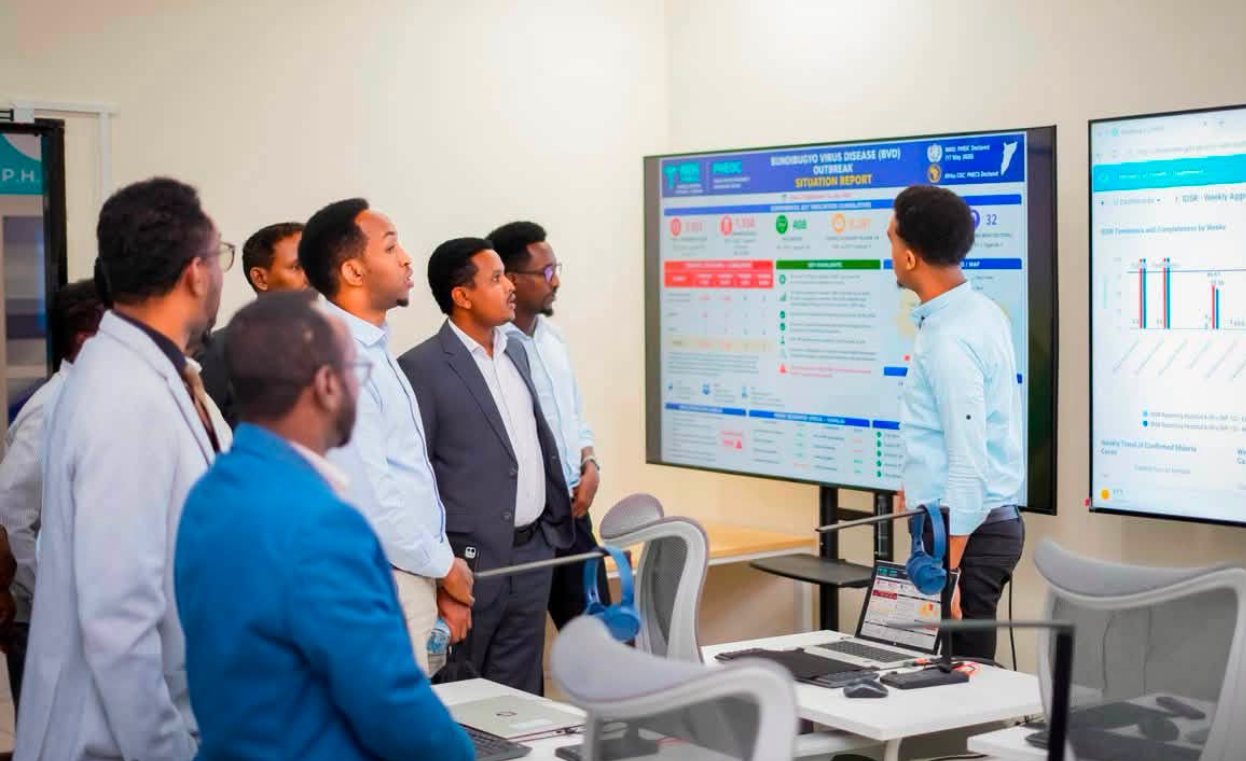

The Director General of Somalia’s National Institute of Health (NIH), Dr. Hussein Abukar Muhiadin, on Sunday held a high-level meeting with representatives from several of the country’s leading universities to strengthen collaboration in medical research, public health, and workforce development.
The meeting, held at the National Institute of Health headquarters in Mogadishu, brought together representatives from Somali National University, Banadir University, SIMAD University, UNISO University, Somali International University (SIU), Salaam University, Capital University, Mogadishu University, and Jamhuuriya University.
Discussions focused on expanding joint health research, particularly studies aimed at evaluating the quality of maternal and child healthcare services across Somalia.
Officials said the research is expected to generate evidence-based recommendations that will help improve healthcare delivery, strengthen public health policies, and guide future reforms within the country’s health sector.
The meeting also explored plans to create practical training opportunities for university students studying laboratory sciences by allowing them to undertake internships at Somalia’s National Central Laboratory.
The initiative is intended to equip future laboratory professionals with hands-on experience while helping address the country’s growing demand for skilled healthcare workers.
Dr. Hussein Abukar Muhiadin praised Somali universities for their contribution to rebuilding the country’s higher education system and strengthening the health sector after decades of conflict.
He said closer cooperation between academic institutions and the National Institute of Health would play a vital role in producing high-quality research capable of addressing Somalia’s most pressing public health challenges.
The initiative comes as Somalia continues to rebuild its healthcare system with support from domestic institutions and international partners.
The country faces persistent challenges, including high maternal and infant mortality rates, shortages of trained medical personnel, limited laboratory capacity, and recurring outbreaks of communicable diseases.
Health experts have increasingly emphasized that locally driven research and stronger collaboration between universities and government institutions are essential for developing evidence-based policies and improving healthcare outcomes.
Established under the Ministry of Health, the National Institute of Health has been expanding its role in disease surveillance, laboratory services, public health research, and scientific collaboration.
Officials say partnerships with Somali universities are expected to strengthen research capacity, improve the training of future healthcare professionals, and support the government’s broader efforts to build a more resilient and self-sustaining national health system.


