


READ FULL SPECIAL REPORT IN PDF
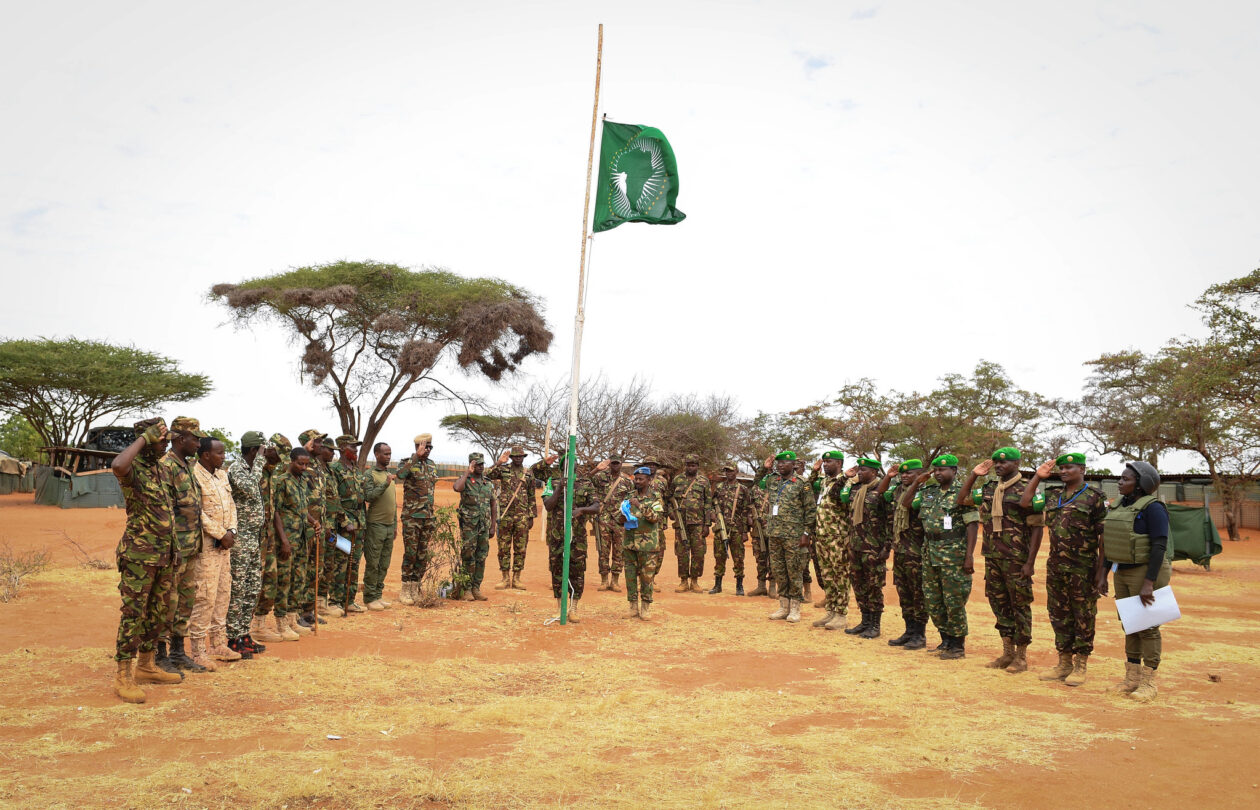
The future of the African Union Support and Stabilisation Mission in Somalia (AUSSOM) has become one of the most critical security issues facing Somalia in 2026. The main question is no longer whether AUSSOM is necessary; most international partners recognise that Somalia is not yet ready for a complete withdrawal of external security support.
The debate has shifted to three key issues: who will finance the mission, how the transition will be managed, and whether Somalia can gradually assume greater responsibility for its own security while navigating a contested political environment.
The African Union’s military presence in Somalia began in 2007 following the collapse of the Islamic Courts Union and the emergence of the Al-Shabaab insurgency.
The AU deployed AMISOM (African Union Mission in Somalia) to support the Transitional Federal Government, protect state institutions, and conduct operations against armed groups threatening the Somali state. The mission later transitioned into ATMIS (2022–2024) and then AUSSOM in January 2025, with an expanded focus on supporting Somali security forces and preparing for the eventual transfer of full security responsibility to Somalia.
Over nearly two decades, the AU mission has achieved significant strategic gains. It helped prevent the collapse of the Somali government, pushed Al-Shabaab out of major urban centres including Mogadishu, Marka, Kismayo and Baidoa, protected key government institutions, and created space for political reconstruction and state-building. Troops from contributing countries including Uganda, Burundi, Kenya, Ethiopia and Djibouti absorbed major battlefield risks and played a central role in containing Al-Shabaab’s territorial expansion.
The AUSSOM military component consisted of 12,626 troops as of June 2025. According to the mission’s Concept of Operations (CONOPs), AUSSOM’s transition and drawdown plan envisages a gradual reduction of forces toward a planned final exit in December 2029. The pace of the drawdown is expected to depend on Somalia’s security conditions and will be guided by regular joint technical assessments involving relevant stakeholders.
Despite these achievements, the AU mission has faced significant challenges. Al-Shabaab has not been defeated and remains capable of controlling rural areas, collecting taxation, operating parallel governance structures, and carrying out complex attacks. Somali security forces continue to rely heavily on international support for logistics, training, financing, intelligence and operational capabilities. Furthermore, military gains have often been difficult to sustain due to weak local governance, political disputes, limited state presence, and challenges in holding areas recovered from Al-Shabaab.
AUSSOM now faces a decisive transition period. The AU, European Union and United Kingdom continue to support sustained international engagement, while the United States has raised concerns about the long-term sustainability of external assistance and Somalia’s slow progress toward security self-reliance. The central challenge is whether Somalia can use this remaining period of international support to build a capable, unified and accountable security sector before any significant reduction of AU forces creates new opportunities for Al-Shabaab to expand its influence.
The Emerging Divide:
- African Union (AU): Wants AUSSOM preserved and demands sustainable international financing while increasing African ownership.
- European Union (EU): Remains the strongest financial supporter but expects gradual Somali responsibility.
- United States (US): Increasingly argues that Somalia has received billions in support but has not delivered sufficient security-sector progress; Washington is challenging continued UN logistical financing.
- United Kingdom (UK): Supports maintaining the international security architecture and UN logistical support while pushing Somali-led transition.
- The biggest risk now is a dangerous overlap between AUSSOM financial uncertainty, Somalia’s unresolved political transition and Al-Shabaab’s ability to exploit the divisions.
Loading Viewer...