

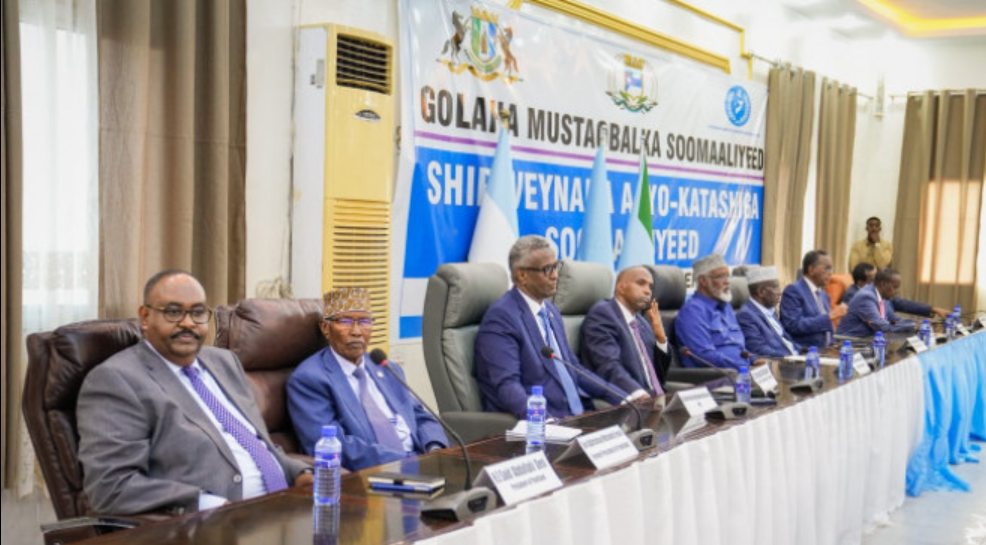

The Somali Future Council has proposed a new Transitional Direct Elections Model (TDEM) 2026, describing it as a roadmap to bridge Somalia’s current political realities with the country’s long-term constitutional objective of holding full one-person, one-vote elections.
According to a proposal document reviewed by Dawan Africa, the framework would, for the first time in Somalia’s modern electoral history, allow citizens to directly elect members of the Federal Parliament and Federal Member State legislatures while temporarily retaining the 4.5 clan power-sharing formula.
Under the proposal, the transitional elections would be implemented through a negotiated political agreement between the Federal Government and the Somali Future Council under a Transitional Elections Implementation Framework (TEIF).
Political parties would not participate during the transition, with recognized traditional elders continuing to allocate parliamentary seats among eligible sub-clans under the existing 4.5 formula.
The proposal also calls for a Federal Elections Implementation Committee (FEIC), jointly appointed by the government and the Somali Future Council, alongside State Elections Implementation Committees established by each Federal Member State.
A key feature of the proposed system is same-day voter registration and voting, allowing eligible citizens to register at polling stations and immediately cast their ballots without a separate voter registration process.
The Somali Future Council says the model is designed to broaden democratic participation, strengthen the legitimacy of elected institutions, reduce political disputes, and build confidence among stakeholders while creating a gradual transition toward universal suffrage.
According to the proposed timeline, political negotiations between the Federal Government and the Somali Future Council would be completed within two weeks, followed by the adoption of the Transitional Elections Implementation Framework.
Elections for Federal Member States would be concluded within three months, while federal parliamentary elections and the presidential election would be completed within six months if the proposal is adopted.