

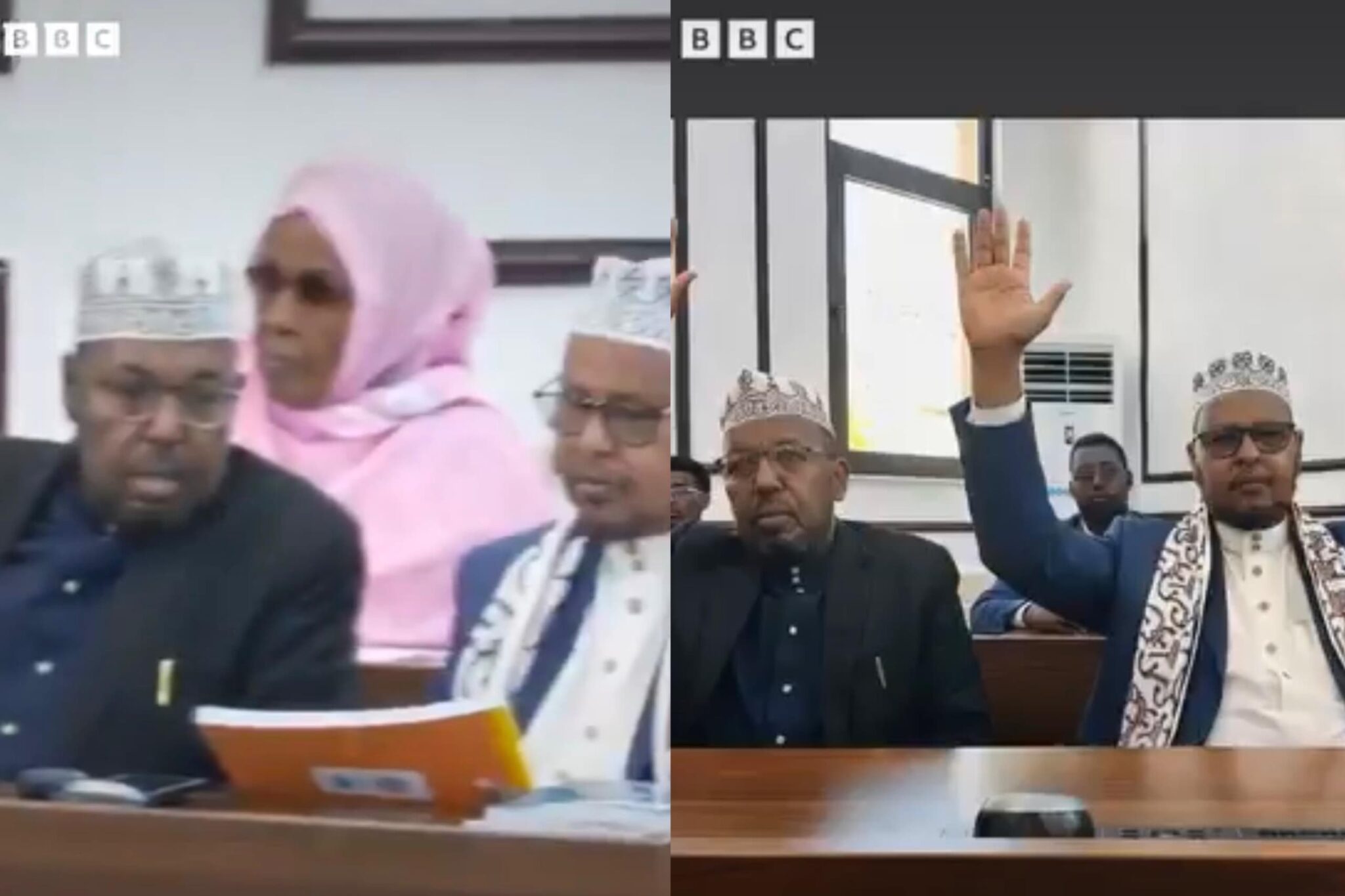

Mogadishu (Kaab TV) — Shortly after Somalia’s bicameral legislature voted on amendments to the Provisional Constitution, allegations of fraudulent voting began circulating. Opponents of the amendments claimed that Sheikh Bashir Salad and Sheikh Ali Wajis—members of the Somali Religious Council—had voted in favor of the changes.
An investigation by the BBC Somali Service found that photographs appearing to show the two sheikhs raising their hands during the vote were generated using artificial intelligence. A reporter from the BBC Somali Service analyzed the images with AI-detection technology and determined that they contained digital watermarks indicating synthetic generation.
Visual inconsistencies further undermined the authenticity of the image. In the fabricated photo, two men appear seated behind the sheikhs. However, authentic photographs taken inside the Federal Parliament of Somalia chamber on the day of the vote show two women seated behind them. The chamber’s seating arrangement, along with other images from the session, corroborated the BBC’s findings.
Somalia’s digital media landscape has become increasingly saturated with deepfake images produced using artificial intelligence. The country’s longstanding problem with fake news is now compounded by manipulated visuals that many people struggle to identify, highlighting the growing need for stronger digital literacy in the AI era.
“The BBC Somali Service investigation underscores that vigilance remains the strongest defense against disinformation and misinformation,” a journalist in Mogadishu told Puntland Post.