

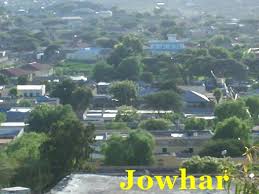

JOWHAR (KAAB TV) – The Hirshabelle State of Somalia, officially known as the Hirshabeelle Regional Government is one of Somalia’s five federal member states, established under the Provisional Federal Constitution of Somalia.
It is geographically situated in the central and southern parts of the country, encompassing the Hiran and Middle Shabelle regions.
To the north, Hirshabelle borders the Galmudug State, while to the southwest it shares boundaries with South West State and the Banadir region (which includes the capital, Mogadishu). To the west lies the international border with Ethiopia, and to the east is the Indian Ocean. The administrative capital of Hirshabelle is Jowhar, while Beledweyne, a major city in Hiran, also plays a significant political and economic role in the state.
Historically, the Hiran region was one of the original eight regions of Somalia before the 18-region model was adopted in the late 1980s.
In 2012, as part of Somalia’s federalization process, the Federal Government approved the merger of Hiran and Middle Shabelle to form the Hirshabelle State. This move was based on Article 49 of the Provisional Constitution, which outlines the formation of regional states.
However, from the outset, the formation of Hirshabelle faced serious political and administrative challenges. Local communities—especially in Hiran—expressed strong opposition, citing lack of inclusive consultation, unequal representation, and inadequate power-sharing.
Although the federal government declared Hirshabelle a functioning regional state in 2016, it was largely a symbolic move without actual local legitimacy or effective governance.
Hirshabelle is home to a number of influential Somali clans and communities, including the Hawadle, Gaalje’el, Abgaal, Jareerweyne, and others. These clans have long histories in the region and have played pivotal roles in Somalia’s social and political landscape.
The name Hirshabelle itself is derived from the combination of the two regions: Hiraan and Shabelle (Middle Shabelle).
Despite the richness of its cultural and historical identity, internal divisions and unresolved grievances among communities have hampered efforts to build a unified regional administration.
The governance of Hirshabelle has been marred by incompetence, corruption, and political fragmentation. Following the 2016 formation of the state, there was hope for progress. However, by 2017, when President Mohamed Abdullahi “Farmaajo” assumed power at the federal level, expectations for effective regional governance were crushed.
Rather than supporting institutional building, critics argue that President Farmaajo’s administration dismantled fragile local systems, pursuing clan-based favoritism and political patronage. This deepened the mistrust among communities and led to the further erosion of public confidence in the regional administration.
When President Hassan Sheikh Mohamud was re-elected in 2022, many residents of Hiran and Middle Shabelle hoped for a new direction. However, three years into his presidency, little to no tangible development has been seen in the region. Basic services—such as healthcare, education, infrastructure, and security—remain virtually non-existent for most citizens.
A stark example of the region’s instability occurred recently in Beledweyne, where a violent confrontation took place between security forces loyal to Governor Ali Jeyte Osman Dabageed and those affiliated with Muuse Salaad, a rival local commander. The dispute, reportedly over control of airport tax revenues, escalated into an armed clash that left nearly 20 people injured.
To make matters worse, Muuse Salaad ordered the closure of Beledweyne airport, halting all flights and cutting off a vital lifeline for the local population. No government institution—regional or federal—has taken responsibility for the incident, highlighting the complete breakdown of law and order in the region.
Parliamentarians elected from Hiran were expected to serve as the voice of their people in both the regional and federal governments. Instead, many have proven politically inexperienced and disengaged, focusing more on personal interests and social media posturing than advocating for their constituents.
Meanwhile, the local population continues to suffer from political marginalization, economic hardship, and lack of essential services. There is a growing sense of political hunger among the people—a desire for real leadership, genuine representation, and meaningful change.
With less than eight months remaining until the next regional election, the people of Hirshabelle are once again facing a crucial crossroads. They are being asked to choose leaders, but confidence in the current political class is at an all-time low.
The upcoming elections must not become a platform for ambitious but inexperienced individuals who lack the vision, integrity, and commitment required for leadership. Instead, Hirshabelle desperately needs:
-
Competent and principled leadership focused on serving the public.
-
Equitable governance that ensures fair representation for all clans and regions.
-
Accountability and transparency in financial and administrative matters.
-
A real effort to rebuild public trust in both the regional and federal government institutions.
The story of Hirshabelle is a reflection of the broader challenges facing Somalia’s federalism project. It is a region rich in history and potential, but currently suffering under weak leadership, political infighting, and systemic neglect.
Without immediate and serious reforms, Hirshabelle risks remaining a symbolic state in name only, failing to meet the needs of its people and contributing to ongoing instability in Somalia.
The people of Hiran and Middle Shabelle deserve better. They deserve peace, services, representation, and a government that works for them—not one that exacerbates their suffering.