

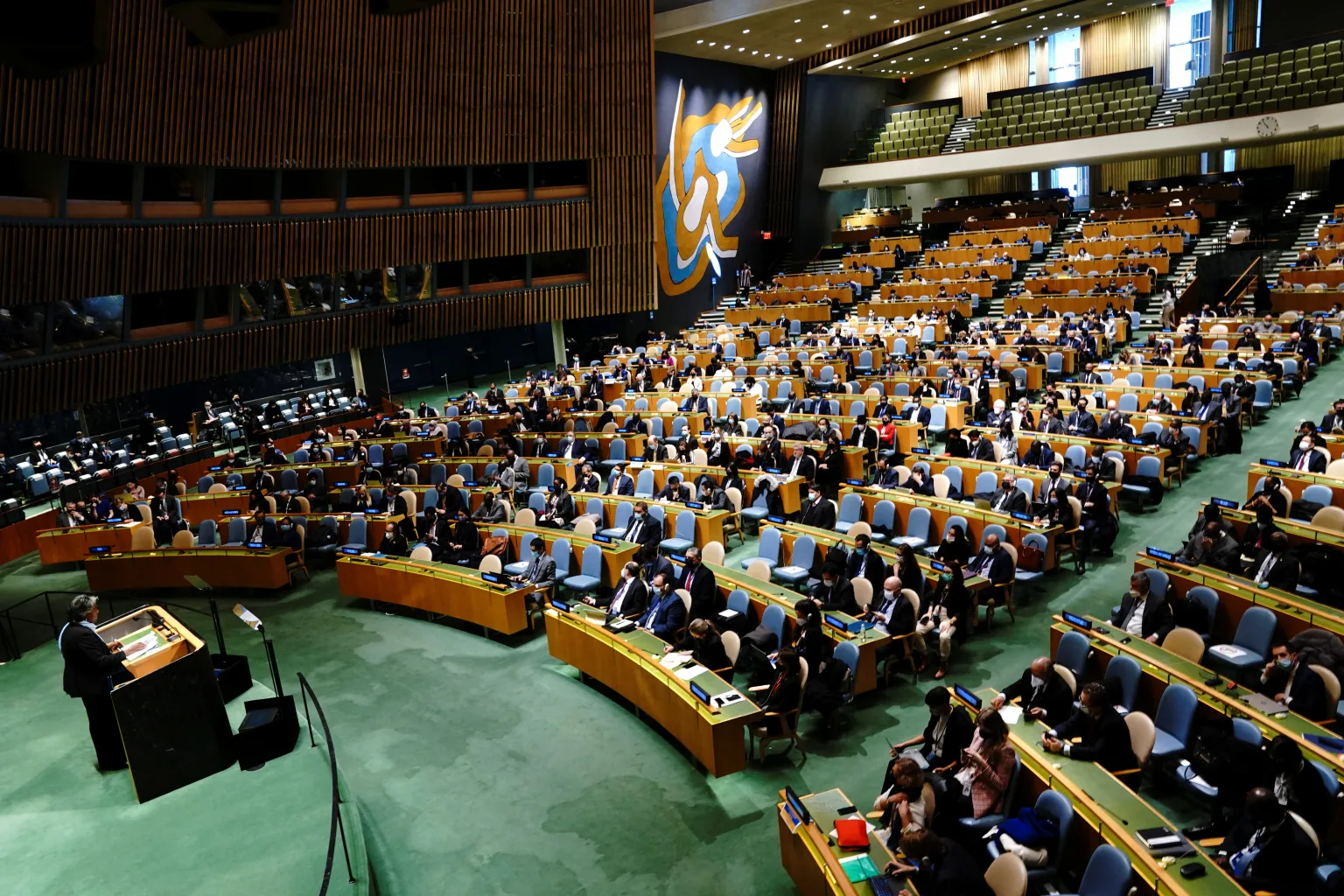

NEW YORK (KAAB TV) – Ethiopia pledges support for peace in Somalia at the UN General Assembly in New York amid a funding crisis for stabilization efforts. The shortfall threatens to undermine years of security gains in the fragile Horn of Africa nation.
Ethiopia’s Minister of Foreign Affairs, Ambassador Taye Atske Selassie, speaking on behalf of his government at the High-Level Conference on Commitments to Support and Stabilize Somalia, urged the international community to scale up its support. The event was held on the margins of the 80th United Nations General Assembly in New York.
“The long-term peace and stability of Somalia hinges on the effective development and empowerment of its national security institutions,” said Ambassador Taye. “We commend the Somali government for the strides made in building its army and police forces. However, these gains are at risk if immediate and coordinated international support is not secured.”
The high-level gathering focused on the African Union’s new stabilization mission in Somalia (AUSSOM), which officially replaced the African Union Transition Mission in Somalia (ATMIS) in January 2025. ATMIS itself succeeded the African Union Mission in Somalia (AMISOM), which had operated since 2007.
These missions have been central to regional and international efforts to combat Al-Shabaab, a militant group affiliated with al-Qaeda that continues to threaten Somalia’s stability.
“We have made significant progress in degrading Al-Shabaab’s capabilities. We honor the sacrifices of our troops, particularly those who have paid the ultimate price in pursuit of peace,” said Ambassador Taye.
Despite these achievements, the AUSSOM mission now faces a critical financial crisis, with a projected $180 million budget gap in 2025. The funding shortfall raises questions about the sustainability of peace efforts in Somalia and the broader region.
Ambassador Taye emphasized the urgent need to implement United Nations Security Council Resolution 2719, adopted in December 2023.
The resolution outlines a new framework for predictable, flexible, and sustainable financing for African Union-led peace operations, a move long championed by African states.
“Resolution 2719 must not remain just words on paper. We call on our international partners to act swiftly and uphold their commitments to shared global peace and security,” he stated.
The transition to AUSSOM represents a strategic shift toward increased Somali ownership of national security, with the AU mission focusing more on mentoring and supporting Somali forces rather than engaging directly in combat operations.
Yet, without adequate funding, experts warn that this model could falter.
Disagreements among donors—particularly regarding how to share the financial burden—have stalled the implementation of a joint UN-AU financing mechanism.
Some critics fear that a poorly managed joint fund could open the door to corruption and inefficiency, while proponents argue that institutionalized funding is essential to safeguard the progress made against extremism.
Somalia remains one of the most challenging security environments in the world. Al-Shabaab continues to control swathes of territory and carries out frequent deadly attacks in both urban centers and rural regions.
The situation in Somalia is increasingly seen as a litmus test for the international community’s ability to respond to protracted conflicts in Africa through multilateral cooperation and sustained peacebuilding efforts.