

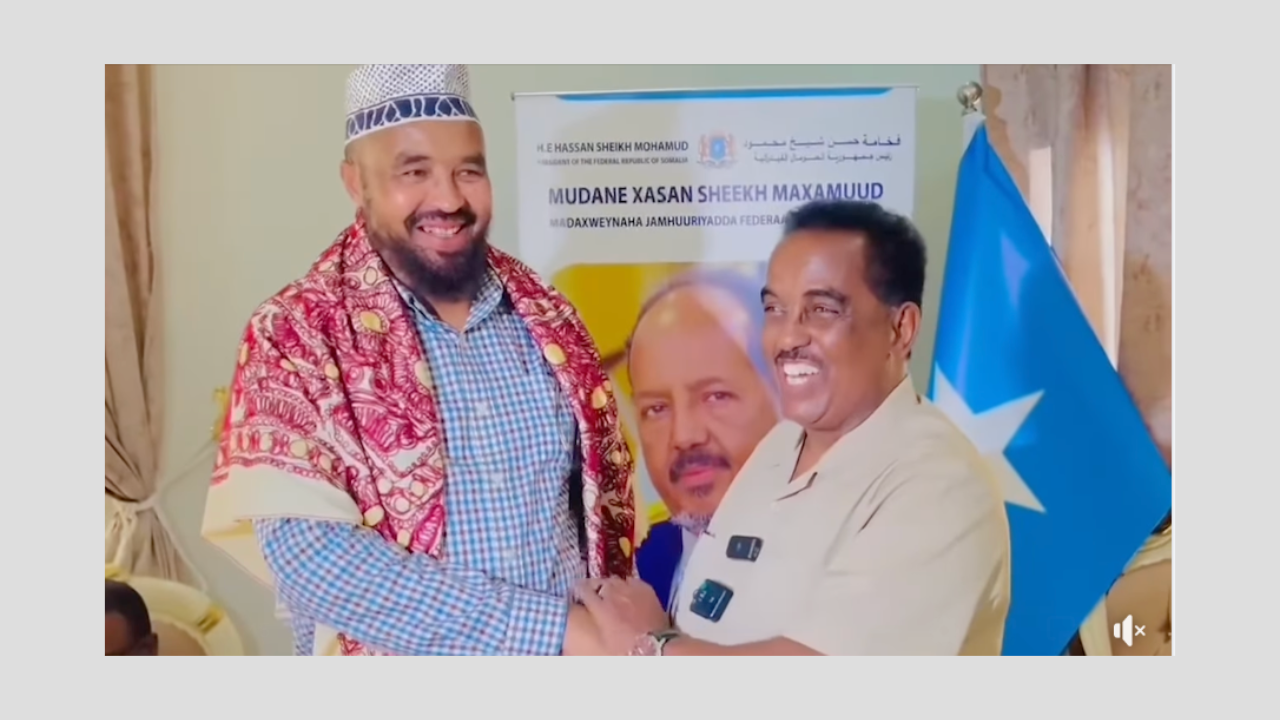

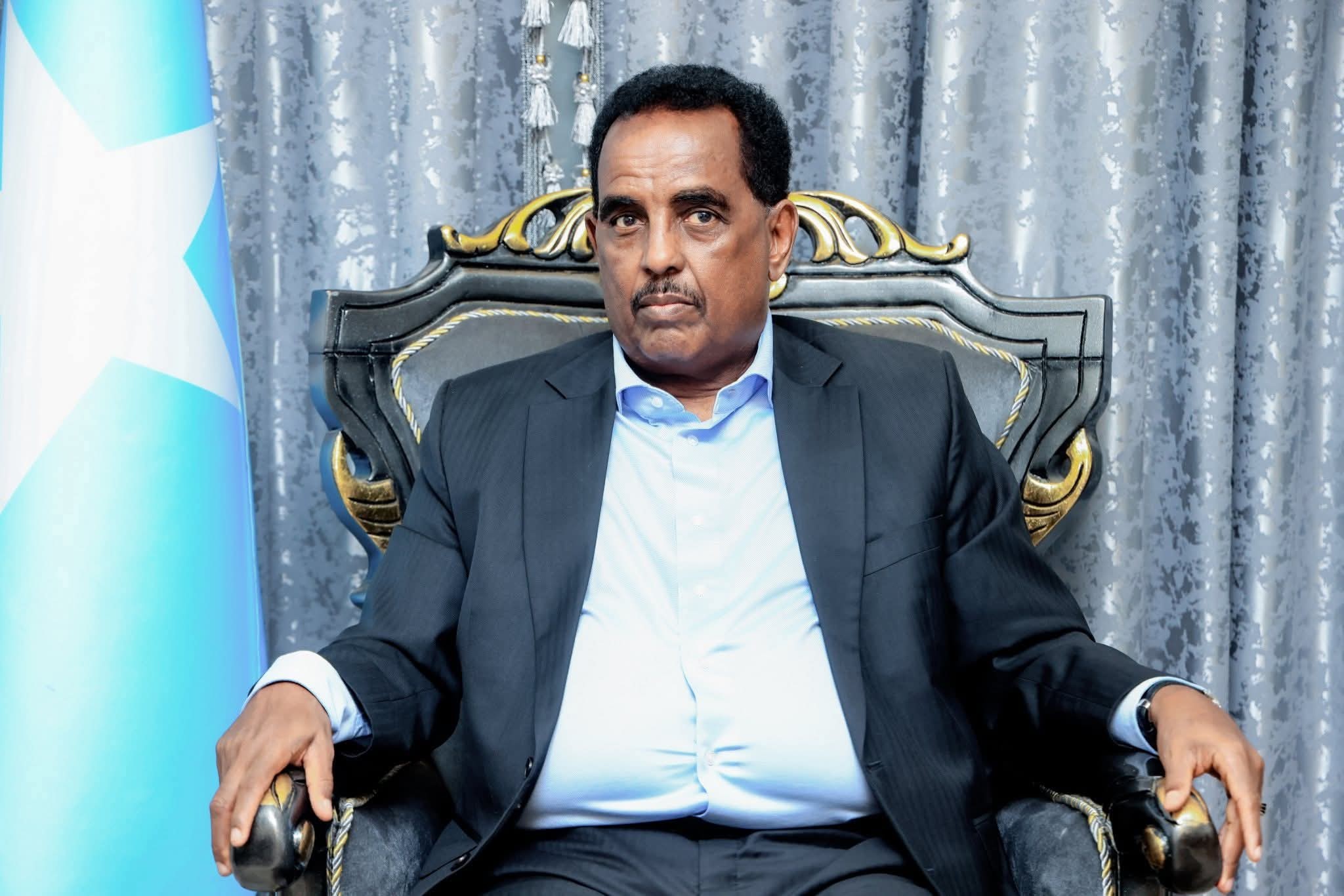
LAASCAANOOD (Kaab TV) – A shocking incident in northern Somalia has ignited widespread outrage after a clan elder publicly announced he was “gifting” a young girl as a wife to Interior Minister and federal MP Ali Yusuf Hosh during a ceremony in Laascaanood.
The elder, King Khadar Ali Jama, praised the 67-year-old minister for his role in facilitating the creation of a controversial new regional administration in northeast Somalia, supported by the Mogadishu-based federal government.
In front of an audience, he declared “The girl and the horse are at Adhi Cadeeye village. We will marry her to you once you come for the inauguration.”
Minister Hosh, smiling and shaking hands with the elder, responded: “I accept the girl and the horse. I will come for them.”
Video clips of the exchange quickly circulated on Somali social media, provoking widespread anger and condemnation.
Many Somalis described the act as child abuse, slavery, and a violation of human dignity, pointing to Somalia’s long-standing problem with forced and early marriages.
“This is modern-day slavery dressed up as culture,” said Afifa Warsame, a Somali women’s rights advocate. “A girl is not a utensil, not livestock, and certainly not a political gift. Fathers who ‘donate’ their daughters should donate their kidneys instead — at least those belong to them.”
Sacdiya Sulayman, an 18-year-old from Sool region, told Kaab TV she was horrified: “It feels like girls are treated like animals, like livestock exchanged for political favors. They are not respected as humans. I am scared for myself and for other Somali girls.”
A Culture of Normalized Sexual Violence
The incident reflects a deeper problem in Somalia, where rape, sexual violence, and child marriage are not only common but often normalized within communities.
In many cases, perpetrators escape justice by marrying their victims — a practice widely condemned by rights advocates but still defended by clan elders under the guise of preserving “honor.”
In July this year, Laascaanood itself witnessed a particularly brutal case: 24 local men were arrested after gang-raping two displaced sisters who had fled conflict to seek refuge in the town.
The crime sparked public protests and outrage, yet the men have still not been brought to trial, reinforcing public anger over impunity for sexual violence.
“Rape survivors are silenced, shamed, or forced to marry their rapists,” said Anab Abdullahi, a women’s rights activist in Mogadishu. “This is not justice — it is institutionalized abuse.”
Somalia remains one of the most dangerous places in the world to be a girl.
According to UNICEF, 45% of Somali girls are married before the age of 18, while 98% are subjected to female genital mutilation (FGM).
Forced and early marriages remain common, often used for dowry, political influence, or clan alliances. Somalia’s Sexual Offences Bill, which could outlaw such practices, has been repeatedly blocked in parliament — of which Hosh himself is a sitting member.
Government Silence and Impunity
Despite the severity of these abuses, Somali leaders have largely remained silent. Neither Minister Hosh nor the federal government has faced scrutiny over the Laascaanood “girl gift” scandal.
The 24 men accused of gang rape remain untried. For many, this represents a system of impunity where those in power — or protected by clans — are shielded from accountability.
“If a minister can accept a girl as a gift on camera, and rapists can go free after brutalizing displaced children, what hope is there for justice in Somalia?” asked Abdirahman Dahir, Nugaal university student.
“Protecting Somali girls is not optional — it is the foundation for a just and democratic Somalia,” Afifa Warsame stressed.
The case of Minister Hosh and the Laascaanood gang rape stands as a painful reminder: until Somalia confronts the normalization of sexual violence and child marriage, girls will continue to be treated not as citizens with rights, but as bargaining chips in a system of abuse.