


MOGADISHU (Baraarug) – Somalia is a country where the media plays a crucial role, particularly in raising public awareness, reporting domestic developments, and exposing issues related to security, human rights violations, and corruption.
However, Somali journalists face numerous challenges — including digital threats, arbitrary arrests, intimidation, and direct attacks by both government forces and armed groups such as Al-Shabaab.
Somalia remains one of the most dangerous countries in the world for journalists. According to the Committee to Protect Journalists (CPJ), more than 85 journalists have been killed in Somalia since 1992, when the organization began tracking journalist killings globally.
Government forces — particularly the intelligence services and police — as well as non-state armed actors, are heavily involved in these attacks.
Poor governance, a lack of accountability, and a weak justice system have allowed dangerous incidents to continue unchecked, forcing many journalists into exile for their own safety.
In a recent report marking World Press Freedom Day 2025, the Somali Journalists Syndicate (SJS) noted that between January and April 2025, there was a marked increase in attacks targeting journalists and media houses in both Somalia and Somaliland.
At least 46 journalists were arrested during those first four months of the year.
One journalist, Mohamed Abukar Dabaashe, was killed this year in a bombing carried out by Al-Shabaab in Mogadishu on March 18.
Journalists Turn to Facebook, TikTok, and YouTube
Amid growing pressure and restrictions on traditional media outlets, many journalists have turned to social media platforms to continue their work independently.
Platforms like Facebook, TikTok, and YouTube have become the primary tools for Somali journalists to share their reporting, as more and more people rely on the internet to access news and information — a shift made easier by widespread access to affordable internet and smartphones.
Unfortunately, even social media is no longer a safe space. Journalists are frequently targeted online: their accounts are hacked or suspended, and in many cases, fake accounts using their names and photos are created to spread disinformation, damaging their credibility and reputation.
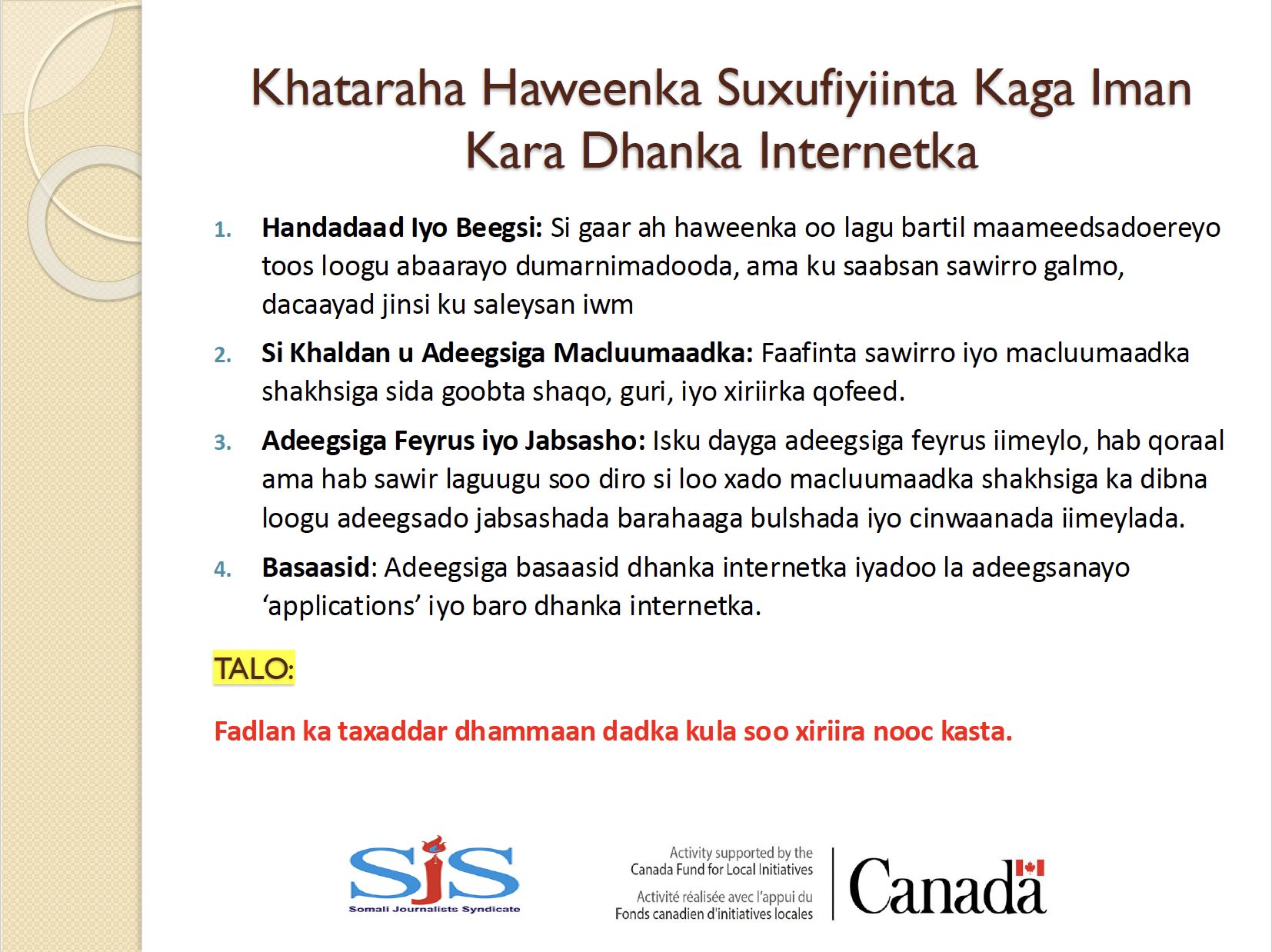
These cyberattacks are not limited to journalists alone — critics of the federal government and regional authorities are also subjected to coordinated harassment and digital repression.
In this 18th episode of Baraarug Podcast, producer Anfa Aden Abdi explores the growing threat of digital attacks on Somali journalists and others who express independent or dissenting views online. We ask:
How can digital threats be mitigated?
What steps should journalists take to protect their online safety?
Baraarug Podcast guest is Abdifatah Mohamed Ali, director of Digital Shelter, an organization working to improve digital safety in Somalia.
Abdifatah shares findings from a recent study highlighting the three most common types of digital attacks faced by Somali journalists:
- Direct online threats,
- Hacking of personal and work-related data,
- Impersonation through fake accounts using their names and photos to spread false information.
He also offers valuable tips on how journalists, human rights defenders — especially women — can navigate the digital space more securely.
In addition, we speak with Somali journalists who have recently experienced cyberattacks, gathering their insights and advice for fellow media professionals.