


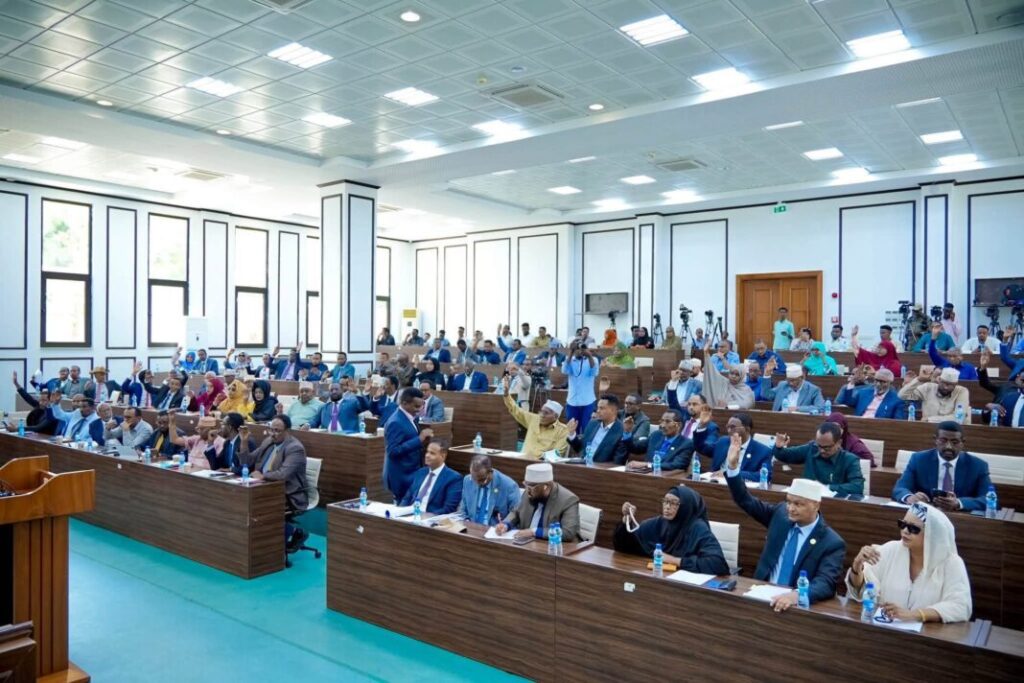


More than 40 members of the House of the People of the Federal Parliament of Somalia have each had $800 deducted from their allowances after being recorded absent from parliamentary sessions.
This step has become a major subject of discussion within parliament, with reports indicating that the financial penalty was implemented in accordance with the House of the People’s internal regulations, which outline disciplinary measures applicable to members who miss parliamentary sessions.
According to available information, the penalized MPs were found to be absent from specific sittings of the chamber, prompting the parliamentary leadership to initiate the enforcement of internal procedural rules concerning attendance.
The Speaker of the House of the People, Abdulkadir Mohamed Nur Jama, has demonstrated a commitment since assuming office to tightening operational discipline within the chamber and ensuring that MPs consistently participate in sessions.
This development echoes a longstanding debate regarding parliamentary absenteeism and its impact on legislative productivity.
Sessions of the House of the People require a quorum stipulated by the constitution and internal rules to advance legislative business.
The chamber’s internal rules dictate that an absentee MP may face penalties affecting allowances or salary, depending on the frequency of missed sessions and the validity of reasons provided.
Reports indicate that each of the more than 40 lawmakers incurred an $800 deduction, accumulating to a total financial sanction approaching $32,000 if processed simultaneously.
This step comes at a time when Speaker Jama seeks to ensure the genuine implementation of the House of the People’s rules and systems, particularly those pertaining to attendance and the duties of members of parliament.
During the tenure of former House Speaker Sheikh Aden Mohamed Nur Madobe, persistent debates surrounded member absenteeism and sittings falling short of the required quorum.
Lawmakers were repeatedly cautioned against skipping parliamentary duties, given that chronic absence can compromise the chamber’s legislative agenda.
Speaker Jama now appears to approach this issue differently, marking the first time since assuming office that internal disciplinary clauses concerning absenteeism have been directly enforced.
Nevertheless, this measure has also sparked questions regarding the tracking methodology used to log member absences and whether all penalised individuals missed sessions without valid legal excuses.
It remains vital to clarify which specific sittings the MPs missed, the duration of their absence, and whether the internal regulations permit exemptions under extenuating circumstances.
To date, no comprehensive official statement has been released by the House of the People disclosing the names of the penalized MPs or the exact sittings they missed.
Should the leadership formally substantiate the data regarding the $800 salary deductions, this action will stand out as one of the most prominent steps toward tightening attendance compliance and upholding internal parliamentary bylaws.
The matter also revives broader debates on legislative accountability, as lawmakers are expected to consistently participate in chamber sessions, legal debates, and other constitutional duties of the House of the People.
On the other hand, if certain MPs feel that the funds were deducted erroneously, the matter is expected to spark internal debate within the chamber, alongside demands to review attendance logs and the justifications for absences.
This step coincides with a period in which the House of the People has entered a new leadership phase, with observers closely monitoring how Speaker Jama will manage internal parliamentary procedures and enforce the chamber’s regulations.
Ultimately, the primary question now remaining is whether these financial deductions will become a permanent mechanism to curb member absenteeism and whether this action will compel lawmakers to fully engage in the legislative duties of the House of the People.